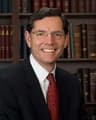
John Barrasso (R-WY)
A resolution honoring the life of the Honorable Alan K. Simpson, former Senator for the State of Wyoming.
A Republican resolution with 45 Democratic cosponsors · See all 99 cosponsors
Last activity — Message on Senate action sent to the House.
Adopted
The chamber formally agreed to it, and for a resolution that is the finish line: what it says is now officially the chamber's position, rule or tribute.
Nothing more is needed. A resolution is how a chamber speaks for itself or sets its own rules, so adopting it is what puts it into effect. It is not a law, so there is nothing for the President to sign.
Its path through Congress
- Introduced
- Officially Recorded
- Adopted by the Senate unanimous consent
A Senate resolution is the Senate speaking for itself: stating a position, honouring someone, or setting its own rules. Adopting it is the whole process. Once the Senate agrees to it, it is officially the Senate's word; it is not a law, so the House and the President have no part in it.
The Senate by unanimous consent (no one objected, so there was no vote): no senator's position on it was recorded.
What this bill would do
This resolution honors the life of the Honorable Alan K. Simpson, a former Senator from the State of Wyoming. It details his personal background, including his education at the University of Wyoming and his military service in the Army. The text outlines his extensive career in public service, ranging from the Wyoming House of Representatives to serving as a U.S. Senator. It highlights his leadership roles, such as serving as Chairman of the Committee on Veterans' Affairs. Additionally, the resolution notes his focus on issues like national debt, entitlement reform, and veteran affairs. Finally, the Senate expresses its sorrow regarding his death and requests that the resolution be shared with the House of Representatives and his family.
Who it would affect, and how
Potential Positive Impacts for People
-
Veterans Advocacy: The bill notes that Senator Simpson championed brave veterans and served as Chairman of the Committee on Veterans' Affairs of the Senate, indicating a career-long focus on this group.
-
Educational Legacy: The text mentions the establishment of the Alan K. Simpson Center for Clinical and Experiential Learning at the University of Wyoming College of Law and the Alan K. Simpson Institute for Western Politics and Leadership at the American Heritage Center, which benefits the University of Wyoming.
Potential Negative Impacts for People
- No negative impacts are identified within the provided text.
Groups and Interests Ranking
Every group the model scored this bill for, from -10 to +10. Tap or hover a score for the reason it gave.
No significant interests or groups are affected by this bill.
- 3/31/2025
- Message on Senate action sent to the House.
- 3/27/2025
- Passed/agreed to in Senate: Submitted in the Senate, considered, and agreed to without amendment and with a preamble by Unanimous Consent.
- Submitted in the Senate, considered, and agreed to without amendment and with a preamble by Unanimous Consent. (consideration: CR S1915; text: CR S1914)
- 99 Cosponsors added.
- Introduced in Senate
 Angela Alsobrooks
Democrat · Maryland
 Tammy Baldwin
Democrat · Wisconsin
 John Boozman
Republican · Arkansas
 Marsha Blackburn
Republican · Tennessee
 Michael Bennet
Democrat · Colorado
 Richard Blumenthal
Democrat · Connecticut
 Cory Booker
Democrat · New Jersey
 Jim Banks
Republican · Indiana
 Lisa Blunt Rochester
Democrat · Delaware
 Ted Budd
Republican · North Carolina
 Katie Britt
Republican · Alabama
 Maria Cantwell
Democrat · Washington
 Mike Crapo
Republican · Idaho
 Susan Collins
Republican · Maine
 Shelley Capito
Republican · West Virginia
 John Cornyn
Republican · Texas
 Bill Cassidy
Republican · Louisiana
 Christopher Coons
Democrat · Delaware
 Tom Cotton
Republican · Arkansas
 Kevin Cramer
Republican · North Dakota
 Ted Cruz
Republican · Texas
 Catherine Cortez Masto
Democrat · Nevada
 John Curtis
Republican · Utah
 Richard Durbin
Democrat · Illinois
 Steve Daines
Republican · Montana
 Tammy Duckworth
Democrat · Illinois
 Joni Ernst
Republican · Iowa
 Deb Fischer
Republican · Nebraska
 John Fetterman
Democrat · Pennsylvania
 Lindsey Graham
Republican · South Carolina
 Chuck Grassley
Republican · Iowa
 Kirsten Gillibrand
Democrat · New York
 Ruben Gallego
Democrat · Arizona
 John Hickenlooper
Democrat · Colorado
 Bill Hagerty
Republican · Tennessee
 Mazie Hirono
Democrat · Hawaii
 Martin Heinrich
Democrat · New Mexico
 John Hoeven
Republican · North Dakota
 Maggie Hassan
Democrat · New Hampshire
 Cindy Hyde-Smith
Republican · Mississippi
 Josh Hawley
Republican · Missouri
 Jon Husted
Republican · Ohio
 Ron Johnson
Republican · Wisconsin
 James Justice
Republican · West Virginia
 Amy Klobuchar
Democrat · Minnesota
 Mark Kelly
Democrat · Arizona
 Angus King
Independent · Maine
 Timothy Kaine
Democrat · Virginia
 John Kennedy
Republican · Louisiana
 Andy Kim
Democrat · New Jersey
 Ben Luján
Democrat · New Mexico
 Cynthia Lummis
Republican · Wyoming
 James Lankford
Republican · Oklahoma
 Mike Lee
Republican · Utah
 Edward Markey
Democrat · Massachusetts
 Mitch McConnell
Republican · Kentucky
 Jerry Moran
Republican · Kansas
 Patty Murray
Democrat · Washington
 Lisa Murkowski
Republican · Alaska
 Christopher Murphy
Democrat · Connecticut
 Jeff Merkley
Democrat · Oregon
 Markwayne Mullin
Republican · Oklahoma
 Roger Marshall
Republican · Kansas
 Bernie Moreno
Republican · Ohio
 David McCormick
Republican · Pennsylvania
 Ashley Moody
Republican · Florida
 Jon Ossoff
Democrat · Georgia
 Alex Padilla
Democrat · California
 Gary Peters
Democrat · Michigan
 Rand Paul
Republican · Kentucky
 John Reed
Democrat · Rhode Island
 James Risch
Republican · Idaho
 Mike Rounds
Republican · South Dakota
 Jacky Rosen
Democrat · Nevada
 Pete Ricketts
Republican · Nebraska
 Bernie Sanders
Independent · Vermont
 Charles Schumer
Democrat · New York
 Adam Schiff
Democrat · California
 Jeanne Shaheen
Democrat · New Hampshire
 Tim Scott
Republican · South Carolina
 Brian Schatz
Democrat · Hawaii
 Dan Sullivan
Republican · Alaska
 Tina Smith
Democrat · Minnesota
 Elissa Slotkin
Democrat · Michigan
 Rick Scott
Republican · Florida
 Eric Schmitt
Republican · Missouri
 Tim Sheehy
Republican · Montana
 John Thune
Republican · South Dakota
 Tommy Tuberville
Republican · Alabama
 Thomas Tillis
Republican · North Carolina
 Chris Van Hollen
Democrat · Maryland
 Roger Wicker
Republican · Mississippi
 Ron Wyden
Democrat · Oregon
 Raphael Warnock
Democrat · Georgia
 Peter Welch
Democrat · Vermont
 Sheldon Whitehouse
Democrat · Rhode Island
 Mark Warner
Democrat · Virginia
 Elizabeth Warren
Democrat · Massachusetts
 Todd Young
Republican · Indiana