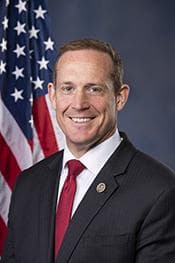


Ted Budd

Ted Budd

Republican · U.S. Senator for North Carolina

61 sponsored · 414 cosponsored

Age 55 · In office since 2023, in Congress since 2017

Contact their office: (202) 224-3154 · 354 Russell Senate Office Building, Washington, DC 20510 · Official website

What they got done

Most bills never get a vote. These are the ones they wrote or backed that got somewhere.

Became law (6)

  • Marsha Blackburn (R-TN)

    Cosponsored

    American Music Tourism Act of 2025

    S. 195 Arts, Culture, Religion

    A Republican bill with 3 Democratic cosponsors.

    Became law

    This bill aims to amend the Visit America Act to promote music tourism.

    Yes· 2 of 10

    • Scored +4

      Is this likely to grow the economy?

      By facilitating international and domestic travel, the bill aims to boost economic activity through tourism.

    • Scored +3

      Would business owners be better off under this?

      Promoting tourism can significantly boost revenue for businesses in the entertainment and hospitality sectors.

    No question was scored the opposite.
  • James Justice (R-WV)

    Cosponsored

    Hershel ‘Woody' Williams National Medal of Honor Monument Location Act

    S. 858 Public Lands and Natural Resources

    A Republican bill with 1 Democratic cosponsor.

    Became law

    This bill allows the National Medal of Honor Museum Foundation to establish a commemorative work on the National Mall.

    Yes

    • Scored +8

      Would veterans be better off under this, taking everything together?

      Directly honors Medal of Honor recipients and veterans through a permanent monument.

    • Scored +2

      Does this increase the pay, pensions or support veterans receive?

      Honors the sacrifice of veterans through a national monument.

    No question was scored the opposite.

  • Dan Sullivan (R-AK)

    Cosponsored

    PRO Veterans Act of 2025

    S. 423 Armed Forces and National Security

    A Republican bill with 13 Republican cosponsors.

    Became law

    This bill aims to protect regular order for budgeting within the Department of Veterans Affairs.

    Yes· 2 of 5

    • Scored +5

      Would veterans be better off under this, taking everything together?

      The act improves veteran service through better data collection, improved website accessibility, and increased budgetary transparency.

    • Scored +5

      Does this make the government pay for what it commits to?

      The bill mandates quarterly briefings on budget shortfalls and required mitigation plans to ensure budgetary oversight.

    No question was scored the opposite.

And 3 more on their Sponsored and Cosponsored pages.

Passed one chamber (13)

Halfway: the other chamber has to pass the same text before it can go to the President. One of these was stopped after it passed.

  • Ted Budd (R-NC)

    Their bill

    Foreign Robocall Elimination Act

    S. 2666 Science, Technology, Communications

    A Republican bill with 2 Democratic cosponsors.

    Passed the Senate

    With no one objecting, no names recorded

    Now: kept ready for the floor instead of being sent to a committee · Aug 10

    This bill directs the FCC to establish an interagency taskforce to combat unlawful robocalls made into the United States from abroad.

    Yes· 2 of 8

    • Scored +6

      Does this give people more protection from unfair business practices?

      The bill seeks to combat unlawful robocalls that cause financial loss and identity theft.

    • Scored +3

      Would households on low incomes be better off under this?

      Reducing robocalls and identity theft provides greater financial security for all households.

    No question was scored the opposite.

  • Ted Cruz (R-TX)

    Cosponsored

    Weather Research and Forecasting Innovation Reauthorization Act of 2026

    S. 3923 Public Lands and Natural Resources

    A Republican bill with 6 Democratic cosponsors.

    Passed the Senate

    With no one objecting, no names recorded

    Now: kept ready for the floor instead of being sent to a committee · Nov 12

    This bill aims to improve the weather research of the National Oceanic and Atmospheric Administration.

    Yes· 2 of 23

    • Scored +7

      Does this better protect air, water and wildlife?

      The bill enhances protections through better monitoring of algal blooms, wildfires, and landslides.

    • Scored +6

      Does this put more money into scientific research?

      The bill provides significant authorization for scientific research into fire weather and water observing systems.

    No question was scored the opposite.

  • Thomas Tillis (R-NC)

    Cosponsored

    National Park System Long-Term Lease Investment Act

    S. 2498 Public Lands and Natural Resources

    A Republican bill with 1 Republican cosponsor.

    Passed the Senate

    With no one objecting, no names recorded

    Now: kept ready for the floor instead of being sent to a committee · Oct 5

    This bill allows the Secretary of the Interior to extend certain existing leases within the National Park System without opening them up to normal bidding.

    Yes· 2 of 3

    • Scored +5

      Would business owners be better off under this?

      Current leaseholders benefit from the ability to extend leases without facing new competition.

    • Scored +3

      Does this better protect public land such as parks and forests?

      The bill provides administrative efficiency for managing long-term leases within the National Park System.

    The opposite

    • Scored -3

      Does this make what the government does easier for the public to see?

      The ability to extend leases without competitive bidding may reduce the transparency of government land-use decisions.

    • Scored -2

      Does this better protect air, water and wildlife?

      Bypassing competitive bidding may reduce transparency and oversight for land use within protected park areas.

And 10 more on their Sponsored and Cosponsored pages.

Resolutions of theirs that were adopted (3)

A resolution is a chamber speaking for itself — a position, a rule or a tribute. Adopting it puts it into effect, but it is not a law.

Still waiting, of the 61 bills they wrote: 4 cleared committee and wait for a first vote, 53 are in committee. Committee is where most bills end, whoever writes them — silence there, not a vote, is the usual way a bill dies.

What their bills would do

Every bill is scored against plain yes-or-no questions. These count their bills — the ones they wrote and the ones they cosponsored — by how each question was answered: yes, or the opposite. Open one to see those bills, where each stands, and why it was scored that way. Scores are made by AI ().

Who their bills would affect

What else they would change

How they voted lately

Their latest votes that decided something, and what each measure would do.

  • U.S. Senate · Sep 29, 2026

    Protect College Sports Act of 2026

    The vote on whether to pass the bill This is the real decision in this chamber. Passing here sends the bill to the other chamber, which must pass it too before it can go to the President.

    Their vote Yea

    This bill sets national rules for student athlete name, image, and likeness rights. It creates protections for academic progress, medical coverage, and health and safety standards.

    • Scored +9

      Would people in their twenties and thirties be better off under this?

      Significantly expands earning potential through NIL rights and provides medical and academic protections for college athletes.

    • Scored -5

      Does this leave more decisions to the states?

      Prevents states from enforcing their own NIL compensation and transfer laws that conflict with the federal framework.

  • U.S. Senate · Sep 29, 2026

    To increase the limitation on funding for post-eligibility insurance and catastrophic injury for student athletes.

    A vote on a proposed change to the bill A vote on one change, not on the bill. A bill can collect dozens of these, and losing one does not stop it.

    Their vote Nay

    What the Amendment Does Mr. Booker, along with Mr. Blumenthal, submitted this amendment to change how a specific fund or program is paid for in the bill.

Every vote they cast, and how often they missed one →

On the President’s nominees

The President chooses federal judges, cabinet secretaries, ambassadors and military officers, and the Senate decides whether each one gets the job. Most are confirmed by voice vote, which records no one’s position. In the 119th Congress (2025–2026) the Senate put 224 confirmations to a recorded vote, and confirmed every one.

Their votes to confirm, of 224 recorded votes

  • Yes: 220
  • No: 1
  • Missed: 3

Those votes covered 591 nominees, because the Senate sometimes confirms many in a single vote.

The ones they voted against

How busy they have been

How many bills they have put their name to over time — volume, not results: most bills never get a vote.

Legislative activity over time