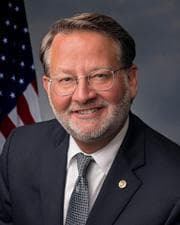

Gary C. Peters

Gary C. Peters

Democrat · U.S. Senator for Michigan

85 sponsored · 290 cosponsored

Age 68 · In office since 2015, in Congress since 2009

Contact their office: (202) 224-6221 · 724 Hart Senate Office Building, Washington, DC 20510 · Official website

What they got done

Most bills never get a vote. These are the ones they wrote or backed that got somewhere.

Became law (5)

  • Gary Peters (D-MI)

    Their bill

    Great Lakes Fishery Research Reauthorization Act

    S. 2878 Public Lands and Natural Resources

    A Democratic bill with 1 Republican cosponsor.

    Became law

    Its purpose is to reauthorize funding used to monitor, assess, and research the Great Lakes Basin. It does this by changing the date in the Further Consolidated Appropriations Act, 2020 from 2025 to 2030.

    Yes· 2 of 15

    • Scored +5

      Does this put more money into scientific research?

      Directly reauthorizes funding for scientific research in the Great Lakes Basin.

    • Scored +5

      Does this better protect air, water and wildlife?

      Extends the ability to monitor and research the health of the Great Lakes Basin ecosystem.

    The opposite

    • Scored -1

      Does this reduce what the federal government spends?

      Reauthorizing funding extends government spending for research through 2030.

  • Marsha Blackburn (R-TN)

    Cosponsored

    American Music Tourism Act of 2025

    S. 195 Arts, Culture, Religion

    A Republican bill with 3 Democratic cosponsors.

    Became law

    This bill aims to amend the Visit America Act to promote music tourism.

    Yes· 2 of 10

    • Scored +4

      Is this likely to grow the economy?

      By facilitating international and domestic travel, the bill aims to boost economic activity through tourism.

    • Scored +3

      Would business owners be better off under this?

      Promoting tourism can significantly boost revenue for businesses in the entertainment and hospitality sectors.

    No question was scored the opposite.

  • Shelley Capito (R-WV)

    Cosponsored

    Rural Broadband Protection Act of 2025

    S. 98 Science, Technology, Communications

    A Republican bill with 3 Democratic cosponsors.

    Became law

    This bill directs the Federal Communications Commission to create a vetting process for those seeking high-cost universal service program funding.

    Yes· 2 of 8

    • Scored +5

      Would people in rural areas be better off under this?

      The bill is specifically designed to ensure that broadband service providers in rural areas are capable of delivering promised services.

    • Scored +5

      Does this get reliable internet to more people?

      The bill strengthens the reliability of broadband deployment by ensuring only capable providers receive high-cost universal service funding.

    No question was scored the opposite.

And 2 more on their Sponsored and Cosponsored pages.

Passed one chamber, waiting on the other (26)

Halfway: the other chamber has to pass the same text before it can go to the President.

  • Gary Peters (D-MI)

    Their bill

    GLRI Act of 2026

    S. 528 Environmental Protection

    A Democratic bill with 3 Republican cosponsors.

    Passed the Senate

    With no one objecting, no names recorded

    Now: kept ready for the floor instead of being sent to a committee · Oct 5

    Its main purpose is to reauthorize the Great Lakes Restoration Initiative. Specifically, the legislation updates the Federal Water Pollution Control Act.

    Yes· 2 of 5

    • Scored +8

      Does this better protect air, water and wildlife?

      The bill provides $500,000,000 annually for the Great Lakes Restoration Initiative to protect water quality and ecosystems.

    • Scored +5

      Would Native Americans be better off under this?

      The Great Lakes are vital to the culture and resources of many Native American tribes.

    No question was scored the opposite.

  • Gary Peters (D-MI)

    Their bill

    Satellite Cybersecurity Act of 2025

    S. 3404 Science, Technology, Communications

    A Democratic bill with 1 Republican cosponsor.

    Passed the Senate

    With no one objecting, no names recorded

    Now: kept ready for the floor instead of being sent to a committee · Sep 24

    This bill requires the Comptroller General of the United States to conduct a study and report on the actions the Federal Government has taken to support the cybersecurity of commercial satellite systems.

    Yes· 2 of 12

    • Scored +8

      Does this better protect the country from computer attacks?

      Directly aims to improve the cybersecurity of commercial satellite systems against foreign threats and hijacking.

    • Scored +6

      Would business owners be better off under this?

      Provides critical security resources and guidelines for those operating commercial satellite systems.

    No question was scored the opposite.

  • Gary Peters (D-MI)

    Their bill

    Federal Building Threat Notification Act

    S. 2542 Government Operations and Politics

    A Democratic bill with 2 Republican cosponsors.

    Passed the Senate

    With no one objecting, no names recorded

    Now: kept ready for the floor instead of being sent to a committee · Aug 10

    This bill directs the Director of the Federal Protective Service to establish emergency communication guidance. This guidance concerns law enforcement-related events for Federal tenants in protected buildings.

    Yes

    • Scored +5

      Does this make what the government does easier for the public to see?

      The act requires a report and briefing to Congress regarding security protocols.

    No question was scored the opposite.

And 23 more on their Sponsored and Cosponsored pages.

Resolutions of theirs that were adopted (6)

A resolution is a chamber speaking for itself — a position, a rule or a tribute. Adopting it puts it into effect, but it is not a law.

Still waiting, of the 85 bills they wrote: 4 cleared committee and wait for a first vote, 59 are in committee. Committee is where most bills end, whoever writes them — silence there, not a vote, is the usual way a bill dies.

What their bills would do

Every bill is scored against plain yes-or-no questions. These count their bills — the ones they wrote and the ones they cosponsored — by how each question was answered: yes, or the opposite. Open one to see those bills, where each stands, and why it was scored that way. Scores are made by AI ().

Who their bills would affect

What else they would change

How they voted lately

Their latest votes that decided something, and what each measure would do.

  • U.S. Senate · Sep 29, 2026

    Protect College Sports Act of 2026

    The vote on whether to pass the bill This is the real decision in this chamber. Passing here sends the bill to the other chamber, which must pass it too before it can go to the President.

    Their vote Yea

    This bill sets national rules for student athlete name, image, and likeness rights. It creates protections for academic progress, medical coverage, and health and safety standards.

    • Scored +9

      Would people in their twenties and thirties be better off under this?

      Significantly expands earning potential through NIL rights and provides medical and academic protections for college athletes.

    • Scored -5

      Does this leave more decisions to the states?

      Prevents states from enforcing their own NIL compensation and transfer laws that conflict with the federal framework.

  • U.S. Senate · Sep 29, 2026

    To increase the limitation on funding for post-eligibility insurance and catastrophic injury for student athletes.

    A vote on a proposed change to the bill A vote on one change, not on the bill. A bill can collect dozens of these, and losing one does not stop it.

    Their vote Yea

    What the Amendment Does Mr. Booker, along with Mr. Blumenthal, submitted this amendment to change how a specific fund or program is paid for in the bill.

Every vote they cast, and how often they missed one →

On the President’s nominees

The President chooses federal judges, cabinet secretaries, ambassadors and military officers, and the Senate decides whether each one gets the job. Most are confirmed by voice vote, which records no one’s position. In the 119th Congress (2025–2026) the Senate put 224 confirmations to a recorded vote, and confirmed every one.

Their votes to confirm, of 224 recorded votes

  • Yes: 25
  • No: 194
  • Missed: 5

Those votes covered 541 nominees, because the Senate sometimes confirms many in a single vote.

The 5 most recent they voted against

How busy they have been

How many bills they have put their name to over time — volume, not results: most bills never get a vote.

Legislative activity over time