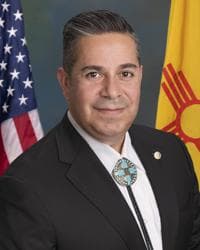


Ben Ray Luján

Ben Ray Luján

Democrat · U.S. Senator for New Mexico

88 sponsored · 512 cosponsored

Age 54 · In office since 2021, in Congress since 2009

Contact their office: (202) 224-6621 · 498 Russell Senate Office Building, Washington, DC 20510 · Official website

What they got done

Most bills never get a vote. These are the ones they wrote or backed that got somewhere.

Became law (3)

  • Deb Fischer (R-NE)

    Cosponsored

    Emergency Conservation Program Improvement Act of 2025

    S. 629 Agriculture and Food

    A Republican bill with 2 Democratic cosponsors. See the voting map.

    Became law

    The House voted 368–19 on Jun 23.

    This bill amends the Agricultural Credit Act of 1978. This bill aims to remove barriers for agricultural producers trying to access funds for emergency conservation measures.

    Yes· 2 of 5

    • Scored +6

      Would farmers be better off under this?

      The bill expands the types of eligible wildfire damage and allows producers to access up to 75 percent of costs upfront.

    • Scored +5

      Would business owners be better off under this?

      Agricultural producers benefit from the option of receiving advance payments for emergency repairs and replacements.

    No question was scored the opposite.

  • Cynthia Lummis (R-WY)

    Cosponsored

    Congressional Award Program Reauthorization Act

    S. 284 Congress

    A Republican bill with 2 Democratic cosponsors. See the voting map.

    Became law

    The House voted 370–22 on Dec 15.

    Its primary purpose is to reauthorize the Congressional Award Act. The bill extends the termination date of the program from October 1, 2023, to October 1, 2028.

    Yes· 2 of 3

    • Scored +3

      Would children be better off under this?

      The extension of the Congressional Award Program ensures continued recognition and opportunities for young people.

    • Scored +3

      Would people in their twenties and thirties be better off under this?

      Extending the program provides several more years of opportunity for young adults to earn prestigious recognition.

    No question was scored the opposite.

  • Tim Sheehy (R-MT)

    Cosponsored

    Aerial Firefighting Enhancement Act of 2025

    S. 160 Armed Forces and National Security

    A Republican bill with 5 Democratic cosponsors.

    Became law

    This bill amends the Wildfire Suppression Aircraft Transfer Act of 1996. It serves to reauthorize the sale of aircraft and parts from the Department of Defense for wildfire suppression.

    Yes· 2 of 4

    • Scored +5

      Would people in rural areas be better off under this?

      Enhanced firefighting capabilities benefit rural residents who are more susceptible to wildfire risks.

    • Scored +5

      Does this better protect air, water and wildlife?

      The bill enhances firefighting capabilities by expanding the types of materials aircraft can drop to aid in wildfire suppression.

    No question was scored the opposite.
Passed one chamber, waiting on the other (21)

Halfway: the other chamber has to pass the same text before it can go to the President.

  • Ben Luján (D-NM)

    Their bill

    New Mexico Land Grant-Mercedes Historical or Traditional Use Cooperation and Coordination Act

    S. 1363 Public Lands and Natural Resources

    A Democratic bill with no cosponsors.

    Passed the Senate

    With no one objecting, no names recorded

    Now: kept ready for the floor instead of being sent to a committee · Sep 24

    This bill is about improving how the Federal Government works together with the governing bodies and community users of land grant-mercedes in New Mexico.

    Yes· 2 of 10

    • Scored +6

      Would people in rural areas be better off under this?

      The bill directly benefits rural communities in New Mexico by protecting traditional land uses and infrastructure.

    • Scored +6

      Does this better protect public land such as parks and forests?

      The bill improves federal land management by incorporating coordination with New Mexico land grant-mercedes.

    The opposite

    • Scored -2

      Does this give the federal government more power?

      The bill involves federal agencies taking on more specific procedural roles regarding local land use.

  • Ben Luján (D-NM)

    Their bill

    Technical Corrections to the Northwestern New Mexico Rural Water Projects Act, Taos Pueblo Indian Water Rights Settlement Act, and Aamodt Litigation Settlement Act

    S. 640 Native Americans

    A Democratic bill with 1 Democratic cosponsor.

    Passed the Senate

    With no one objecting, no names recorded

    Now: kept ready for the floor instead of being sent to a committee · Dec 15

    This Act makes several technical corrections to existing laws regarding water development funds.

    Yes· 2 of 7

    • Scored +7

      Would Native Americans be better off under this?

      The bill directly increases funding for water development trust funds for the Navajo Nation, Taos Pueblo, and Aamodt Settlement Pueblos.

    • Scored +6

      Does this invest in rural communities?

      The bill authorizes funding for water facilities and regional water systems which are vital for rural tribal communities.

    No question was scored the opposite.

  • Ted Cruz (R-TX)

    Cosponsored

    Route 66 National Historic Trail Designation Act

    S. 2887 Public Lands and Natural Resources

    A Republican bill with 4 Democratic cosponsors.

    Passed the Senate

    With no one objecting, no names recorded

    This bill amends the National Trails System Act to officially designate the Route 66 National Historic Trail.

    Yes· 2 of 10

    • Scored +3

      Would business owners be better off under this?

      Business owners along Route 66 benefit from the increased visibility and tourism that comes with the official designation.

    • Scored +3

      Would people in rural areas be better off under this?

      Provides economic opportunities via tourism while protecting rural property rights and energy interests.

    No question was scored the opposite.

And 18 more on their Sponsored and Cosponsored pages.

Still waiting, of the 88 bills they wrote: 86 are in committee. Committee is where most bills end, whoever writes them — silence there, not a vote, is the usual way a bill dies.

What their bills would do

Every bill is scored against plain yes-or-no questions. These count their bills — the ones they wrote and the ones they cosponsored — by how each question was answered: yes, or the opposite. Open one to see those bills, where each stands, and why it was scored that way. Scores are made by AI ().

Who their bills would affect

What else they would change

How they voted lately

Their latest votes that decided something, and what each measure would do.

  • U.S. Senate · Sep 29, 2026

    Protect College Sports Act of 2026

    The vote on whether to pass the bill This is the real decision in this chamber. Passing here sends the bill to the other chamber, which must pass it too before it can go to the President.

    Their vote Yea

    This bill sets national rules for student athlete name, image, and likeness rights. It creates protections for academic progress, medical coverage, and health and safety standards.

    • Scored +9

      Would people in their twenties and thirties be better off under this?

      Significantly expands earning potential through NIL rights and provides medical and academic protections for college athletes.

    • Scored -5

      Does this leave more decisions to the states?

      Prevents states from enforcing their own NIL compensation and transfer laws that conflict with the federal framework.

  • U.S. Senate · Sep 29, 2026

    To increase the limitation on funding for post-eligibility insurance and catastrophic injury for student athletes.

    A vote on a proposed change to the bill A vote on one change, not on the bill. A bill can collect dozens of these, and losing one does not stop it.

    Their vote Yea

    What the Amendment Does Mr. Booker, along with Mr. Blumenthal, submitted this amendment to change how a specific fund or program is paid for in the bill.

Every vote they cast, and how often they missed one →

On the President’s nominees

The President chooses federal judges, cabinet secretaries, ambassadors and military officers, and the Senate decides whether each one gets the job. Most are confirmed by voice vote, which records no one’s position. In the 119th Congress (2025–2026) the Senate put 224 confirmations to a recorded vote, and confirmed every one.

Their votes to confirm, of 224 recorded votes

  • Yes: 7
  • No: 210
  • Missed: 7

Those votes covered 587 nominees, because the Senate sometimes confirms many in a single vote.

The 5 most recent they voted against

How busy they have been

How many bills they have put their name to over time — volume, not results: most bills never get a vote.

Legislative activity over time