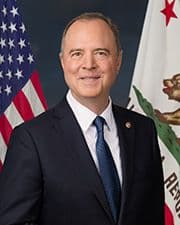


Adam B. Schiff

Adam B. Schiff

Democrat · U.S. Senator for California

100 sponsored · 626 cosponsored

Age 66 · In office since 2024, in Congress since 2001

Contact their office: (202) 224-3841 · 112 Hart Senate Office Building, Washington, DC 20510 · Official website

What they got done

Most bills never get a vote. These are the ones they wrote or backed that got somewhere.

Became law (5)

  • Susan Collins (R-ME)

    Cosponsored

    Kay Hagan Tick Reauthorization Act

    S. 2398 Health

    A Republican bill with 15 Democratic cosponsors.

    Became law

    This bill is designed to reauthorize specific programs related to vector-borne diseases. The legislation amends the Public Health Service Act to update the timeline for several provisions.

    Yes· 2 of 11

    • Scored +3

      Does this make the country readier for the next outbreak?

      The bill enhances support for health departments and regional centers that address vector-borne diseases, improving pandemic preparedness related to those diseases.

    • Scored +2

      Would children be better off under this?

      Preventing and treating vector-borne diseases has a small positive impact on children's health.

    No question was scored the opposite.
  • Deb Fischer (R-NE)

    Cosponsored

    Emergency Conservation Program Improvement Act of 2025

    S. 629 Agriculture and Food

    A Republican bill with 2 Democratic cosponsors. See the voting map.

    Became law

    The House voted 368–19 on Jun 23.

    This bill amends the Agricultural Credit Act of 1978. This bill aims to remove barriers for agricultural producers trying to access funds for emergency conservation measures.

    Yes· 2 of 5

    • Scored +6

      Would farmers be better off under this?

      The bill expands the types of eligible wildfire damage and allows producers to access up to 75 percent of costs upfront.

    • Scored +5

      Would business owners be better off under this?

      Agricultural producers benefit from the option of receiving advance payments for emergency repairs and replacements.

    No question was scored the opposite.
  • John Cornyn (R-TX)

    Cosponsored

    Holocaust Expropriated Art Recovery Act of 2025

    S. 1884 Law

    A Republican bill with 11 Democratic cosponsors.

    Became law

    This Act seeks to clarify and improve the existing 2016 Act. It aims to ensure that claims to recover Nazi-looted art are resolved on their actual merits rather than being dismissed due to various legal technicalities.

    Yes

    • Scored +7

      Does this protect the right to fair treatment by the courts?

      The bill enhances legal recourse for victims by precluding time-based and discretionary defenses.

    No question was scored the opposite.
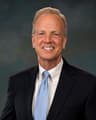
And 2 more on their Sponsored and Cosponsored pages.

Passed Congress — the President's turn (1)

Both chambers passed it. The President signs it into law or vetoes it, and a veto stands unless two-thirds of each chamber vote to pass it anyway. Everything Congress has sent the President →

  • Jerry Moran (R-KS)

    Cosponsored

    Fallen Servicemembers Religious Heritage Restoration Act

    S. 1318 Armed Forces and National Security

    A Republican bill with 11 Democratic cosponsors. See the voting map.

    Passed both chambers

    235191

    This bill consists of two main parts: the Foreign Intelligence Accountability Act and the Anti-CBDC Surveillance State Act.

    Yes· 2 of 5

    • Scored +8

      Does this protect people from being watched or searched?

      The bill strengthens protections against government surveillance and prevents the implementation of a central bank digital currency.

    • Scored +7

      Does this give people more control over their personal data?

      The bill implements stricter oversight on government access to personal data and prohibits central bank digital currency implementation.

    The opposite

    • Scored -5

      Does this give the government more power to monitor people inside the country?

      The bill acts to restrict and curb the expansion of domestic surveillance capabilities of the Federal Reserve and FBI.

    • Scored -3

      Does this give the federal government more power?

      The bill limits the expansion of federal authority regarding digital currency and surveillance.

Passed one chamber, waiting on the other (9)

Halfway: the other chamber has to pass the same text before it can go to the President.

  • Adam Schiff (D-CA)

    Their bill

    Bay Area Ridge National Scenic Trail Feasibility Study Act

    S. 3720 Public Lands and Natural Resources

    A Democratic bill with 1 Democratic cosponsor.

    Passed the Senate

    With no one objecting, no names recorded

    Now: kept ready for the floor instead of being sent to a committee · Nov 12

    This bill requires the Secretary of the Interior to study whether it is feasible to designate the Bay Area Ridge as a national scenic trail.

    Yes· 2 of 4

    • Scored +5

      Would people in cities be better off under this?

      The trail provides significant outdoor recreation access to major urban population centers in the Bay Area.

    • Scored +3

      Does this better protect public land such as parks and forests?

      Designating a national scenic trail enhances the management and public access to significant natural lands.

    No question was scored the opposite.
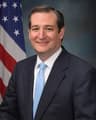
  • Ted Cruz (R-TX)

    Cosponsored

    Falun Gong and Victims of Forced Organ Harvesting Protection Act

    S. 4009 International Affairs

    A Republican bill with 5 Democratic cosponsors.

    Passed the Senate

    With no one objecting, no names recorded

    Now: kept ready for the floor instead of being sent to a committee · Oct 5

    This bill targets forced organ harvesting in the People's Republic of China. It requires the President to put sanctions on foreign people who take part in or help with forced organ harvesting in China.

    Yes· 2 of 5

    • Scored +8

      Does this protect the freedom to practise a religion?

      Protects practitioners of Falun Gong and others targeted for religious beliefs from forced organ harvesting.

    • Scored +7

      Would Asian Americans be better off under this?

      Specifically protects targeted groups in China, including Uyghurs and Falun Gong practitioners.

    The opposite

    • Scored -2

      Would business owners be better off under this?

      Potential legal risks for U.S. persons and entities interacting with sanctioned foreign property.

  • John Hoeven (R-ND)

    Cosponsored

    John A. Hauser Mental Health in Aviation Act

    S. 3257 Transportation and Public Works

    A Republican bill with 19 Democratic cosponsors.

    Passed the Senate

    With no one objecting, no names recorded

    Now: kept ready for the floor instead of being sent to a committee · Oct 1

    S. 3257, known as the John A. Hauser Mental Health in Aviation Act, directs the Federal Aviation Administration (FAA) Administrator to update regulations and guidance regarding individuals in aviation who disclose menta…

    Yes· 2 of 11

    • Scored +7

      Does this make mental health care easier to get?

      Encourages aviation personnel to seek mental health help and streamlines the medical certification process for those receiving treatment.

    • Scored +6

      Would people with disabilities be better off under this?

      Directly benefits those with mental health diagnoses by improving certification processes.

    The opposite

    • Scored -1

      Does this reduce what the federal government spends?

      The bill authorizes new spending of up to $16.5 million annually for medical examiners and public campaigns.

And 6 more on their Sponsored and Cosponsored pages.

Resolutions of theirs that were adopted (3)

A resolution is a chamber speaking for itself — a position, a rule or a tribute. Adopting it puts it into effect, but it is not a law.

Still waiting, of the 100 bills they wrote: 2 cleared committee and wait for a first vote, 94 are in committee. Committee is where most bills end, whoever writes them — silence there, not a vote, is the usual way a bill dies.

What their bills would do

Every bill is scored against plain yes-or-no questions. These count their bills — the ones they wrote and the ones they cosponsored — by how each question was answered: yes, or the opposite. Open one to see those bills, where each stands, and why it was scored that way. Scores are made by AI ().

Who their bills would affect

What else they would change

How they voted lately

Their latest votes that decided something, and what each measure would do.

  • U.S. Senate · Sep 29, 2026

    Protect College Sports Act of 2026

    The vote on whether to pass the bill This is the real decision in this chamber. Passing here sends the bill to the other chamber, which must pass it too before it can go to the President.

    Their vote Nay

    This bill sets national rules for student athlete name, image, and likeness rights. It creates protections for academic progress, medical coverage, and health and safety standards.

    • Scored +9

      Would people in their twenties and thirties be better off under this?

      Significantly expands earning potential through NIL rights and provides medical and academic protections for college athletes.

    • Scored -5

      Does this leave more decisions to the states?

      Prevents states from enforcing their own NIL compensation and transfer laws that conflict with the federal framework.

  • U.S. Senate · Sep 29, 2026

    To increase the limitation on funding for post-eligibility insurance and catastrophic injury for student athletes.

    A vote on a proposed change to the bill A vote on one change, not on the bill. A bill can collect dozens of these, and losing one does not stop it.

    Their vote Yea

    What the Amendment Does Mr. Booker, along with Mr. Blumenthal, submitted this amendment to change how a specific fund or program is paid for in the bill.

Every vote they cast, and how often they missed one →

On the President’s nominees

The President chooses federal judges, cabinet secretaries, ambassadors and military officers, and the Senate decides whether each one gets the job. Most are confirmed by voice vote, which records no one’s position. In the 119th Congress (2025–2026) the Senate put 224 confirmations to a recorded vote, and confirmed every one.

Their votes to confirm, of 224 recorded votes

  • Yes: 19
  • No: 200
  • Missed: 5

Those votes covered 589 nominees, because the Senate sometimes confirms many in a single vote.

The 5 most recent they voted against

How busy they have been

How many bills they have put their name to over time — volume, not results: most bills never get a vote.

Legislative activity over time