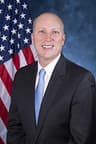
A Republican bill with 109 Republican cosponsors · See all 110 cosponsors
Last activity — Received in the Senate.
Passed one chamber, waiting for the other to take it up
Passed one chamber, and the other has not yet sent it to a committee or put it on its calendar.
The other chamber will hand it to a committee, place it on its calendar, or leave it where it is. Nothing has been decided, and a bill can sit here indefinitely.
Its path through Congress
- Introduced
- Passed House 220–208
- Awaiting Senate
What this bill would do
The "Safeguard American Voter Eligibility Act" (SAVE Act) amends the National Voter Registration Act of 1993. It requires individuals to provide documentary proof of United States citizenship to register for Federal elections. The bill defines acceptable documents and creates a process for those who cannot provide them. It also requires States to identify and remove noncitizens from voter rolls. Additionally, it establishes criminal penalties for certain registration violations.
Yes· 3 of 6
- Scored +3
Does this make elections run better?
The bill seeks to ensure only citizens vote, which some argue improves the integrity of the electoral process.
- Scored +2
Would high-income households be better off under this?
High-income households are less likely to experience difficulties in obtaining and presenting the required documentation.
- Scored +2
Would people with disabilities be better off under this?
The bill requires states to provide reasonable accommodations for individuals with disabilities to present documentary proof of citizenship.
The opposite· 3 of 15
- Scored -8
Would immigrants be better off under this?
The bill introduces significant barriers for immigrants, even legal residents, mistakenly attempting to register or facing confusion about eligibility.
- Scored -4
Would households on low incomes be better off under this?
Low-income individuals may face significant barriers in obtaining the required documents, which can involve fees and bureaucratic hurdles.
- Scored -4
Does this protect the right to vote?
The bill's documentary proof requirement could negatively affect voting access for eligible citizens, potentially disenfranchising some voters.
What Congress actually voted on
2 recorded votes have been taken on this bill. One of them decided something; the rest moved it along.
- The House: the vote on whether to pass the bill This is the real decision in this chamber. Passing here sends the bill to the other chamber, which must pass it too before it can go to the President. Passed 220 yes · 208 no
04/10/2025 · Roll call 102 · recorded as “On Passage”
- The House: a last attempt to send the bill back to committee The minority party's final chance to change or stall a bill just before the vote on passage. It almost always fails; when it succeeds, the bill does not get its final vote that day. Motion to recommit rejected 211 yes · 215 no
04/10/2025 · Roll call 101 · recorded as “On Motion to Recommit”
Who it would affect, and how
Potential Positive Impacts for People
- Verification of Citizenship: The Act ensures that only United States citizens are registered to vote in Federal elections by requiring documentary proof during registration (Section 2(b)).
- Support for Those Without Standard Documents: It requires States to create a process where applicants who cannot provide documentary proof can submit other evidence and sign an attestation under penalty of perjury to establish citizenship (Section 2(f)(j)(2)(A)).
- Accessibility for Disabled Individuals: States must ensure reasonable accommodations are made for individuals with disabilities to present their documentary proof of citizenship to election officials (Section 2(d)(4)(3)).
- Protection of Provisional Voting: The Act does not restrict the ability of an individual to cast a provisional ballot, which can be counted if the person is verified as a citizen (Section 6).
- Notice of Naturalization: The Secretary of Homeland Security must promptly notify chief election officials when an individual becomes a naturalized citizen (Section 5).
Potential Negative Impacts for People
- Stricter Registration Requirements: Individuals cannot be registered for Federal office unless they present specific documentary proof of citizenship, which may be a burden for those who do not possess the listed documents (Section 2(b)).
- Increased Legal Risks: The Act creates criminal penalties for election officials who register an applicant who fails to present documentary proof of citizenship (Section 2(j)(3)).
- Removal from Voter Rolls: States are required to remove individuals from official voter lists upon receiving verified information that the registrant is not a United States citizen (Section 2(f)(k)).
- Surveillance and Data Sharing: The Act requires Federal agencies to share information with State election officials within 24 hours to verify citizenship status (Section 2(f)(j)(5)(A)).
- Risk of Removal Proceedings: The Secretary of Homeland Security is required to investigate and determine whether to start removal proceedings against any alien found to be unlawfully registered to vote (Section 2(f)(j)(5)(D)).
Groups and Interests Ranking
Every group the model scored this bill for, from -10 to +10. Tap or hover a score for the reason it gave.
- Demographic And Interest Groups
- Would high-income households be better off under this? — High-income households are less likely to experience difficulties in obtaining and presenting the required documentation. Would people with disabilities be better off under this? — The bill requires states to provide reasonable accommodations for individuals with disabilities to present documentary proof of citizenship. Would veterans be better off under this, taking everything together? — Veterans with military IDs and records of service will likely find it easier to comply with the documentation requirements. Would white Americans be better off under this? — White Americans may generally find it easier to comply with documentation requirements due to greater access to resources and established records. Would immigrants be better off under this? — The bill introduces significant barriers for immigrants, even legal residents, mistakenly attempting to register or facing confusion about eligibility. Would households on low incomes be better off under this? — Low-income individuals may face significant barriers in obtaining the required documents, which can involve fees and bureaucratic hurdles. Would Black Americans be better off under this? — African Americans may face disproportionate challenges in obtaining necessary documentation due to historical factors and systemic inequalities. Would Hispanic Americans be better off under this? — Hispanic Americans may face disproportionate challenges in obtaining necessary documentation due to immigration status or language barriers. Would Asian Americans be better off under this? — Asian Americans, particularly naturalized citizens, may encounter complexities in providing documentary proof. Would Native Americans be better off under this? — Native Americans might face specific challenges related to tribal identification and documentation. Would people in their twenties and thirties be better off under this? — Young adults may face challenges in readily providing documentary proof of citizenship due to mobility or lack of established records. Would middle-income households be better off under this? — Middle-class households may experience some inconvenience in gathering the necessary documents. Would retired people be better off under this? — Some retirees may find it difficult to locate or update old documents. Would people in rural areas be better off under this? — Rural residents may face challenges due to limited access to government offices and documentation services. Would people over 65 be better off under this? — Some seniors may face difficulties in accessing or retrieving required documentation due to age or limited resources. Would students be better off under this? — Students, especially those away from home, may find it inconvenient to access necessary documents.
- Social Issues And Justice
- Does this expand the rights of people with disabilities? — The bill mandates reasonable accommodations for people with disabilities to present citizenship documents. Does this make casting a ballot easier in practice? — The bill's documentary proof requirement could negatively affect voting access for eligible citizens, potentially disenfranchising some voters. Does this protect the right to vote? — The bill's documentary proof requirement could negatively affect voting access for eligible citizens, potentially disenfranchising some voters. Does this narrow racial gaps in how people are treated? — The bill may disproportionately affect racial and ethnic minorities who may face greater challenges in obtaining documentary proof of citizenship.
- Governance And Ideology
- Does this make elections run better? — The bill seeks to ensure only citizens vote, which some argue improves the integrity of the electoral process.
- 4/10/2025
- Received in the Senate.
- Motion to reconsider laid on the table Agreed to without objection.
- Passed/agreed to in House: On passage Passed by the Yeas and Nays: 220 - 208 (Roll no. 102).
- On passage Passed by the Yeas and Nays: 220 - 208 (Roll no. 102). (text: CR H1569-1571)
- On motion to recommit Failed by the Yeas and Nays: 211 - 215 (Roll no. 101).
- Considered as unfinished business. (consideration: CR H1580-1581)
- POSTPONED PROCEEDINGS - At the conclusion of debate on H.R. 22, the Chair put the question on motion to recommit and by voice vote, announced the noes had prevailed. Ms. Johnson (TX) demanded the yeas and nays and the Chair postponed further proceedings until a time to be announced.
- The previous question on the motion to recommit was ordered pursuant to clause 2(b) of rule XIX.
- Ms. Johnson (TX) moved to recommit to the Committee on House Administration. (text: CR H1569)
- The previous question was ordered pursuant to the rule.
- DEBATE - The House proceeded with one hour of debate on H.R. 22.
- Rule provides for consideration of S.J. Res. 18, S.J. Res. 28, H.R. 1526 and H.R. 22. The resolution provides for consideration of H.R. 22, H.R. 1526, S.J. Res. 18, and S.J. Res. 28 under a closed rule. The resolution provides for one hour of debate on each measure and one motion to recommit on H.R. 22 and H.R. 1526, and one motion to commit on S.J. Res. 18 and S.J. Res. 28.
- Considered under the provisions of rule H. Res. 294. (consideration: CR H1569-1579)
- 2 Cosponsors added.
- 4/8/2025
- Rule H. Res. 294 passed House.
- 1 Cosponsor added.
- 4/7/2025
- Rules Committee Resolution H. Res. 294 Reported to House. Rule provides for consideration of S.J. Res. 18, S.J. Res. 28, H.R. 1526 and H.R. 22. The resolution provides for consideration of H.R. 22, H.R. 1526, S.J. Res. 18, and S.J. Res. 28 under a closed rule. The resolution provides for one hour of debate on each measure and one motion to recommit on H.R. 22 and H.R. 1526, and one motion to commit on S.J. Res. 18 and S.J. Res. 28.
- 4/3/2025
- 1 Cosponsor added.
- 4/1/2025
- Rules Committee Resolution H. Res. 282 Reported to House. Rule provides for consideration of H.R. 22, H.R. 1526, S.J. Res. 18 and S.J. Res. 28. The resolution provides for consideration of H.R. 22, H.R. 1526, S.J. Res. 18, and S.J. Res. 28 under a closed rule. The resolution provides for one hour of debate on each measure and one motion to recommit on H.R. 22 and H.R. 1526, and one motion to commit on S.J. Res. 18 and S.J. Res. 28. The resolution also provides that H. Res. 23 and H. Res. 164 are laid on the table.
- 3/31/2025
- 10 Cosponsors added.
- 3/27/2025
- 1 Cosponsor added.
- 3/25/2025
- 1 Cosponsor added.
- 3/24/2025
- 1 Cosponsor added.
- 3/21/2025
- 3 Cosponsors added.
- 3/10/2025
- 2 Cosponsors added.
- 3/5/2025
- 2 Cosponsors added.
- 3/3/2025
- 3 Cosponsors added.
- 2/24/2025
- 1 Cosponsor added.
- 2/21/2025
- 2 Cosponsors added.
- 2/14/2025
- 1 Cosponsor added.
- 2/13/2025
- 1 Cosponsor added.
- 2/6/2025
- 1 Cosponsor added.
- 2/5/2025
- 1 Cosponsor added.
- 2/4/2025
- 2 Cosponsors added.
- 1/31/2025
- 3 Cosponsors added.
- 1/28/2025
- 1 Cosponsor added.
- 1/22/2025
- 2 Cosponsors added.
- 1/9/2025
- 8 Cosponsors added.
- 1/7/2025
- 7 Cosponsors added.
- 1/3/2025
- Referred to the House Committee on House Administration.
- 53 Cosponsors added.
- Introduced in House
8 bills Congress.gov lists as related to this one — companions in the other chamber, earlier versions, and bills this one absorbed or was folded into.
- 119-HR-7296: SAVE America Act
- 119-HR-8206: Homeland Security and Further Additional Continuing Appropriations Act, 2026
- 119-HR-8595: Making appropriations for national security, Department of State, and related programs for the fiscal year ending September 30, 2027, and for other purposes.
- 119-S-128: SAVE Act
- 119-S-3752: SAVE America Act
- 119-HRES-282: Providing for consideration of the joint resolution (S.J. Res. 18) disapproving the rule submitted by the Bureau of Consumer Financial Protection relating to "Overdraft Lending: Very Large Financial Institutions''; providing for consideration of the joint resolution (S.J. Res. 28) disapproving the rule submitted by the Bureau of Consumer Financial Protection relating to ''Defining Larger Participants of a Market for General-Use Digital Consumer Payment Applications''; providing for consideration of the bill (H.R. 1526) to amend title 28, United States Code, to limit the authority of district courts to provide injunctive relief, and for other purposes; providing for consideration of the bill (H.R. 22) to amend the National Voter Registration Act of 1993 to require proof of United States citizenship to register an individual to vote in elections for Federal office, and for other purposes; and for other purposes.
- 119-HRES-294: Providing for consideration of the joint resolution (S.J. Res. 18) disapproving the rule submitted by the Bureau of Consumer Financial Protection relating to "Overdraft Lending: Very Large Financial Institutions"; providing for consideration of the joint resolution (S.J. Res. 28) disapproving the rule submitted by the Bureau of Consumer Financial Protection relating to "Defining Larger Participants of a Market for General-Use Digital Consumer Payment Applications"; providing for consideration of the bill (H.R. 1526) to amend title 28, United States Code, to limit the authority of district courts to provide injunctive relief, and for other purposes; providing for consideration of the bill (H.R. 22) to amend the National Voter Registration Act of 1993 to require proof of United States citizenship to register an individual to vote in elections for Federal office, and for other purposes; and for other purposes.
- 118-HR-8281 (not yet synced)
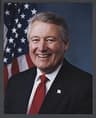 Rick Allen
Republican · Georgia
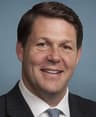 Jodey Arrington
Republican · Texas
 Stephanie Bice
Republican · Oklahoma
 Lauren Boebert
Republican · Colorado
 Gus Bilirakis
Republican · Florida
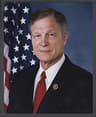 Brian Babin
Republican · Texas
 Mike Bost
Republican · Illinois
 Andy Biggs
Republican · Arizona
 James Baird
Republican · Indiana
 Eric Burlison
Republican · Missouri
 Josh Brecheen
Republican · Oklahoma
 Sheri Biggs
Republican · South Carolina
 Kat Cammack
Republican · Florida
 Michael Cloud
Republican · Texas
 Andrew Clyde
Republican · Georgia
 Ben Cline
Republican · Virginia
 Dan Crenshaw
Republican · Texas
 Mike Collins
Republican · Georgia
 Elijah Crane
Republican · Arizona
 Jeff Crank
Republican · Colorado
 Byron Donalds
Republican · Florida
 Neal Dunn
Republican · Florida
 Troy Downing
Republican · Montana
 Jake Ellzey
Republican · Texas
 Chuck Edwards
Republican · North Carolina
 Tom Emmer
Republican · Minnesota
 Ron Estes
Republican · Kansas
 Pat Fallon
Republican · Texas
 Randy Feenstra
Republican · Iowa
 Russ Fulcher
Republican · Idaho
 Michelle Fischbach
Republican · Minnesota
 Brad Finstad
Republican · Minnesota
 Randy Fine
Republican · Florida
 Paul Gosar
Republican · Arizona
 Lance Gooden
Republican · Texas
 Mark Green
Republican · Tennessee
 Andrew Garbarino
Republican · New York
 Craig Goldman
Republican · Texas
 Andy Harris
Republican · Maryland
 Bill Huizenga
Republican · Michigan
 Clay Higgins
Republican · Louisiana
 Diana Harshbarger
Republican · Tennessee
 Ashley Hinson
Republican · Iowa
 Erin Houchin
Republican · Indiana
 Wesley Hunt
Republican · Texas
 Harriet Hageman
Republican · Wyoming
 Abraham Hamadeh
Republican · Arizona
 Mike Haridopolos
Republican · Florida
 Mark Harris
Republican · North Carolina
 John Joyce
Republican · Pennsylvania
 Ronny Jackson
Republican · Texas
 Brian Jack
Republican · Georgia
 Mike Kelly
Republican · Pennsylvania
 Kevin Kiley
Independent · California
 Brad Knott
Republican · North Carolina
 Barry Loudermilk
Republican · Georgia
 Darin LaHood
Republican · Illinois
 Anna Paulina Luna
Republican · Florida
 Laurel Lee
Republican · Florida
 Nick LaLota
Republican · New York
 Michael Lawler
Republican · New York
 Nicholas Langworthy
Republican · New York
 Nancy Mace
Republican · South Carolina
 Nicole Malliotakis
Republican · New York
 Michael McCaul
Republican · Texas
 Tom McClintock
Republican · California
 John Moolenaar
Republican · Michigan
 Daniel Meuser
Republican · Pennsylvania
 Gregory Murphy
Republican · North Carolina
 Mary Miller
Republican · Illinois
 Barry Moore
Republican · Alabama
 Mariannette Miller-Meeks
Republican · Iowa
 Cory Mills
Republican · Florida
 Richard McCormick
Republican · Georgia
 Nathaniel Moran
Republican · Texas
 Mark Messmer
Republican · Indiana
 Riley Moore
Republican · West Virginia
 Tim Moore
Republican · North Carolina
 John McGuire
Republican · Virginia
 Addison McDowell
Republican · North Carolina
 Troy Nehls
Republican · Texas
 Ralph Norman
Republican · South Carolina
 Burgess Owens
Republican · Utah
 Andrew Ogles
Republican · Tennessee
 August Pfluger
Republican · Texas
 Scott Perry
Republican · Pennsylvania
 Gary Palmer
Republican · Alabama
 Jimmy Patronis
Republican · Florida
 David Rouzer
Republican · North Carolina
 Guy Reschenthaler
Republican · Pennsylvania
 John Rose
Republican · Tennessee
 Pete Sessions
Republican · Texas
 Marlin Stutzman
Republican · Indiana
 Elise Stefanik
Republican · New York
 Pete Stauber
Republican · Minnesota
 Dale Strong
Republican · Alabama
 Keith Self
Republican · Texas
 Thomas Tiffany
Republican · Wisconsin
 Glenn Thompson
Republican · Pennsylvania
 Claudia Tenney
Republican · New York
 William Timmons
Republican · South Carolina
 David Taylor
Republican · Ohio
 Jefferson Van Drew
Republican · New Jersey
 Beth Van Duyne
Republican · Texas
 Joe Wilson
Republican · South Carolina
 Daniel Webster
Republican · Florida
 Steve Womack
Republican · Arkansas
 Randy Weber
Republican · Texas
 Roger Williams
Republican · Texas
 Bruce Westerman
Republican · Arkansas