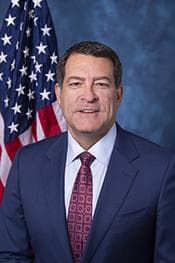

Mark E. Green

Mark E. Green

Republican · U.S. Representative for Tennessee's 7th district · no longer serving

23 sponsored · 81 cosponsored

Age 62 · Served 2019–2025

What they got done

Most bills never get a vote. These are the ones they wrote or backed that got somewhere.

Became law (1)

  • Pete Stauber (R-MN)

    Cosponsored

    Miracle on Ice Congressional Gold Medal Act

    H.R. 452 Sports and Recreation

    A Republican bill with 107 Democratic cosponsors.

    Became law

    This Act authorizes the award of 3 Congressional Gold Medals to the members of the 1980 U.S. Olympic Men's Ice Hockey Team. The medals recognize the team's victory over the Soviet Union during the 1980 Winter Olympics.

    Yes

    • Scored +1

      Is this likely to grow the economy?

      The sale of duplicate bronze medals provides a small influx of revenue to the United States Mint Public Enterprise Fund.

    No question was scored the opposite.

Passed one chamber, waiting on the other (21)

Halfway: the other chamber has to pass the same text before it can go to the President.

  • Gus Bilirakis (R-FL)

    Cosponsored

    Major Richard Star Act

    H.R. 2102 Armed Forces and National Security

    A Republican bill with 207 Democratic cosponsors. See the voting map.

    Passed the House

    39218

    Now: handed to a committee to examine — Committee on Armed Services · Nov 12

    This bill changes the rules to allow certain military retirees to receive both veterans' disability compensation and retired pay at the same time.

    Yes· 2 of 3

    • Scored +8

      Would veterans be better off under this, taking everything together?

      This bill provides significant financial relief to veterans with combat-related disabilities by allowing them to receive both retired pay and disability compensation concurrently.

    • Scored +7

      Does this increase the pay, pensions or support veterans receive?

      The bill increases financial benefits for veterans with combat-related disabilities by allowing concurrent receipt of retired pay and disability compensation.

    No question was scored the opposite.

  • Tim Burchett (R-TN)

    Cosponsored

    To designate the facility of the United States Postal Service located at 300 Macedonia Lane in Knoxville, Tennessee, as the "Reverend Harold Middlebrook Post Office Building".

    H.R. 1372 Government Operations and Politics

    A Republican bill with 1 Democratic cosponsor.

    Passed the House

    Since then: a Senate committee approved it and sent it to the floor

    Now: in the queue for a floor vote, with no date set · Sep 14

    This bill names a specific United States Postal Service facility after Reverend Harold Middlebrook. The building is located at 300 Macedonia Lane in Knoxville, Tennessee.

  • Riley Moore (R-WV)

    Cosponsored

    Protecting Privacy in Purchases Act

    H.R. 1181 Finance and Financial Sector

    A Republican bill with 132 Republican cosponsors. See the voting map.

    Passed the House

    221201

    Now: handed to a committee to examine — Committee on Banking, Housing, and Urban Affairs · Jul 15

    This bill prohibits payment card networks and covered entities from using specific merchant category codes to distinguish firearms retailers from other types of retailers.

    Yes· 2 of 4

    • Scored +6

      Does this protect the right to own guns?

      The bill protects the privacy of firearms transactions which supports the ability to conduct lawful gun commerce.

    • Scored +5

      Would business owners be better off under this?

      Firearms retailers are protected from being uniquely identified by their merchant category codes.

    The opposite

    • Scored -7

      Does this leave more decisions to the states?

      The bill preempts state and local laws that regulate the assignment or use of merchant category codes for firearms retailers.

And 18 more on their Sponsored and Cosponsored pages.

Still waiting, of the 23 bills they wrote: 23 are in committee. Committee is where most bills end, whoever writes them — silence there, not a vote, is the usual way a bill dies.

What their bills would do

Every bill is scored against plain yes-or-no questions. These count their bills — the ones they wrote and the ones they cosponsored — by how each question was answered: yes, or the opposite. Open one to see those bills, where each stands, and why it was scored that way. Scores are made by AI ().

Who their bills would affect

What else they would change

How they voted lately

Their latest votes that decided something, and what each measure would do.

Every vote they cast, and how often they missed one →

How busy they have been

How many bills they have put their name to over time — volume, not results: most bills never get a vote.

Legislative activity over time