
Chip Roy (R-TX)
Homeland Security and Further Additional Continuing Appropriations Act, 2026
A Republican bill with 8 Republican cosponsors · See all 8 cosponsors
Last activity — Referred to the Committee on Appropriations, and in addition to the Committee on the Budget, for a period to be subsequently determined by the Speaker, in each case for consideration of such provisions as fall within the jurisdiction of the committee concerned.
In committee
Introduced and handed to a committee in the chamber it started in.
The committee holds it, and most bills are never heard from again. A hearing or a committee vote would be news; silence is the usual outcome, and it kills the bill without anyone voting against it.
Its path through Congress
- Introduced
- In Committee
What this bill would do
This legislation consists of several divisions, including the Department of Homeland Security Appropriations Act, 2026, a Continuing Appropriations Act, 2026, and the SAVE America Act. The primary focus is providing funding for Department of Homeland Security functions such as Customs and Border Protection, the Coast Guard, and FEMA, while establishing oversight and administrative requirements. The second division addresses continuing appropriations to maintain essential government functions. The final division, the SAVE America Act, introduces stricter requirements for voter registration and the casting of ballots in federal elections. This includes mandating documentary proof of United States citizenship and valid photo identification for voters.
Yes· 3 of 14
- Scored +8
Does this improve help for people hit by a disaster?
The bill provides significant funding for FEMA assistance programs, including flood mitigation and the Disaster Relief Fund.
- Scored +5
Would women be better off under this?
The bill mandates standards to safeguard the health, safety, and rights of pregnant, postpartum, and nursing individuals in custody.
- Scored +3
Does this better protect the country from computer attacks?
The bill provides funding for the Cybersecurity and Infrastructure Security Agency for operations and support.
The opposite· 3 of 7
- Scored -5
Does this make casting a ballot easier in practice?
The bill imposes new identification and documentation burdens on voters, including specific deadlines for mail-in voters.
- Scored -4
Does this protect the right to vote?
The bill mandates strict documentary proof of citizenship and photo ID requirements for voter registration and casting ballots.
- Scored -4
Would immigrants be better off under this?
The bill imposes stricter documentation requirements for naturalization and voter registration.
Who it would affect, and how
Potential Positive Impacts for People
-
Protection of Pregnant Individuals: The bill mandates that the Secretary ensure specific standards of treatment are implemented to safeguard the health, safety, and rights of pregnant women, postpartum, and nursing individuals in U.S. Customs and Border Protection custody. (Sec. 208)
-
Increased Oversight of Detention Facilities: The Office of Inspector General is provided $20,000,000 specifically for additional inspections and oversight of detention facilities. (Sec. 5, Office of Inspector General)
-
Support for Missing and Exploited Children: The United States Secret Service receives a $6,000,000 grant for activities related to investigations of missing and exploited children. (Sec. s, United States Secret Service)
-
Enhanced Disaster Assistance: The bill provides significant funding for various federal assistance programs, including $3,836,748,513 for FEMA activities such as the State Homeland Security Grant Program and the Nonprofit Security Grant Program. (Sec. 5, Federal Assistance)
-
Voter Integrity and Citizenship Verification: The bill establishes a system to ensure that only United States citizens are registered to vote in federal elections by requiring documentary proof of citizenship. (Division C, Sec. 3002; Section 8(j)(1))
-
Addressing Name Discrepancies: It provides a way for individuals to resolve issues if the name on their citizenship documentation does not match their application name. (Section 8(j)(2))
-
Access to Identification Copies: To assist those who need to provide ID copies, the law requires states to ensure public access to digital imaging devices like printers or scanners at government buildings at no cost. (Section 303(b))
-
Provisions for Specific Groups: Photo ID requirements do not apply to absent uniformed services voters or certain individuals with specific accessibility needs. (Section 303(a)(2)(B))
Potential Negative Impacts for People
-
Restrictions on Government Aircraft Use: The bill dictates that all official costs associated with the use of Government aircraft by Department of Homeland Security personnel for the travel of the Secretary and Deputy Secretary must be paid from the Office of the Secretary. (Sec. 104)
-
Prohibition of New Border Crossing Fees: The Secretary is prohibited from establishing, collecting, or imposing any new border crossing fee on individuals crossing the Southern or Northern borders at land ports of entry. (Sec. 204)
-
Limitations on Immigration Documentation: The bill specifies that no funds may be used to amend the oath of allegiance required for naturalization. (Sec. 512)
-
Increased Documentation Burdens for Voters: Individuals applying to register to vote are required to provide documentary proof of United States citizenship, and those using mail-in registration must present this proof in person to an election official within specific deadlines. (Division C, Sec. 3002; Section 8(j)(1))
-
Strict Photo ID Requirements for In-Person Voting: To vote in person, individuals must present a valid physical photo identification. (Section 303(a)(1)(A))
-
Additional Requirements for Mail-in Voting: Those voting other than in person must submit a copy of a valid photo identification with their ballot. (Section s303(a)(2)(A)(i))
-
Restrictions on Provisional Ballots: For in-person voters using a provisional ballot, the vote may not be counted unless they present the required identification or a specific religious objection affidavit within three days. (Section 303(a)(1)(B)(i))
-
Criminal and Legal Risks: The bill introduces criminal penalties for election officials who register applicants who fail to provide documentary proof of citizenship and notes that false declarations can be used in criminal or immigration proceedings. (Section 12(j)(3)(C); Section 9(b)(4)(B))
Groups and Interests Ranking
Every group the model scored this bill for, from -10 to +10. Tap or hover a score for the reason it gave.
- Environment Energy And Infrastructure
- Does this improve help for people hit by a disaster? — The bill provides significant funding for FEMA assistance programs, including flood mitigation and the Disaster Relief Fund. Does this better protect air, water and wildlife? — The bill includes funds for environmental compliance and restoration for the Coast Guard. Does this improve buses, trains and other public transport? — The bill provides security assistance for public transportation, including Amtrak and over-the-road buses.
- National Security And Foreign Policy
- Does this better protect the country from computer attacks? — The bill provides funding for the Cybersecurity and Infrastructure Security Agency for operations and support. Does this put more money into stopping terrorism? — The bill funds the Nonprofit Security Grant Program to protect against terrorist or extremist attacks.
- Governance And Ideology
- Does this make elections run better? — The bill aims to ensure election integrity by requiring documentary proof of citizenship and photo identification for federal elections. Does this make what the government does easier for the public to see? — The bill requires the Secretary of DHS to report on non-competitive grants and contracts.
- Social Issues And Justice
- Does this tighten control of the border? — The bill provides significant funding for Customs and Border Protection, the Coast Guard, and various border security assets. Does this change how police departments operate? — The bill provides $20,000,000 for additional inspections and oversight of detention facilities. Is this likely to reduce homelessness? — The bill provides $123,500,000 for the emergency food and shelter program under the McKinney-Vento Act. Does this make casting a ballot easier in practice? — The bill imposes new identification and documentation burdens on voters, including specific deadlines for mail-in voters. Does this protect the right to vote? — The bill mandates strict documentary proof of citizenship and photo ID requirements for voter registration and casting ballots. Does this make it easier for immigrants already here to become citizens? — The bill prohibits using funds to amend the oath of allegiance required for naturalization.
- Economy And Finance
- Is this likely to create jobs? — The bill provides pay increases for air traffic controllers and supervisors to address workforce shortfalls.
- Demographic And Interest Groups
- Would women be better off under this? — The bill mandates standards to safeguard the health, safety, and rights of pregnant, postpartum, and nursing individuals in custody. Would children be better off under this? — The bill provides $6,000,000 to the Secret Service for investigations regarding missing and exploited children. Would people in cities be better off under this? — The bill provides funding for the Urban Area Security Initiative. Would immigrants be better off under this? — The bill imposes stricter documentation requirements for naturalization and voter registration. Would households on low incomes be better off under this? — The costs and logistical hurdles associated with obtaining specific documentary proof and photo identification may disproportionately affect low-income voters. Would people over 65 be better off under this? — New photo ID and documentation requirements may pose challenges for elderly voters who may not have easily accessible modern documentation. Would people with disabilities be better off under this? — While the bill mentions reasonable accommodations for presenting documentation, the added layers of identification requirements create potential new barriers to voting.
- 4/13/2026
- 1 Cosponsor added.
- 4/9/2026
- 7 Cosponsors added.
- 4/6/2026
- Referred to the Committee on Appropriations, and in addition to the Committee on the Budget, for a period to be subsequently determined by the Speaker, in each case for consideration of such provisions as fall within the jurisdiction of the committee concerned.
- Introduced in House
10 bills Congress.gov lists as related to this one — companions in the other chamber, earlier versions, and bills this one absorbed or was folded into.
- 119-HR-22: SAVE Act
- 119-HR-7147: Homeland Security and Further Additional Continuing Appropriations Act, 2026.
- 119-HR-7296: SAVE America Act
- 119-HR-7481: Department of Homeland Security Appropriations Act, 2026
- 119-HR-7744: Department of Homeland Security Appropriations Act, 2026
- 119-HR-8029: Pay Our Homeland Defenders Act
- 119-S-128: SAVE Act
- 119-S-1383: Veterans Accessibility Advisory Committee Act of 2025
- 119-S-3752: SAVE America Act
- 119-S-4155: A bill to require voters to provide photo identification as a condition of casting a ballot, and for other purposes.
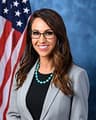 Lauren Boebert
Republican · Colorado
 Andy Biggs
Republican · Arizona
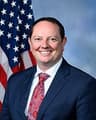 Eric Burlison
Republican · Missouri
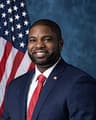 Byron Donalds
Republican · Florida
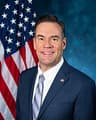 Russ Fulcher
Republican · Idaho
 Clay Higgins
Republican · Louisiana
 Mark Harris
Republican · North Carolina
 Mary Miller
Republican · Illinois