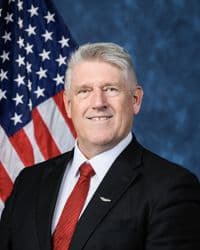

Troy Downing

Troy Downing

Republican · U.S. Representative for Montana's 2nd district

27 sponsored · 182 cosponsored

Age 59 · In office since 2025

Contact their office: (202) 225-3211 · 1529 Longworth House Office Building, Washington, DC 20515 · Official website

What they got done

Most bills never get a vote. These are the ones they wrote or backed that got somewhere.

Became law (6)

And 3 more on their Sponsored and Cosponsored pages.

Passed Congress — the President's turn (1)

Both chambers passed it. The President signs it into law or vetoes it, and a veto stands unless two-thirds of each chamber vote to pass it anyway. Everything Congress has sent the President →

  • Troy Downing (R-MT)

    Their bill

    Expanding Access to Capital for Rural Job Creators Act

    H.R. 1190 Finance and Financial Sector

    A Republican bill with 3 Democratic cosponsors.

    Passed both chambers

    With no one objecting, no names recorded

    H.R. 1190 is known as the Expanding Access to Capital for Rural Job Creators Act. This bill amends the Securities Exchange Act of 1934. The main goal is to expand access to capital for rural-area small businesses.

    Yes· 2 of 6

    • Scored +7

      Would business owners be better off under this?

      The bill directly expands capital access opportunities for small business owners.

    • Scored +7

      Does this make it easier to run a small business?

      The bill specifically targets small businesses to help them access more capital.

    No question was scored the opposite.

Passed one chamber, waiting on the other (28)

Halfway: the other chamber has to pass the same text before it can go to the President.

  • Troy Downing (R-MT)

    Their bill

    SBA Fraud Enforcement Extension Act

    H.R. 4495 Commerce

    A Republican bill with 2 Democratic cosponsors.

    Passed the House

    By voice vote, no names recorded

    Now: in the queue for a floor vote, with no date set · Dec 2

    This bill aims to extend the statute of limitations for fraud related to specific pandemic programs. It focuses on Shuttered Venue Operators and the Restaurant Revitalization program.

    Yes

    • Scored +3

      Does this make the government pay for what it commits to?

      Extending the statute of limitations allows for better enforcement and recovery of fraudulent grant funds.

    • Scored +3

      Does this reduce what the federal government spends?

      The act provides a longer window for the government to recover funds lost to fraud in pandemic relief programs.

    The opposite

    • Scored -3

      Would business owners be better off under this?

      Business owners participating in these programs face a longer window of potential legal liability for fraud.

    • Scored -2

      Does this protect the right to fair treatment by the courts?

      The bill extends the period during which individuals can be held liable for past actions, potentially impacting legal certainty.

  • Gus Bilirakis (R-FL)

    Cosponsored

    Major Richard Star Act

    H.R. 2102 Armed Forces and National Security

    A Republican bill with 207 Democratic cosponsors. See the voting map.

    Passed the House

    39218

    Now: handed to a committee to examine — Committee on Armed Services · Nov 12

    This bill changes the rules to allow certain military retirees to receive both veterans' disability compensation and retired pay at the same time.

    Yes· 2 of 3

    • Scored +8

      Would veterans be better off under this, taking everything together?

      This bill provides significant financial relief to veterans with combat-related disabilities by allowing them to receive both retired pay and disability compensation concurrently.

    • Scored +7

      Does this increase the pay, pensions or support veterans receive?

      The bill increases financial benefits for veterans with combat-related disabilities by allowing concurrent receipt of retired pay and disability compensation.

    No question was scored the opposite.

  • Zachary Nunn (R-IA)

    Cosponsored

    GUARD Act

    H.R. 2978 Crime and Law Enforcement

    A Republican bill with 24 Democratic cosponsors. See the voting map.

    Passed the House

    The House voted 414–7 on Sep 16.

    414–7

    Now: in the queue for a floor vote, with no date set · Sep 16

    This bill allows State, local, and Tribal law enforcement agencies that receive certain Federal grant funds to use that money to investigate elder financial fraud, pig butchering, and general financial fraud.

    Yes· 2 of 21

    • Scored +9

      Would people over 65 be better off under this?

      The bill specifically prioritizes the investigation of elder financial fraud to protect seniors.

    • Scored +9

      Would retired people be better off under this?

      Directly aims to protect retirees from deception and financial fraud.

    No question was scored the opposite.

And 25 more on their Sponsored and Cosponsored pages.

Still waiting, of the 27 bills they wrote: 3 cleared committee and wait for a first vote, 20 are in committee. Committee is where most bills end, whoever writes them — silence there, not a vote, is the usual way a bill dies.

What their bills would do

Every bill is scored against plain yes-or-no questions. These count their bills — the ones they wrote and the ones they cosponsored — by how each question was answered: yes, or the opposite. Open one to see those bills, where each stands, and why it was scored that way. Scores are made by AI ().

Who their bills would affect

What else they would change

How they voted lately

Their latest votes that decided something, and what each measure would do.

  • U.S. House · Nov 12, 2026

    Major Richard Star Act

    The vote on whether to pass the bill This is the real decision in this chamber. Passing here sends the bill to the other chamber, which must pass it too before it can go to the President.

    Their vote Yea

    This bill changes the rules to allow certain military retirees to receive both veterans' disability compensation and retired pay at the same time.

    • Scored +8

      Would veterans be better off under this, taking everything together?

      This bill provides significant financial relief to veterans with combat-related disabilities by allowing them to receive both retired pay and disability compensation concurrently.

  • U.S. House · Nov 12, 2026

    Providing for consideration of the bill (H.R. 2102) to amend title 10, United States Code, to provide for concurrent receipt of veterans' disability compensation and retired pay for disability retirees with combat-related disabilities, and for other purposes.

    The vote on whether to adopt the resolution A resolution is one chamber speaking for itself — setting its own rules, taking a position, honouring someone — and it never goes to the President. Agreeing to it is the whole decision.

    Their vote Nay

    H. Res. 1247 sets the rules for how the House of Representatives will consider the bill H.R. 2102, which is also known as the "Major Richard Star Act."

    • Scored +7

      Would people with disabilities be better off under this?

      The bill provides increased financial compensation for service-connected disabilities.

  • U.S. House · Nov 11, 2026

    Retirement Fairness for Charities and Educational Institutions Act of 2025

    The vote on whether to pass the bill This is the real decision in this chamber. Passing here sends the bill to the other chamber, which must pass it too before it can go to the President.

    Their vote Yea

    This bill amends Federal securities laws to enhance 403(b) retirement plans. The changes affect laws such as the Investment Company Act of 1940, the Securities Act of 1933, and the Securities Exchange Act of 1934.

    • Scored +5

      Does this give people more protection from unfair business practices?

      The bill enhances consumer protection by establishing fiduciary responsibilities for employers managing 403(b) investment options.

Every vote they cast, and how often they missed one →

On the President’s vetoes

A vetoed bill becomes law only if two-thirds of both chambers pass it again. The President can refuse to sign a bill both chambers passed. It becomes law anyway only if two-thirds of the House and two-thirds of the Senate vote to pass it again. A vote against the veto (a Yea) was a vote to make the bill law over the President’s objection; a vote for it (a Nay) was a vote to let the veto stand.

How busy they have been

How many bills they have put their name to over time — volume, not results: most bills never get a vote.

Legislative activity over time