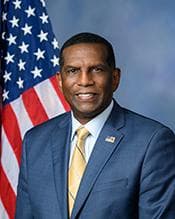
Burgess Owens

Burgess Owens

Republican · U.S. Representative for Utah's 4th district

28 sponsored · 285 cosponsored

Age 75 · In office since 2021

Contact their office: (202) 225-3011 · 309 Cannon House Office Building, Washington, DC 20515 · Official website

What they got done

Most bills never get a vote. These are the ones they wrote or backed that got somewhere.

Became law (3)

  • Russell Fry (R-SC)

    Cosponsored

    Trafficking Survivors Relief Act

    H.R. 4323 Crime and Law Enforcement

    A Republican bill with 8 Democratic cosponsors.

    Became law

    This bill aims to provide relief for individuals who committed crimes as a direct result of being victims of human trafficking.

    Yes· 2 of 3

    • Scored +8

      Does this shorten or soften prison sentences?

      The bill allows for vacating convictions, expunging arrests, and reducing sentences for victims of trafficking.

    • Scored +7

      Does this protect the right to fair treatment by the courts?

      The bill provides mechanisms for individuals to challenge convictions and expunge records based on trafficking victimization.

    No question was scored the opposite.
  • Pete Stauber (R-MN)

    Cosponsored

    Miracle on Ice Congressional Gold Medal Act

    H.R. 452 Sports and Recreation

    A Republican bill with 107 Democratic cosponsors.

    Became law

    This Act authorizes the award of 3 Congressional Gold Medals to the members of the 1980 U.S. Olympic Men's Ice Hockey Team. The medals recognize the team's victory over the Soviet Union during the 1980 Winter Olympics.

    Yes

    • Scored +1

      Is this likely to grow the economy?

      The sale of duplicate bronze medals provides a small influx of revenue to the United States Mint Public Enterprise Fund.

    No question was scored the opposite.

  • Celeste Maloy (R-UT)

    Cosponsored

    Providing for congressional disapproval under chapter 8 of title 5, United States Code, of the rule submitted by the National Park Service relating to "Glen Canyon National Recreation Area: Motor Vehicles".

    H.J.Res. 60 Public Lands and Natural Resources

    A Republican resolution with 3 Republican cosponsors. See the voting map.

    Became law

    The Senate voted 50–43 on May 8.

    This is a joint resolution from the 119th Congress. It focuses on a rule submitted by the National Park Service regarding motor vehicles at the Glen Canyon National Recreation Area.

    Yes

    • Scored +5

      Does this better protect air, water and wildlife?

      The resolution stops a National Park Service rule regarding motor vehicles, which likely favors access over strict environmental preservation.

    The opposite

    • Scored -5

      Does this give the federal government more power?

      The resolution uses congressional authority to restrict the regulatory power of a federal agency (National Park Service).

    • Scored -3

      Does this better protect public land such as parks and forests?

      By nullifying a National Park Service rule, the resolution may reduce regulated management of motor vehicle use on public lands.

Passed one chamber, waiting on the other (33)

Halfway: the other chamber has to pass the same text before it can go to the President.

  • Burgess Owens (R-UT)

    Their bill

    No Aid for Ghost Students Act of 2026

    H.R. 7892 Education

    A Republican bill with 4 Republican cosponsors. See the voting map.

    Passed the House

    249172

    Now: handed to a committee to examine — Committee on Health, Education, Labor, and Pensions · Jun 11

    This bill directs the Secretary of Education to implement an identity fraud detection system for FAFSA applications.

    Yes

    • Scored +2

      Does this make what the government does easier for the public to see?

      The bill requires the Secretary to submit annual reports and descriptions of the identity fraud detection system to Congress.

    • Scored +1

      Does this give people more control over their personal data?

      The bill implements advanced identity verification standards to protect the integrity of student data and prevent fraud.

    The opposite· 2 of 4

    • Scored -3

      Would households on low incomes be better off under this?

      The requirement for intensive, potentially in-person or live audiovisual verification may create additional barriers for low-income students seeking financial aid.

    • Scored -2

      Would people in their twenties and thirties be better off under this?

      Young adults applying for financial aid may face increased bureaucratic burdens and delays in receiving funds due to new verification mandates.

  • Gus Bilirakis (R-FL)

    Cosponsored

    Major Richard Star Act

    H.R. 2102 Armed Forces and National Security

    A Republican bill with 207 Democratic cosponsors. See the voting map.

    Passed the House

    39218

    Now: handed to a committee to examine — Committee on Armed Services · Nov 12

    This bill changes the rules to allow certain military retirees to receive both veterans' disability compensation and retired pay at the same time.

    Yes· 2 of 3

    • Scored +8

      Would veterans be better off under this, taking everything together?

      This bill provides significant financial relief to veterans with combat-related disabilities by allowing them to receive both retired pay and disability compensation concurrently.

    • Scored +7

      Does this increase the pay, pensions or support veterans receive?

      The bill increases financial benefits for veterans with combat-related disabilities by allowing concurrent receipt of retired pay and disability compensation.

    No question was scored the opposite.

  • Zachary Nunn (R-IA)

    Cosponsored

    GUARD Act

    H.R. 2978 Crime and Law Enforcement

    A Republican bill with 24 Democratic cosponsors. See the voting map.

    Passed the House

    The House voted 414–7 on Sep 16.

    414–7

    Now: in the queue for a floor vote, with no date set · Sep 16

    This bill allows State, local, and Tribal law enforcement agencies that receive certain Federal grant funds to use that money to investigate elder financial fraud, pig butchering, and general financial fraud.

    Yes· 2 of 21

    • Scored +9

      Would people over 65 be better off under this?

      The bill specifically prioritizes the investigation of elder financial fraud to protect seniors.

    • Scored +9

      Would retired people be better off under this?

      Directly aims to protect retirees from deception and financial fraud.

    No question was scored the opposite.

And 30 more on their Sponsored and Cosponsored pages.

Still waiting, of the 28 bills they wrote: 5 cleared committee and wait for a first vote, 22 are in committee. Committee is where most bills end, whoever writes them — silence there, not a vote, is the usual way a bill dies.

What their bills would do

Every bill is scored against plain yes-or-no questions. These count their bills — the ones they wrote and the ones they cosponsored — by how each question was answered: yes, or the opposite. Open one to see those bills, where each stands, and why it was scored that way. Scores are made by AI ().

Who their bills would affect

What else they would change

How they voted lately

Their latest votes that decided something, and what each measure would do.

  • U.S. House · Nov 12, 2026

    Major Richard Star Act

    The vote on whether to pass the bill This is the real decision in this chamber. Passing here sends the bill to the other chamber, which must pass it too before it can go to the President.

    Their vote Yea

    This bill changes the rules to allow certain military retirees to receive both veterans' disability compensation and retired pay at the same time.

    • Scored +8

      Would veterans be better off under this, taking everything together?

      This bill provides significant financial relief to veterans with combat-related disabilities by allowing them to receive both retired pay and disability compensation concurrently.

  • U.S. House · Nov 12, 2026

    Providing for consideration of the bill (H.R. 2102) to amend title 10, United States Code, to provide for concurrent receipt of veterans' disability compensation and retired pay for disability retirees with combat-related disabilities, and for other purposes.

    The vote on whether to adopt the resolution A resolution is one chamber speaking for itself — setting its own rules, taking a position, honouring someone — and it never goes to the President. Agreeing to it is the whole decision.

    Their vote Not Voting

    H. Res. 1247 sets the rules for how the House of Representatives will consider the bill H.R. 2102, which is also known as the "Major Richard Star Act."

    • Scored +7

      Would people with disabilities be better off under this?

      The bill provides increased financial compensation for service-connected disabilities.

  • U.S. House · Nov 11, 2026

    Retirement Fairness for Charities and Educational Institutions Act of 2025

    The vote on whether to pass the bill This is the real decision in this chamber. Passing here sends the bill to the other chamber, which must pass it too before it can go to the President.

    Their vote Yea

    This bill amends Federal securities laws to enhance 403(b) retirement plans. The changes affect laws such as the Investment Company Act of 1940, the Securities Act of 1933, and the Securities Exchange Act of 1934.

    • Scored +5

      Does this give people more protection from unfair business practices?

      The bill enhances consumer protection by establishing fiduciary responsibilities for employers managing 403(b) investment options.

Every vote they cast, and how often they missed one →

On the President’s vetoes

A vetoed bill becomes law only if two-thirds of both chambers pass it again. The President can refuse to sign a bill both chambers passed. It becomes law anyway only if two-thirds of the House and two-thirds of the Senate vote to pass it again. A vote against the veto (a Yea) was a vote to make the bill law over the President’s objection; a vote for it (a Nay) was a vote to let the veto stand.

How busy they have been

How many bills they have put their name to over time — volume, not results: most bills never get a vote.

Legislative activity over time