
A Republican bill with 14 Democratic cosponsors · See all 31 cosponsors
Last activity — Read twice and referred to the Committee on Appropriations.
In committee
Introduced and handed to a committee in the chamber it started in.
The committee holds it, and most bills are never heard from again. A hearing or a committee vote would be news; silence is the usual outcome, and it kills the bill without anyone voting against it.
Its path through Congress
- Introduced
- In Committee
What this bill would do
This bill is called the ``Keep SNAP Funded Act of 2025''. Its main job is to provide funding to keep the supplemental nutrition assistance program running without any interruptions. It covers fiscal year 2026 whenever regular funding for the Department of Agriculture has not been passed yet. The bill also pays for any missed benefits that happened between September 30, 2025, and the date the bill is enacted. This funding will stop as soon as regular appropriations for the Department of Agriculture for fiscal year 2026 become law.
Yes· 3 of 27
- Scored +9
Would households on low incomes be better off under this?
Provides essential, uninterrupted food assistance to low-income households relying on SNAP.
- Scored +8
Would children be better off under this?
Many SNAP beneficiaries are children who rely on consistent household food assistance.
- Scored +8
Is this likely to lift people out of poverty?
The bill directly prevents interruptions in vital food assistance for low-income individuals and families.
The opposite
- Scored -2
Does this reduce what the federal government spends?
The bill appropriates additional funds to ensure uninterrupted SNAP benefits during funding gaps.
Who it would affect, and how
Potential Positive Impacts for People
-
Uninterrupted SNAP Benefits: Section 2(a) provides necessary funds to the Secretary of Agriculture to ensure uninterrupted benefits under the supplemental nutrition assistance program during fiscal year 2026 when regular appropriations have not been enacted. This is a positive for people who rely on these food benefits because it keeps assistance flowing without pauses.
-
Retroactive Benefit Payments: Section 2(b) includes amounts needed to pay for any missed benefits from the period starting September 30, 2025, until the date the Act is enacted. This helps individuals by making sure they receive money they missed out on due to funding gaps.
Potential Negative Impacts for People
- No Negative Impacts Found: Based strictly on the provided text, there are no specific sections or provisions identified that create negative consequences or burdens for individuals or groups.
Groups and Interests Ranking
Every group the model scored this bill for, from -10 to +10. Tap or hover a score for the reason it gave.
- Demographic And Interest Groups
- Would households on low incomes be better off under this? — Provides essential, uninterrupted food assistance to low-income households relying on SNAP. Would children be better off under this? — Many SNAP beneficiaries are children who rely on consistent household food assistance. Would people with disabilities be better off under this? — Many individuals with disabilities rely on SNAP for essential nutrition and are protected from benefit lapses. Would people over 65 be better off under this? — Many elderly individuals rely on SNAP benefits to meet daily nutritional needs. Would people in middle age be better off under this? — Middle-aged individuals and families facing financial strain receive stable food support. Would retired people be better off under this? — Retired individuals living on fixed low incomes benefit from reliable food assistance. Would women be better off under this? — Women, particularly single mothers heading low-income households, heavily benefit from stable food assistance. Would people in their twenties and thirties be better off under this? — Young adults facing economic hardship benefit from uninterrupted nutrition assistance. Would Black Americans be better off under this? — Provides proportional support to minority communities with higher rates of food insecurity. Would Hispanic Americans be better off under this? — Provides proportional support to Hispanic communities utilizing nutrition assistance programs. Would men be better off under this? — Low-income men facing food insecurity benefit from continuous program funding. Would Native Americans be better off under this? — Supports Native American populations experiencing higher rates of food insecurity. Would people in rural areas be better off under this? — Rural residents relying on nutrition assistance programs receive stable, uninterrupted support. Would people in cities be better off under this? — Urban populations with high concentrations of SNAP participants benefit from uninterrupted aid. Would veterans be better off under this, taking everything together? — Low-income veterans who rely on SNAP receive guaranteed uninterrupted benefits. Would farmers be better off under this? — Continued SNAP funding maintains steady demand for agricultural commodities and food products. Would students be better off under this? — Low-income students and student households benefit from continuous nutritional support. Would Asian Americans be better off under this? — Supports Asian American households that qualify for and rely on SNAP. Would business owners be better off under this? — Food retailers benefit from continuous consumer purchasing power provided by SNAP. Would immigrants be better off under this? — Eligible immigrant households receiving SNAP benefits are protected against funding interruptions. Would LGBTQ people be better off under this? — LGBTQ individuals experiencing disproportionate poverty rates benefit from secure food assistance. Would white Americans be better off under this? — Supports low-income white households receiving SNAP benefits.
- Social Issues And Justice
- Is this likely to lift people out of poverty? — The bill directly prevents interruptions in vital food assistance for low-income individuals and families. Is this likely to reduce homelessness? — Providing reliable food assistance helps stabilize low-income households at risk of housing instability.
- Economy And Finance
- Is this likely to grow the economy? — Ensuring continuous funding for SNAP supports baseline consumer spending on food among low-income households. Does this make it easier to run a small business? — Continued SNAP funding ensures that grocery stores and authorized food retailers maintain consistent customer purchasing power. Does this reduce what the federal government spends? — The bill appropriates additional funds to ensure uninterrupted SNAP benefits during funding gaps.
- Governance And Ideology
- Does this give the federal government more power? — The legislation exercises federal authority to continuously fund a federal nutrition program during appropriations lapses.
- 11/3/2025
- 2 Cosponsors added.
- 10/29/2025
- 15 Cosponsors added.
- 10/28/2025
- 3 Cosponsors added.
- 10/27/2025
- 10 Cosponsors added.
- 10/22/2025
- 1 Cosponsor added.
- 10/21/2025
- Read twice and referred to the Committee on Appropriations.
- Introduced in Senate
3 bills Congress.gov lists as related to this one — companions in the other chamber, earlier versions, and bills this one absorbed or was folded into.
 Marsha Blackburn
Republican · Tennessee
 Cory Booker
Democrat · New Jersey
 Katie Britt
Republican · Alabama
 Susan Collins
Republican · Maine
 Shelley Capito
Republican · West Virginia
 John Cornyn
Republican · Texas
 Bill Cassidy
Republican · Louisiana
 Kevin Cramer
Republican · North Dakota
 Catherine Cortez Masto
Democrat · Nevada
 Ruben Gallego
Democrat · Arizona
 Martin Heinrich
Democrat · New Mexico
 Maggie Hassan
Democrat · New Hampshire
 Jon Husted
Republican · Ohio
 Amy Klobuchar
Democrat · Minnesota
 Angus King
Independent · Maine
 Andy Kim
Democrat · New Jersey
 Ben Luján
Democrat · New Mexico
 Cynthia Lummis
Republican · Wyoming
 James Lankford
Republican · Oklahoma
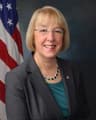 Patty Murray
Democrat · Washington
 Lisa Murkowski
Republican · Alaska
 Roger Marshall
Republican · Kansas
 Bernie Moreno
Republican · Ohio
 David McCormick
Republican · Pennsylvania
 Gary Peters
Democrat · Michigan
 Bernie Sanders
Independent · Vermont
 Charles Schumer
Democrat · New York
 Dan Sullivan
Republican · Alaska
 Raphael Warnock
Democrat · Georgia
 Peter Welch
Democrat · Vermont
 Elizabeth Warren
Democrat · Massachusetts