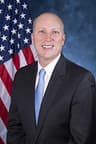
A Republican bill with 44 Republican cosponsors · See all 44 cosponsors
Last activity — Ordered to be Reported in the Nature of a Substitute by the Yeas and Nays: 13 - 10.
Introduced, nothing more yet
Formally proposed, and not yet handed to a committee.
Nearly every bill is sent to a committee within days. Introduction alone is not a sign of support, of momentum, or of any likelihood of passing — any member may introduce any bill.
Its path through Congress
- Introduced
What this bill would do
This bill is called the "FACE Act Repeal Act of 2025". Its main purpose is to repeal section 248 of title 18, United States Code, which relates to prohibitions on freedom of access to clinic entrances. The bill also removes the corresponding item from the table of sections for chapter 13 of title 18. These changes would apply to any prosecution of an offense that is pending or starts on or after the date the Act is enacted.
Yes· 3 of 5
- Scored +8
Does this leave more decisions to the states?
Repealing the federal law returns the authority to regulate clinic access exclusively to state and local jurisdictions.
- Scored +6
Does this protect the freedom to practise a religion?
The repeal allows for more unrestricted protest activities, which often include religious demonstrations at clinics.
- Scored +6
Does this protect what people are allowed to say in public life?
Repealing the FACE Act removes federal penalties for certain types of protests at clinic entrances, expanding expressive activity.
The opposite· 3 of 9
- Scored -8
Does this give the federal government more power?
The bill explicitly reduces federal power by repealing a federal criminal statute.
- Scored -7
Does this make abortion easier to get?
Repealing the FACE Act removes legal protections against blocking access to clinics that provide abortions.
- Scored -6
Would women be better off under this?
The repeal may lead to increased obstruction of access to women's reproductive health clinics.
Who it would affect, and how
Potential Positive Impacts for People
- Repeal of Section 248: By repealing the prohibitions relating to freedom of access to clinic entrances, this bill removes the specific legal restrictions found in section 248 of title 18, United States Code.
Potential Negative Impacts for People
- Repeal of Section 248: The repeal of this section removes the legal prohibitions that protect the freedom of access to clinic entrances.
Groups and Interests Ranking
Every group the model scored this bill for, from -10 to +10. Tap or hover a score for the reason it gave.
- Demographic And Interest Groups
- Would women be better off under this? — The repeal may lead to increased obstruction of access to women's reproductive health clinics. Would households on low incomes be better off under this? — Low income individuals relying on specific clinics may face greater difficulty in accessing services. Would people with disabilities be better off under this? — Those with mobility issues are disproportionately affected by physical obstructions at clinic entrances. Would LGBTQ people be better off under this? — LGBTQ individuals accessing gender-affirming care at clinics may face increased obstruction. Would people in their twenties and thirties be better off under this? — Young adults seeking reproductive healthcare may face increased barriers to access.
- Healthcare
- Does this make abortion easier to get? — Repealing the FACE Act removes legal protections against blocking access to clinics that provide abortions. Does this make health care easier to get in general? — The repeal of protections for clinic entrances may hinder patients' physical access to healthcare services.
- Social Issues And Justice
- Does this protect what people are allowed to say in public life? — Repealing the FACE Act removes federal penalties for certain types of protests at clinic entrances, expanding expressive activity. Does this protect the freedom to practise a religion? — The repeal allows for more unrestricted protest activities, which often include religious demonstrations at clinics. Does this shorten or soften prison sentences? — Repealing a federal criminal statute reduces the number of federal offenses and associated prosecutions. Does this narrow the gap between how men and women are treated? — Reducing access to reproductive health clinics negatively impacts gender-specific healthcare equality.
- Governance And Ideology
- Does this leave more decisions to the states? — Repealing the federal law returns the authority to regulate clinic access exclusively to state and local jurisdictions. Does this protect the individual right to speak freely? — Removes federal criminal penalties for activities near clinic entrances that may be considered speech or assembly. Does this give the federal government more power? — The bill explicitly reduces federal power by repealing a federal criminal statute.
- 9/14/2026
- 1 Cosponsor added.
- 8/27/2026
- 1 Cosponsor added.
- 12/17/2025
- 1 Cosponsor added.
- 9/15/2025
- 1 Cosponsor added.
- 7/21/2025
- 1 Cosponsor added.
- 7/16/2025
- 1 Cosponsor added.
- 6/10/2025
- Committee Consideration and Mark-up Session Held
- Ordered to be Reported in the Nature of a Substitute by the Yeas and Nays: 13 - 10.
- 4/29/2025
- 1 Cosponsor added.
- 4/8/2025
- 2 Cosponsors added.
- 4/7/2025
- 1 Cosponsor added.
- 3/26/2025
- 1 Cosponsor added.
- 3/11/2025
- 1 Cosponsor added.
- 1/31/2025
- 1 Cosponsor added.
- 1/28/2025
- 3 Cosponsors added.
- 1/23/2025
- 3 Cosponsors added.
- 1/21/2025
- Referred to the House Committee on the Judiciary.
- 25 Cosponsors added.
- Introduced in House
One bill Congress.gov lists as related to this one — companions in the other chamber, earlier versions, and bills this one absorbed or was folded into.
 Lauren Boebert
Republican · Colorado
 Andy Biggs
Republican · Arizona
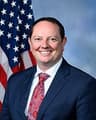 Eric Burlison
Republican · Missouri
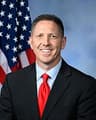 Josh Brecheen
Republican · Oklahoma
 Sheri Biggs
Republican · South Carolina
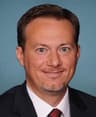 Michael Cloud
Republican · Texas
 Andrew Clyde
Republican · Georgia
 Ben Cline
Republican · Virginia
 Dan Crenshaw
Republican · Texas
 Elijah Crane
Republican · Arizona
 Warren Davidson
Republican · Ohio
 Troy Downing
Republican · Montana
 Charles Fleischmann
Republican · Tennessee
 Russ Fulcher
Republican · Idaho
 Paul Gosar
Republican · Arizona
 Glenn Grothman
Republican · Wisconsin
 Mark Green
Republican · Tennessee
 Marjorie Greene
Republican · Georgia
 Brandon Gill
Republican · Texas
 Andy Harris
Republican · Maryland
 Clay Higgins
Republican · Louisiana
 Diana Harshbarger
Republican · Tennessee
 Harriet Hageman
Republican · Wyoming
 Pat Harrigan
Republican · North Carolina
 Mark Harris
Republican · North Carolina
 Doug LaMalfa
Republican · California
 Anna Paulina Luna
Republican · Florida
 Nicholas Langworthy
Republican · New York
 Mary Miller
Republican · Illinois
 Barry Moore
Republican · Alabama
 Nathaniel Moran
Republican · Texas
 Riley Moore
Republican · West Virginia
 Burgess Owens
Republican · Utah
 Andrew Ogles
Republican · Tennessee
 Robert Onder
Republican · Missouri
 John Rutherford
Republican · Florida
 Christopher Smith
Republican · New Jersey
 Adrian Smith
Republican · Nebraska
 Austin Scott
Republican · Georgia
 Pete Stauber
Republican · Minnesota
 Keith Self
Republican · Texas
 David Taylor
Republican · Ohio
 Daniel Webster
Republican · Florida
 Randy Weber
Republican · Texas