
Timothy Kaine (D-VA)
A resolution supporting the goals and ideals of "Career and Technical Education Month".
A Democratic resolution with 19 Republican cosponsors · See all 48 cosponsors
Last activity — Submitted in the Senate, considered, and agreed to without amendment and with a preamble by Unanimous Consent. (consideration: CR S716; text: CR S710)
Adopted
The chamber formally agreed to it, and for a resolution that is the finish line: what it says is now officially the chamber's position, rule or tribute.
Nothing more is needed. A resolution is how a chamber speaks for itself or sets its own rules, so adopting it is what puts it into effect. It is not a law, so there is nothing for the President to sign.
Its path through Congress
- Introduced
- Officially Recorded
- Adopted by the Senate unanimous consent
A Senate resolution is the Senate speaking for itself: stating a position, honouring someone, or setting its own rules. Adopting it is the whole process. Once the Senate agrees to it, it is officially the Senate's word; it is not a law, so the House and the President have no part in it.
The Senate by unanimous consent (no one objected, so there was no vote): no senator's position on it was recorded.
What this bill would do
This Senate resolution supports the designation of February 2026 as "Career and Technical Education Month." It aims to celebrate career and technical education across the United States and support its specific goals and ideals. The resolution recognizes how important this education is for preparing a skilled and well-educated workforce. Additionally, it encourages various professionals, including educators and parents, to promote these programs as a respected educational pathway.
Yes· 3 of 6
- Scored +5
Would students be better off under this?
The resolution explicitly aims to support the academic and career benefits of CTE for students.
- Scored +4
Would people in their twenties and thirties be better off under this?
CTE programs provide essential skills and pathways for students and adult learners entering the workforce.
- Scored +3
Would business owners be better off under this?
The resolution notes that employers find CTE programs beneficial to their bottom line.
The opposite
No question was scored the opposite.
Who it would affect, and how
Potential Positive Impacts for People
-
Workforce Readiness: The resolution notes that career and technical education (CTE) ensures a competitive and skilled workforce is ready and capable of holding jobs in high-wage, high-skill, and in-demand career fields.
-
Academic and Career Benefits for Students: According to the text, secondary CTE has statistically significant positive impacts on academic achievement, high school completion, employability skills, and college readiness.
-
Skill and Credential Acquisition: CTE provides students and adult learners with the opportunity to cultivate knowledge and skills to earn credentials that lead to careers in growing, high-demand fields.
-
Economic Alignment: The text states that CTE aligns with labor market demand and provides relevant coursework and employability skills.
Potential Negative Impacts for People
- No negative impacts are mentioned in the text.
Groups and Interests Ranking
Every group the model scored this bill for, from -10 to +10. Tap or hover a score for the reason it gave.
- Demographic And Interest Groups
- Would students be better off under this? — The resolution explicitly aims to support the academic and career benefits of CTE for students. Would people in their twenties and thirties be better off under this? — CTE programs provide essential skills and pathways for students and adult learners entering the workforce. Would business owners be better off under this? — The resolution notes that employers find CTE programs beneficial to their bottom line. Would households on low incomes be better off under this? — Access to technical training can facilitate movement into high-wage, in-demand careers.
- Economy And Finance
- Is this likely to grow the economy? — By fostering a skilled workforce, the resolution supports long-term economic competitiveness. Is this likely to create jobs? — The resolution supports training that prepares a workforce for high-demand, growing career fields.
- 2/26/2026
- Passed/agreed to in Senate: Submitted in the Senate, considered, and agreed to without amendment and with a preamble by Unanimous Consent.
- Submitted in the Senate, considered, and agreed to without amendment and with a preamble by Unanimous Consent. (consideration: CR S716; text: CR S710)
- 48 Cosponsors added.
- Bill introduced.
3 bills Congress.gov lists as related to this one — companions in the other chamber, earlier versions, and bills this one absorbed or was folded into.
 Tammy Baldwin
Democrat · Wisconsin
 John Barrasso
Republican · Wyoming
 Michael Bennet
Democrat · Colorado
 Richard Blumenthal
Democrat · Connecticut
 Cory Booker
Democrat · New Jersey
 Lisa Blunt Rochester
Democrat · Delaware
 Ted Budd
Republican · North Carolina
 Katie Britt
Republican · Alabama
 Maria Cantwell
Democrat · Washington
 Mike Crapo
Republican · Idaho
 Bill Cassidy
Republican · Louisiana
 Christopher Coons
Democrat · Delaware
 Kevin Cramer
Republican · North Dakota
 Catherine Cortez Masto
Democrat · Nevada
 Richard Durbin
Democrat · Illinois
 Steve Daines
Republican · Montana
 Chuck Grassley
Republican · Iowa
 John Hickenlooper
Democrat · Colorado
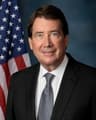 Bill Hagerty
Republican · Tennessee
 Mazie Hirono
Democrat · Hawaii
 John Hoeven
Republican · North Dakota
 Maggie Hassan
Democrat · New Hampshire
 Cindy Hyde-Smith
Republican · Mississippi
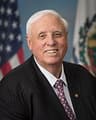 James Justice
Republican · West Virginia
 Amy Klobuchar
Democrat · Minnesota
 Angus King
Independent · Maine
 Ben Luján
Democrat · New Mexico
 Cynthia Lummis
Republican · Wyoming
 James Lankford
Republican · Oklahoma
 Patty Murray
Democrat · Washington
 Jeff Merkley
Democrat · Oregon
 Roger Marshall
Republican · Kansas
 Alex Padilla
Democrat · California
 Gary Peters
Democrat · Michigan
 John Reed
Democrat · Rhode Island
 Jacky Rosen
Democrat · Nevada
 Bernie Sanders
Independent · Vermont
 Adam Schiff
Democrat · California
 Jeanne Shaheen
Democrat · New Hampshire
 Tim Scott
Republican · South Carolina
 Tina Smith
Democrat · Minnesota
 Thomas Tillis
Republican · North Carolina
 Chris Van Hollen
Democrat · Maryland
 Roger Wicker
Republican · Mississippi
 Ron Wyden
Democrat · Oregon
 Sheldon Whitehouse
Democrat · Rhode Island
 Mark Warner
Democrat · Virginia
 Todd Young
Republican · Indiana