
Dan Sullivan (R-AK)
Harmful Algal Bloom and Hypoxia Research and Control Amendments Act of 2025
A Republican bill with 7 Democratic cosponsors · See all 15 cosponsors
Last activity — Held at the desk.
Passed one chamber, waiting for the other to take it up
Passed one chamber, and the other has not yet sent it to a committee or put it on its calendar.
The other chamber will hand it to a committee, place it on its calendar, or leave it where it is. Nothing has been decided, and a bill can sit here indefinitely.
Its path through Congress
- Introduced
- Passed Senate unanimous consent
- Awaiting House
The Senate by unanimous consent (no one objected, so there was no vote): no senator's position on it was recorded.
What this bill would do
This bill updates and amends the Harmful Algal Bloom and Hypoxia Research and Control Act of 1998 to better address harmful algal blooms and low-oxygen water conditions. It requires regular action strategies and scientific assessments from a federal task force that includes the Department of Energy. The legislation directs both the National Oceanic and Atmospheric Administration and the Environmental Protection Agency to carry out specific research, monitoring, and forecasting activities. It establishes a national observing network and a national-level incubator program to find new ways to prevent and control these blooms. Additionally, the bill authorizes specific funding amounts for these federal activities through fiscal year 2030 and allows federal officials to waive certain non-Federal share requirements for financial assistance.
Yes· 3 of 22
- Scored +7
Does this better protect air, water and wildlife?
The bill enhances monitoring, forecasting, and mitigation strategies for marine, estuarine, and freshwater harmful algal blooms and hypoxia.
- Scored +6
Does this put more money into scientific research?
The bill establishes a national observing network and an incubator program to advance technologies for detecting and controlling harmful algal blooms.
- Scored +5
Does this put more money into medical research?
The bill authorizes significant appropriations for federal agencies like NOAA and the EPA to research harmful algal blooms and hypoxia events.
The opposite
- Scored -2
Does this reduce what the federal government spends?
The bill authorizes new appropriations for federal harmful algal bloom and hypoxia research, monitoring, and incubator programs through fiscal year 2030.
Who it would affect, and how
Potential Positive Impacts for People
-
Section 2(b)(4)(H): This provision requires the program to consult closely with groups heavily dependent on water resources, including State and local entities, Indian tribes, island communities, rural communities, and fisheries and recreation industries. This is positive because it ensures that local voices and vulnerable groups have direct input into how water resource issues are handled.
-
Section 2(e)(1): This section establishes a National Harmful Algal Bloom Observing Network by integrating federal, state, regional, and local observing capabilities. This is a positive step for the people because it improves the monitoring, detection, and forecasting of dangerous algal blooms to protect public health.
-
Section 2(f)(1): This provision creates a national-level incubator program that provides merit-based funding for new technologies and strategies to prevent and control harmful algal blooms. It specifically prioritizes projects that protect public health, key wildlife habitats, and low-income communities, Indian tribes, and rural communities, which directly benefits everyday people living in these areas.
-
Section 3(1)(A): This section allows the appropriate federal official to waive non-Federal share requirements for funding recipients if no reasonable means are available to meet them. This is a positive relief for financially strapped local communities and tribes who might otherwise miss out on vital federal assistance due to lack of matching funds.
Potential Negative Impacts for People
- Section 2(h)(1): This provision authorizes the appropriation of $19,500,000 annually to the Under Secretary and $8,000,000 annually to the Administrator for fiscal years 2026 through 2030, alongside other authorized funds. While aimed at tackling environmental issues, committing these specific public funds places a financial burden on taxpayers.
Groups and Interests Ranking
Every group the model scored this bill for, from -10 to +10. Tap or hover a score for the reason it gave.
- Demographic And Interest Groups
- Would Native Americans be better off under this? — The legislation includes provisions specifically consulting and prioritizing Indian tribes, Tribal organizations, and Native Hawaiian organizations. Would people in rural areas be better off under this? — Rural and island communities dependent on water resources receive targeted consultation and priority under the legislation. Would farmers be better off under this? — The bill includes agricultural industry stakeholders in task force consultations and addresses runoff and nutrient management. Would households on low incomes be better off under this? — The legislation specifically prioritizes low-income communities and subsistence users in its mitigation and incubator programs. Would business owners be better off under this? — Commercial fisheries, tourism, and aquaculture businesses benefit from better forecasting, testing access, and bloom mitigation. Would children be better off under this? — Protecting water quality and public health from toxic algae benefits children who frequently recreate in natural waters. Would people in middle age be better off under this? — General population health protection from harmful algal blooms benefits individuals of all working ages. Would middle-income households be better off under this? — Improved water monitoring and environmental protection safeguard recreational water use for middle-class households. Would retired people be better off under this? — Retirees benefit from enhanced public health monitoring and environmental protection around coastal and freshwater bodies. Would people over 65 be better off under this? — Vulnerable populations including seniors benefit from reduced exposure to toxic aerosols and contaminated water. Would people in their twenties and thirties be better off under this? — Improved water safety and recreational access benefit young adults who engage in outdoor and water-based activities.
- Environment Energy And Infrastructure
- Does this better protect air, water and wildlife? — The bill enhances monitoring, forecasting, and mitigation strategies for marine, estuarine, and freshwater harmful algal blooms and hypoxia. Does this invest in rural communities? — The legislation explicitly prioritizes rural communities and local water resource management in combating harmful algal blooms. Does this improve help for people hit by a disaster? — The bill provides authorities to waive non-Federal share matching requirements for financially strapped communities responding to events of national significance. Does this better protect public land such as parks and forests? — The legislation promotes the protection of key wildlife habitats and biodiversity in aquatic and coastal ecosystems.
- Governance And Ideology
- Does this make what the government does easier for the public to see? — The legislation requires regular action strategies, databases, and scientific assessments submitted to Congress. Does this leave more decisions to the states? — The bill emphasizes coordination and consultation with state and local entities, Indian tribes, and regional observing systems. Does this give the federal government more power? — The legislation expands the responsibilities and coordination of federal agencies including NOAA, the EPA, and the Department of Energy.
- Education And Technology
- Does this put more money into scientific research? — The bill establishes a national observing network and an incubator program to advance technologies for detecting and controlling harmful algal blooms.
- Healthcare
- Does this put more money into medical research? — The bill authorizes significant appropriations for federal agencies like NOAA and the EPA to research harmful algal blooms and hypoxia events.
- Economy And Finance
- Does this give people more protection from unfair business practices? — The bill supports food safety and security by improving testing, monitoring, and forecasting of toxic harmful algal blooms. Does this make it easier to run a small business? — The legislation benefits commercial fisheries, aquaculture, and related industries by addressing harmful algal blooms and offering funding opportunities. Does this reduce what the federal government spends? — The bill authorizes new appropriations for federal harmful algal bloom and hypoxia research, monitoring, and incubator programs through fiscal year 2030.
- 9/11/2025
- Message on Senate action sent to the House.
- Held at the desk.
- Received in the House.
- 9/10/2025
- Passed/agreed to in Senate: Passed Senate without amendment and an amendment to the Title by Unanimous Consent.
- Passed Senate without amendment and an amendment to the Title by Unanimous Consent. (consideration: CR S6547-6549; text: CR S6547-6549)
- 7/8/2025
- 1 Cosponsor added.
- 7/1/2025
- Committee on Commerce, Science, and Transportation. Reported by Senator Cruz without amendment and an amendment to the title. With written report No. 119-34.
- Placed on Senate Legislative Calendar under General Orders. Calendar No. 109.
- 5/12/2025
- 2 Cosponsors added.
- 2/5/2025
- Committee on Commerce, Science, and Transportation. Ordered to be reported without amendment favorably.
- 2/4/2025
- 1 Cosponsor added.
- 1/30/2025
- 1 Cosponsor added.
- 1/28/2025
- 3 Cosponsors added.
- 1/22/2025
- 1 Cosponsor added.
- 1/14/2025
- Read twice and referred to the Committee on Commerce, Science, and Transportation.
- 6 Cosponsors added.
- Introduced in Senate
One bill Congress.gov lists as related to this one — companions in the other chamber, earlier versions, and bills this one absorbed or was folded into.
 Tammy Baldwin
Democrat · Wisconsin
 Susan Collins
Republican · Maine
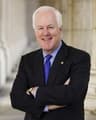 John Cornyn
Republican · Texas
 Bill Cassidy
Republican · Louisiana
 Christopher Coons
Democrat · Delaware
 Angus King
Independent · Maine
 John Kennedy
Republican · Louisiana
 Lisa Murkowski
Republican · Alaska
 Jeff Merkley
Democrat · Oregon
 Bernie Moreno
Republican · Ohio
 Alex Padilla
Democrat · California
 Gary Peters
Democrat · Michigan
 Adam Schiff
Democrat · California
 Roger Wicker
Republican · Mississippi
 Sheldon Whitehouse
Democrat · Rhode Island