
A Republican bill with 29 Republican cosponsors · See all 29 cosponsors
Last activity — Read twice and referred to the Committee on Health, Education, Labor, and Pensions.
In committee
Introduced and handed to a committee in the chamber it started in.
The committee holds it, and most bills are never heard from again. A hearing or a committee vote would be news; silence is the usual outcome, and it kills the bill without anyone voting against it.
Its path through Congress
- Introduced
- In Committee
What this bill would do
This bill is titled the More Opportunities for Moms to Succeed Act or the MOMS Act. It creates a public website called pregnancy.gov to serve as a resource directory for pregnant women, postpartum women, and parents of young children. The legislation requires States to submit lists of licensed child placement agencies to be maintained on the website. It provides grants to support nonprofit organizations that help women carry pregnancies to term and care for their babies after birth. The bill also funds telehealth equipment to improve maternal and infant health care in rural and medically underserved areas. Finally, it amends the Social Security Act to allow for the establishment and enforcement of child support obligations on behalf of unborn children.
Yes· 3 of 32
- Scored +7
Would households on low incomes be better off under this?
Provides free support services, nutritional assistance, and child support enforcement for underserved populations.
- Scored +7
Would people in rural areas be better off under this?
Directly addresses maternal mortality in rural areas through targeted telehealth grants.
- Scored +6
Would Native Americans be better off under this?
Specifically targets grants for telehealth equipment to jurisdictions of Indian Tribes.
The opposite
- Scored -8
Does this make abortion easier to get?
The bill explicitly prohibits entities that perform or refer for abortions from receiving grants or being listed on the resource website.
- Scored -4
Would men be better off under this?
Increases the legal obligation and enforcement of child support starting from conception.
- Scored -2
Does this leave more decisions to the states?
Threatens loss of adoption incentive payments for states that fail to comply with list submissions.
Who it would affect, and how
Potential Positive Impacts for People
-
Section 101 establishes the pregnancy.gov website, which allows users to search for local resources based on their ZIP Code, helping mothers easily find mentorship, health care, financial assistance, and material support.
-
Section 102 creates a national list of licensed child placement agencies on the website, which can help connect prospective adoptive parents with vetted agencies.
-
Section 201 provides grants to eligible nonprofit organizations that offer free services to help women carry pregnancies to term and care for their children, including medical care, housing assistance, and childcare.
-
Section 202 funds the purchase of at-home telehealth equipment for prenatal and postnatal care, which can improve health outcomes and access to care in rural, frontier, and medically underserved areas.
-
Section 301 allows mothers to request and receive child support from the biological father beginning from the month of conception, providing financial assistance during pregnancy if requested.
Potential Negative Impacts for People
-
Section 101, Section 201, and Section 202 explicitly prohibit any entities that perform, induce, refer for, or counsel in favor of abortions from receiving grants or being listed as a relevant resource on the pregnancy.gov website, which excludes certain healthcare providers from participating in these programs.
-
Section 102 penalizes States by causing them to lose eligibility for certain adoption and legal guardianship incentive payments if they fail to submit the required list of private child placement agencies.
Groups and Interests Ranking
Every group the model scored this bill for, from -10 to +10. Tap or hover a score for the reason it gave.
- Demographic And Interest Groups
- Would households on low incomes be better off under this? — Provides free support services, nutritional assistance, and child support enforcement for underserved populations. Would people in rural areas be better off under this? — Directly addresses maternal mortality in rural areas through targeted telehealth grants. Would Native Americans be better off under this? — Specifically targets grants for telehealth equipment to jurisdictions of Indian Tribes. Would women be better off under this? — Significantly increases access to pregnancy resources, telehealth, and child support recovery. Would Black Americans be better off under this? — Targets telehealth and maternal health resources toward medically underserved areas. Would Asian Americans be better off under this? — Requires the pregnancy.gov website to be accessible in languages other than English. Would children be better off under this? — Aims to improve infant health outcomes and secure child support from conception. Would Hispanic Americans be better off under this? — Requires the pregnancy.gov website to be accessible in languages other than English. Would immigrants be better off under this? — Provides multilingual access to critical pregnancy and maternal health resources. Would people in their twenties and thirties be better off under this? — Provides resources and support for young women and parents. Would farmers be better off under this? — Improves healthcare access for those in rural and frontier counties via telehealth. Would people in middle age be better off under this? — Provides support for mothers and families across different age brackets. Would middle-income households be better off under this? — Provides a centralized resource directory for pregnancy and parenting. Would people with disabilities be better off under this? — Lists disability support organizations as a core relevant resource. Would students be better off under this? — Provides referrals for education and employment assistance to help mothers complete high school. Would people in cities be better off under this? — Provides a localized ZIP code-based resource directory. Would white Americans be better off under this? — Provides general resource access for all pregnant and postpartum women. Would men be better off under this? — Increases the legal obligation and enforcement of child support starting from conception.
- Social Issues And Justice
- Does this make child care cost less? — The bill provides referrals and direct services for childcare assistance to pregnant and postpartum women. Is this likely to lift people out of poverty? — Aims to provide financial assistance and child support from conception to reduce the financial burden on mothers. Does this make housing cost less? — Includes housing assistance and maternity homes as relevant resources for expecting mothers. Is this likely to reduce homelessness? — Directs resources toward housing assistance and shelters for pregnant and postpartum women. Does this expand the rights of people with disabilities? — Includes disability support organizations as a relevant resource for prenatal diagnostic services. Does this narrow racial gaps in how people are treated? — Focuses telehealth grants on underserved areas, including jurisdictions of Indian Tribes.
- Education And Technology
- Does this get reliable internet to more people? — Facilitates the use of telehealth equipment, which necessitates and promotes connectivity in underserved areas. Does this give people more control over their personal data? — Requires grant recipients to have privacy policies comparable to HIPAA regulations.
- Governance And Ideology
- Does this make what the government does easier for the public to see? — Creates a public, searchable federal directory of resources and licensed child placement agencies. Does this protect people from being watched or searched? — Mandates that grant-funded organizations protect the identifying information of women seeking services. Does this give the federal government more power? — Establishes a federal resource website and grants managed by the Secretary of HHS. Does this leave more decisions to the states? — Threatens loss of adoption incentive payments for states that fail to comply with list submissions.
- Environment Energy And Infrastructure
- Does this invest in rural communities? — Invests in telehealth infrastructure specifically for rural and frontier counties.
- Healthcare
- Does this make health care easier to get in general? — Provides grants for telehealth equipment to improve prenatal and postnatal care in rural and underserved areas. Does this make mental health care easier to get? — The bill includes recovery and mental health services for women and families as relevant resources on the pregnancy.gov website. Does this do more about addiction and overdose deaths? — The bill lists voluntary substance abuse counseling and treatment as a covered service for referral. Does this make abortion easier to get? — The bill explicitly prohibits entities that perform or refer for abortions from receiving grants or being listed on the resource website.
- 9/22/2026
- 1 Cosponsor added.
- 7/22/2026
- 1 Cosponsor added.
- 6/17/2026
- 1 Cosponsor added.
- 5/21/2026
- 1 Cosponsor added.
- 5/20/2026
- 1 Cosponsor added.
- 5/12/2026
- 1 Cosponsor added.
- 5/12/2025
- 2 Cosponsors added.
- 5/6/2025
- Read twice and referred to the Committee on Health, Education, Labor, and Pensions.
- 21 Cosponsors added.
- Introduced in Senate
4 bills Congress.gov lists as related to this one — companions in the other chamber, earlier versions, and bills this one absorbed or was folded into.
 Marsha Blackburn
Republican · Tennessee
 Jim Banks
Republican · Indiana
 Ted Budd
Republican · North Carolina
 Mike Crapo
Republican · Idaho
 John Cornyn
Republican · Texas
 Kevin Cramer
Republican · North Dakota
 Ted Cruz
Republican · Texas
 Steve Daines
Republican · Montana
 Deb Fischer
Republican · Nebraska
 Lindsey Graham
Republican · South Carolina
 Chuck Grassley
Republican · Iowa
- Darline Graham
Republican · South Carolina
 Cindy Hyde-Smith
Republican · Mississippi
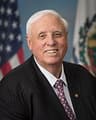 James Justice
Republican · West Virginia
 John Kennedy
Republican · Louisiana
 James Lankford
Republican · Oklahoma
 Jerry Moran
Republican · Kansas
 Roger Marshall
Republican · Kansas
 Bernie Moreno
Republican · Ohio
 David McCormick
Republican · Pennsylvania
 James Risch
Republican · Idaho
 Mike Rounds
Republican · South Dakota
 Pete Ricketts
Republican · Nebraska
 Dan Sullivan
Republican · Alaska
 Eric Schmitt
Republican · Missouri
 Tim Sheehy
Republican · Montana
 Tommy Tuberville
Republican · Alabama
 Thomas Tillis
Republican · North Carolina
 Roger Wicker
Republican · Mississippi