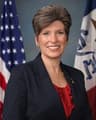
Joni Ernst (R-IA)
Protecting American Taxpayers Act
A Republican bill with 21 Republican cosponsors · See all 21 cosponsors
Last activity — Read the second time. Placed on Senate Legislative Calendar under General Orders. Calendar No. 401.
Cleared committee, waiting for its first floor vote
A committee approved it and it is on the calendar of the chamber it started in.
This is further than most bills get, and still no promise of a vote: the calendar is a queue, and the majority leadership decides what is called. A bill can sit here until the Congress ends.
Its path through Congress
- Introduced
- On Calendar
What this bill would do
The Protecting American Taxpayers Act is a bill designed to combat fraud across various Federal programs. It establishes new measures to prevent fraud in child care, health care, and small business assistance. The legislation also seeks to rescind unused COVID-19 funding and increase oversight of State programs. Additionally, it restricts financial assistance for certain foreign agents and creates strategies to oppose support for the Taliban. Finally, the bill expands whistleblower protections and implements new fraud alert systems to protect taxpayers.
Yes· 3 of 9
- Scored +7
Does this make what the government does easier for the public to see?
The bill requires more detailed reporting on improper payments and federal spending through USAspending.gov.
- Scored +6
Does this make the government pay for what it commits to?
The bill increases transparency by requiring agencies to report and explain improper payment trends.
- Scored +6
Would veterans be better off under this, taking everything together?
The bill creates a dedicated officer to help veterans identify and avoid financial scams.
The opposite· 3 of 9
- Scored -5
Does this send more money or help to other countries?
The bill rescinds various funding streams intended for Afghan reconstruction and security.
- Scored -4
Would households on low incomes be better off under this?
The bill imposes a $100,000 fine on public assistance recipients who conduct remittance transfers.
- Scored -3
Does this make it easier to run a small business?
Small businesses may be ineligible for assistance if an associate is convicted of financial misconduct.
Who it would affect, and how
Potential Positive Impacts for People
-
Improved Oversight of Child Care Services: The bill requires child care providers to maintain attendance records for seven years and mandates that payments be based on actual attendance rather than just enrollment (Sec. 1102).
-
Enhanced Monitoring of Health Care Fraud: It requires the Secretary of Health and Human Services to monitor significant increases in Medicare, Medicaid, and CHIP payments or providers within specific geographic areas to identify potential fraud (Sec. 1103).
-
Protection for Small Businesses: The act aims to assist small businesses by prohibiting financial assistance to those associated with individuals convicted of financial misconduct or false statements regarding covered loans or grants (Sec. 1202).
-
Deficit Reduction: The bill rescinds unused COVID-19 funding and surplus agency salaries/expenses to be used for deficit reduction (Sec. 1402, Sec. 1502).
-
Increased Transparency in Government Spending: It requires the inclusion of improper payment information in the President's budget submission to provide a more detailed explanation of trends and corrective actions (Sec. 2602).
-
Enhanced Protection for Veterans: The creation of a Veterans Scam and Fraud Evasion Officer provides a central point of contact and resources to help veterans identify, report, and avoid fraud and scams (Sec. 3602).
-
Stronger Whistleblower Protections: The bill expands protections for individuals disclosing evidence of gross mismanagement, waste, or abuse of authority within government contracts (Sec. 3702, Sec. 3703).
Potential Negative Impacts for People
-
Restrictions on Small Business Assistance: Small business concerns may be deemed ineligible for financial assistance if an associate is finally convicted of certain crimes involving financial misconduct (Sec. 1202).
-
Loss of Unused Funding: The bill rescinds unobligated balances from various COVID-19 relief programs (Sec. 1402).
-
Financial Restrictions on Foreign Entities: Entities controlled by agents of covered foreign principals will be ineligible to receive direct or indirect financial assistance from the United States (Sec. 2203).
-
Suspension of Foreign Assistance: The Secretary of State is directed to suspend foreign assistance to countries or organizations found to be providing assistance to the Taliban (Sec. 2302).
-
Penalties for Public Assistance Recipients: Individuals receiving public assistance who conduct remittance transfers may be subject to a fine of $100,000 (Sec. 3502).
Groups and Interests Ranking
Every group the model scored this bill for, from -10 to +10. Tap or hover a score for the reason it gave.
- Economy And Finance
- Does this make the government pay for what it commits to? — The bill increases transparency by requiring agencies to report and explain improper payment trends. Does this give people more protection from unfair business practices? — The bill directs the Treasury to report on ways to protect consumers from artificial intelligence-driven fraud. Does this reduce what the federal government owes? — The bill rescinds unused COVID-19 funding and surplus agency salaries to be used for deficit reduction. Does this reduce what the federal government spends? — The bill implements rescissions of unobligated balances from various COVID-19 relief programs. Does this make it easier to run a small business? — Small businesses may be ineligible for assistance if an associate is convicted of financial misconduct.
- Governance And Ideology
- Does this make what the government does easier for the public to see? — The bill requires more detailed reporting on improper payments and federal spending through USAspending.gov. Does this protect people from being watched or searched? — The bill seeks to protect against identity theft through better monitoring of AI-related financial fraud.
- Social Issues And Justice
- Is this likely to lift people out of poverty? — The bill prohibits individuals receiving public assistance from conducting remittance transfers under penalty of a large fine. Does this make child care cost less? — The bill introduces more stringent attendance-based billing and audit requirements for child care providers.
- Healthcare
- Does this make health care easier to get in general? — The bill mandates increased investigations into significant increases in health service payments which may impact service availability. Does this put more money into Medicaid, the health coverage for people on low incomes? — The bill implements increased oversight and investigation requirements for Medicaid payments.
- Demographic And Interest Groups
- Would veterans be better off under this, taking everything together? — The bill creates a dedicated officer to help veterans identify and avoid financial scams. Would households on low incomes be better off under this? — The bill imposes a $100,000 fine on public assistance recipients who conduct remittance transfers. Would business owners be better off under this? — Small business owners may lose eligibility for federal assistance due to the actions of an associate. Would children be better off under this? — The bill implements stricter documentation and audit requirements for child care providers.
- Education And Technology
- Does this give people more control over their personal data? — The bill includes provisions to research and report on protecting consumers from identity theft and deep fake scams.
- National Security And Foreign Policy
- Does this increase the pay, pensions or support veterans receive? — The bill establishes a Veterans Scam and Fraud Evasion Officer to help veterans avoid and report scams. Does this send more money or help to other countries? — The bill rescinds various funding streams intended for Afghan reconstruction and security.
- 7/15/2026
- 2 Cosponsors added.
- 7/14/2026
- 1 Cosponsor added.
- 7/13/2026
- 3 Cosponsors added.
- 6/23/2026
- 1 Cosponsor added.
- 5/18/2026
- 1 Cosponsor added.
- 4/28/2026
- 1 Cosponsor added.
- 4/27/2026
- Read the second time. Placed on Senate Legislative Calendar under General Orders. Calendar No. 401.
- 4/22/2026
- Introduced in the Senate. Read the first time. Placed on Senate Legislative Calendar under Read the First Time.
- 12 Cosponsors added.
- Introduced in Senate
2 bills Congress.gov lists as related to this one — companions in the other chamber, earlier versions, and bills this one absorbed or was folded into.
 John Barrasso
Republican · Wyoming
 Jim Banks
Republican · Indiana
 Ted Budd
Republican · North Carolina
 Katie Britt
Republican · Alabama
 John Cornyn
Republican · Texas
 Kevin Cramer
Republican · North Dakota
 Steve Daines
Republican · Montana
 Chuck Grassley
Republican · Iowa
 Jon Husted
Republican · Ohio
 James Justice
Republican · West Virginia
 John Kennedy
Republican · Louisiana
 Cynthia Lummis
Republican · Wyoming
 James Lankford
Republican · Oklahoma
 Roger Marshall
Republican · Kansas
 Bernie Moreno
Republican · Ohio
 David McCormick
Republican · Pennsylvania
 Ashley Moody
Republican · Florida
 Pete Ricketts
Republican · Nebraska
 Eric Schmitt
Republican · Missouri
 Tim Sheehy
Republican · Montana
 Todd Young
Republican · Indiana