
A Republican bill with 17 Democratic cosponsors · See all 35 cosponsors
Last activity — Read twice and referred to the Committee on Finance.
In committee
Introduced and handed to a committee in the chamber it started in.
The committee holds it, and most bills are never heard from again. A hearing or a committee vote would be news; silence is the usual outcome, and it kills the bill without anyone voting against it.
Its path through Congress
- Introduced
- In Committee
What this bill would do
The "American Innovation and Jobs Act" modifies the Internal Revenue Code of 1986 to provide better tax benefits for research activities. It allows taxpayers to immediately deduct research and experimental expenditures rather than capitalizing them. The bill increases the cap on refundable research credits for new and small businesses over several years. It also extends the eligibility period for certain startups to access these credits. Additionally, it raises the gross receipts threshold for the research credit and creates special rules for qualified small businesses.
Yes· 3 of 16
- Scored +10
Would business owners be better off under this?
Provides direct tax relief, immediate expensing of R&D, and expanded credits.
- Scored +9
Does this make it easier to run a small business?
Significantly expands the refundable research credit cap and extends eligibility for startups.
- Scored +8
Does this cut taxes for small businesses?
Increases refundable credits and provides more favorable percentage rates specifically for qualified small businesses.
The opposite· 3 of 4
- Scored -5
Does this raise the taxes companies pay?
The bill provides significant tax deductions and credits for businesses, effectively reducing the corporate tax burden for eligible entities.
- Scored -3
Does this reduce what the federal government owes?
Increased tax credits and immediate expensing likely reduce federal tax revenue, potentially increasing the deficit.
- Scored -2
Does this make the government pay for what it commits to?
The bill focuses on tax expenditures rather than budgetary constraints.
Who it would affect, and how
Potential Positive Impacts for People
- Immediate Expense Deductions: Taxpayers can treat research or experimental expenditures as expenses to be deducted, which may provide faster tax relief than capitalizing them (Section 2(a)).
- Increased Refundable Credits: The cap on refundable credits for new and small businesses is increased from $250,000 to an "applicable amount" that grows over time, reaching $750,000 by the 2034 taxable year (Section 3(a)).
- Longer Eligibility for Startups: The period for startup date eligibility is extended from a "5-taxable-year period" to an "8-taxable-year period" (Section 3(b)(1)).
- Expanded Access Based on Revenue: The gross receipts test is increased from "$5,000,000" to "$15,000,000," allowing more businesses to qualify for the credit (Section 3(c)(1)).
- Better Terms for Small Businesses: Qualified small businesses receive more favorable percentage rates (20 percent instead of 14 percent, and 10 percent instead of 6 percent) or can disregard years with no research expenses when determining averages (Section 4(a)).
Potential Negative Impacts for People
- Limited Scope of Deductions: Tax benefits do not apply to the acquisition or improvement of land, nor to property used in research that is already subject to depreciation or depletion allowances (Section 2(c)).
- Exclusion of Mineral Exploration: Expenditures used to find the existence, location, extent, or quality of mineral deposits, including oil and gas, are not eligible under this section (Section 2(d)).
- Reasonableness Requirement: The tax benefits only apply to research expenditures that are considered "reasonable under the circumstances," which could lead to disputes over what is reasonable (Section 2(e)).
Groups and Interests Ranking
Every group the model scored this bill for, from -10 to +10. Tap or hover a score for the reason it gave.
- Demographic And Interest Groups
- Would business owners be better off under this? — Provides direct tax relief, immediate expensing of R&D, and expanded credits. Would billionaires be better off under this? — Large-scale corporate owners benefit from the ability to immediately deduct R&D expenses. Would people with substantial wealth be better off under this? — Benefits those who fund venture capital and startup R&D activities. Would the very wealthiest people be better off under this? — Benefits those with significant corporate interests and investments. Would high-income households be better off under this? — High-income individuals who own businesses or invest in startups will see increased returns. Would people in their twenties and thirties be better off under this? — Young entrepreneurs starting new tech companies benefit from extended startup eligibility and credits. Would people in middle age be better off under this? — Business owners in this age bracket benefit from R&D tax relief.
- Economy And Finance
- Does this make it easier to run a small business? — Significantly expands the refundable research credit cap and extends eligibility for startups. Does this cut taxes for small businesses? — Increases refundable credits and provides more favorable percentage rates specifically for qualified small businesses. Is this likely to grow the economy? — Encouraging innovation and R&D investment is a primary driver of long-term economic growth. Is this likely to create jobs? — By incentivizing R&D through tax relief, the bill encourages business expansion and innovation which typically leads to job growth. Does this raise the taxes companies pay? — The bill provides significant tax deductions and credits for businesses, effectively reducing the corporate tax burden for eligible entities. Does this reduce what the federal government owes? — Increased tax credits and immediate expensing likely reduce federal tax revenue, potentially increasing the deficit. Does this make the government pay for what it commits to? — The bill focuses on tax expenditures rather than budgetary constraints.
- Education And Technology
- Does this put more money into scientific research? — Provides strong tax incentives for private sector scientific research and experimentation. Does this put more into space exploration? — R&D credits are highly applicable to aerospace and space exploration technology development.
- Healthcare
- Does this put more money into medical research? — Indirectly increases funding for research by making it more tax-efficient for private companies to conduct R&D.
- National Security And Foreign Policy
- Does this better protect the country from computer attacks? — Increased R&D incentives may lead to more private sector innovation in cybersecurity technologies.
- Environment Energy And Infrastructure
- Does this put more money into wind, solar and other renewable power? — R&D tax benefits can be utilized by renewable energy companies to innovate. Does this reduce how much oil, gas and coal is produced? — While mineral exploration is excluded, general R&D credits may still benefit traditional energy companies.
- 5/7/2025
- Read twice and referred to the Committee on Finance.
- 35 Cosponsors added.
- Introduced in Senate
One bill Congress.gov lists as related to this one — companions in the other chamber, earlier versions, and bills this one absorbed or was folded into.
 Tammy Baldwin
Democrat · Wisconsin
 John Barrasso
Republican · Wyoming
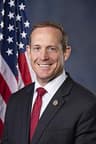 Ted Budd
Republican · North Carolina
 Katie Britt
Republican · Alabama
 Shelley Capito
Republican · West Virginia
 Christopher Coons
Democrat · Delaware
 Catherine Cortez Masto
Democrat · Nevada
 Steve Daines
Republican · Montana
 Deb Fischer
Republican · Nebraska
 Bill Hagerty
Republican · Tennessee
 Martin Heinrich
Democrat · New Mexico
 Maggie Hassan
Democrat · New Hampshire
 Jon Husted
Republican · Ohio
 Amy Klobuchar
Democrat · Minnesota
 Mark Kelly
Democrat · Arizona
 Angus King
Independent · Maine
 Timothy Kaine
Democrat · Virginia
 John Kennedy
Republican · Louisiana
 Ben Luján
Democrat · New Mexico
 James Lankford
Republican · Oklahoma
 Jerry Moran
Republican · Kansas
 Patty Murray
Democrat · Washington
 Markwayne Mullin
Republican · Oklahoma
 Roger Marshall
Republican · Kansas
 Jon Ossoff
Democrat · Georgia
 Alex Padilla
Democrat · California
 Gary Peters
Democrat · Michigan
 Jacky Rosen
Democrat · Nevada
 Pete Ricketts
Republican · Nebraska
 Jeanne Shaheen
Democrat · New Hampshire
 Elissa Slotkin
Democrat · Michigan
 Tommy Tuberville
Republican · Alabama
 Thomas Tillis
Republican · North Carolina
 Roger Wicker
Republican · Mississippi
 Mark Warner
Democrat · Virginia