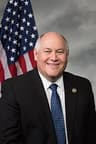
Ron Estes (R-KS)
American Innovation and R&D Competitiveness Act of 2025
A Republican bill with 41 Democratic cosponsors · See all 81 cosponsors
Last activity — Referred to the House Committee on Ways and Means.
In committee
Introduced and handed to a committee in the chamber it started in.
The committee holds it, and most bills are never heard from again. A hearing or a committee vote would be news; silence is the usual outcome, and it kills the bill without anyone voting against it.
Its path through Congress
- Introduced
- In Committee
What this bill would do
This bill, known as the "American Innovation and R&D Competitiveness Act of 2025," aims to amend the Internal Revenue Code of 1986. Its primary purpose is to restore the deduction for research and experimental expenditures. The legislation allows taxpayers to treat these costs as expenses rather than capital accounts under certain conditions. It also provides options for the amortization of specific research expenses over a period of at least 60 months. These changes are intended to apply to taxable years beginning after December 31, 2021.
Yes· 3 of 12
- Scored +5
Would business owners be better off under this?
The bill directly benefits business owners by providing significant tax relief on research expenditures.
- Scored +4
Is this likely to grow the economy?
Promoting research and development is a key driver for long-term economic productivity and growth.
- Scored +3
Does this cut taxes for small businesses?
The restoration of R&D deductions provides tax relief for small businesses engaged in innovation.
The opposite
- Scored -3
Does this raise the taxes companies pay?
By restoring deductions rather than increasing them, it effectively lowers the tax burden for corporations engaged in R&D compared to current capitalization requirements.
- Scored -2
Does this reduce what the federal government owes?
Restoring these deductions may reduce federal tax revenue in the short term.
- Scored -1
Does this reduce how much oil, gas and coal is produced?
The bill specifically excludes mineral and oil/gas exploration from these deductions, which may favor traditional energy over new R&D.
Who it would affect, and how
Potential Positive Impacts for People
-
Tax Deductions for Businesses: A taxpayer may treat research or experimental expenditures paid or incurred during the taxable year in connection with their trade or business as expenses that are allowed as a deduction. Section 2(a)(1)
-
Flexibility in Accounting Methods: Taxpayers have the option to adopt the deduction method for their first taxable year without needing consent from the Secretary, or they may adopt it at any time with consent. Section s 2(a)(2)(A) and (B)
-
Deferred Expense Options: At the election of the taxpayer, certain research and experimental expenditures that are chargeable to a capital account may be treated as deferred expenses, which can be deducted ratably over a period of not less than 60 months. Section 2(b)(1)
Potential Negative Impacts for People
-
Exclusions on Land and Property: The provisions of this section do not apply to expenditures used for the acquisition or improvement of land, or property used in connection with research that is subject to depreciation or depletion allowances. Section 2(c)
-
Exclusions on Exploration: This section does not apply to any expenditures paid or incurred to determine the existence, location, extent, or quality of mineral deposits, such as oil or gas. Section 2(d)
-
Requirement of Reasonableness: To be eligible for the application of this section, a research or experimental expenditure must be considered reasonable under the circumstances. Section 2(e)
Groups and Interests Ranking
Every group the model scored this bill for, from -10 to +10. Tap or hover a score for the reason it gave.
- Economy And Finance
- Is this likely to grow the economy? — Promoting research and development is a key driver for long-term economic productivity and growth. Does this make it easier to run a small business? — The bill provides tax flexibility that benefits small and medium enterprises conducting research. Does this cut taxes for small businesses? — The restoration of R&D deductions provides tax relief for small businesses engaged in innovation. Is this likely to create jobs? — Encouraging R&D investment can lead to increased innovation and subsequent job growth in technical sectors. Does this raise the taxes companies pay? — By restoring deductions rather than increasing them, it effectively lowers the tax burden for corporations engaged in R&D compared to current capitalization requirements. Does this reduce what the federal government owes? — Restoring these deductions may reduce federal tax revenue in the short term.
- Demographic And Interest Groups
- Would business owners be better off under this? — The bill directly benefits business owners by providing significant tax relief on research expenditures.
- Education And Technology
- Does this put more money into scientific research? — The bill incentivizes much more private investment into scientific research through tax relief. Does this put more into space exploration? — Incentivizing R&D can provide technological tailwinds for the aerospace and space sectors.
- Environment Energy And Infrastructure
- Does this put more money into wind, solar and other renewable power? — The bill encourages all forms of R&D, which includes renewable energy innovations. Does this cut the pollution that drives climate change? — Incentivizing R&D can drive the development of clean energy technologies. Does this reduce how much oil, gas and coal is produced? — The bill specifically excludes mineral and oil/gas exploration from these deductions, which may favor traditional energy over new R&D.
- Healthcare
- Does this put more money into medical research? — While not direct funding, the tax incentive encourages more private-sector medical and scientific research.
- National Security And Foreign Policy
- Does this better protect the country from computer attacks? — Increased R&D can indirectly lead to better cybersecurity technologies. Does this make trade with other countries easier? — A more competitive domestic innovation sector can strengthen international trade positions.
- 5/21/2025
- 2 Cosponsors added.
- 4/29/2025
- 2 Cosponsors added.
- 4/17/2025
- 4 Cosponsors added.
- 4/9/2025
- 2 Cosponsors added.
- 3/18/2025
- 4 Cosponsors added.
- 3/10/2025
- Referred to the House Committee on Ways and Means.
- 67 Cosponsors added.
- Introduced in House
3 bills Congress.gov lists as related to this one — companions in the other chamber, earlier versions, and bills this one absorbed or was folded into.
 Jake Auchincloss
Democrat · Massachusetts
 Jodey Arrington
Republican · Texas
 Gabe Amo
Democrat · Rhode Island
 Vern Buchanan
Republican · Florida
 Suzanne Bonamici
Democrat · Oregon
 Joyce Beatty
Democrat · Ohio
 Andy Barr
Republican · Kentucky
 Julia Brownley
Democrat · California
 Donald Beyer
Democrat · Virginia
 Aaron Bean
Republican · Florida
 Emanuel Cleaver
Democrat · Missouri
 Joe Courtney
Democrat · Connecticut
 Gerald Connolly
Democrat · Virginia
 Earl Carter
Republican · Georgia
 Salud Carbajal
Democrat · California
 Angie Craig
Democrat · Minnesota
 Mike Carey
Republican · Ohio
 Donald Davis
Democrat · North Carolina
 Suzan DelBene
Democrat · Washington
 Sharice Davids
Democrat · Kansas
 Chuck Edwards
Republican · North Carolina
 Randy Feenstra
Republican · Iowa
 Brian Fitzpatrick
Republican · Pennsylvania
 Michelle Fischbach
Republican · Minnesota
 Valerie Foushee
Democrat · North Carolina
 John Garamendi
Democrat · California
 Josh Gottheimer
Democrat · New Jersey
 Bill Huizenga
Republican · Michigan
 Steven Horsford
Democrat · Nevada
 Kevin Hern
Republican · Oklahoma
 Chrissy Houlahan
Democrat · Pennsylvania
 Diana Harshbarger
Republican · Tennessee
 Josh Harder
Democrat · California
 Ashley Hinson
Republican · Iowa
 Pat Harrigan
Republican · North Carolina
 John Joyce
Republican · Pennsylvania
 Sara Jacobs
Democrat · California
 Mike Kelly
Republican · Pennsylvania
 Ro Khanna
Democrat · California
 Raja Krishnamoorthi
Democrat · Illinois
 David Kustoff
Republican · Tennessee
 Kevin Kiley
Independent · California
 John Larson
Democrat · Connecticut
 Ted Lieu
Democrat · California
 Darin LaHood
Republican · Illinois
 Nick LaLota
Republican · New York
 Nicole Malliotakis
Republican · New York
 Tracey Mann
Republican · Kansas
 John Moolenaar
Republican · Michigan
 Seth Moulton
Democrat · Massachusetts
 Daniel Meuser
Republican · Pennsylvania
 Carol Miller
Republican · West Virginia
 Joseph Morelle
Democrat · New York
 Gregory Murphy
Republican · North Carolina
 Blake Moore
Republican · Utah
 Frank Mrvan
Democrat · Indiana
 Richard McCormick
Republican · Georgia
 Max Miller
Republican · Ohio
 Nathaniel Moran
Republican · Texas
 Kevin Mullin
Democrat · California
 Jennifer McClellan
Democrat · Virginia
 Joe Neguse
Democrat · Colorado
 Jimmy Panetta
Democrat · California
 Chris Pappas
Democrat · New Hampshire
 Brittany Pettersen
Democrat · Colorado
 Michael Rulli
Republican · Ohio
 Adrian Smith
Republican · Nebraska
 David Schweikert
Republican · Arizona
 Terri Sewell
Democrat · Alabama
 Eric Swalwell
Democrat · California
 Lloyd Smucker
Republican · Pennsylvania
 Thomas Suozzi
Democrat · New York
 W. Steube
Republican · Florida
 Kim Schrier
Democrat · Washington
 Hillary Scholten
Democrat · Michigan
 Dina Titus
Democrat · Nevada
 Claudia Tenney
Republican · New York
 Jefferson Van Drew
Republican · New Jersey
 Beth Van Duyne
Republican · Texas
 Gabe Vasquez
Democrat · New Mexico
 Rudy Yakym
Republican · Indiana