
A Republican bill with 90 Republican cosponsors · See all 91 cosponsors
Last activity — Referred to the Committee on Ways and Means, and in addition to the Committee on Education and Workforce, for a period to be subsequently determined by the Speaker, in each case for consideration of such provisions as fall within the jurisdiction of the committee concerned.
In committee
Introduced and handed to a committee in the chamber it started in.
The committee holds it, and most bills are never heard from again. A hearing or a committee vote would be news; silence is the usual outcome, and it kills the bill without anyone voting against it.
Its path through Congress
- Introduced
- In Committee
What this bill would do
The Educational Choice for Children Act of 2025 proposes to amend the Internal Revenue Code of 1986. It would allow individuals and corporations to claim a tax credit for charitable donations made to scholarship granting organizations. These organizations would provide scholarships to qualified elementary and secondary students for various educational expenses. The bill establishes specific definitions for eligible students and qualified expenses, including tuition and instructional materials. It also sets a volume cap on the total amount of credits available. Finally, the Act includes provisions to protect the autonomy of these organizations and the schools they support from government control.
Yes· 3 of 12
- Scored +8
Would students be better off under this?
The bill creates a new mechanism for students to access funding for tuition, books, and other educational expenses.
- Scored +8
Does this make it easier to use public money at a school other than the local one?
The bill enables school choice by providing tax credits for donations that fund scholarships for private and religious school attendance.
- Scored +7
Would children be better off under this?
The bill provides financial assistance through scholarships for elementary and secondary students.
The opposite
- Scored -1
Does this raise the taxes companies pay?
The bill allows corporations to claim a tax credit for contributions to scholarship organizations rather than increasing their tax rates.
Who it would affect, and how
Potential Positive Impacts for People
-
Tax Credits for Individuals and Corporations: Individuals can receive a credit against their tax equal to the amount of qualified contributions, limited to the greater of 10 percent of their adjusted gross income or $5,000 (Section 2(a)(1)). Corporations can also receive a credit of up to 5 percent of their taxable income (Section 2(b)(1)).
-
Educational Opportunities for Students: The bill provides scholarships for qualified elementary and secondary education expenses, which can include tuition, books, online materials, and even educational therapies for students with disabilities (Section 2(a)(1)(c)(3)).
-
Tax-Free Scholarship Income: For individuals, gross income will not include amounts provided to a dependent through these scholarships (Section 4(a)).
-
Protection of Organizational and School Autonomy: The bill states that scholarship granting organizations and private or religious schools should have maximum freedom and should not be subject to mandate, direction, or control by any Federal, State, or local government entity (Section 5(a)(1) and (2)).
-
Preservation of Parental Rights: The Act specifies that no government entity shall disfavor or discourage parents from using scholarships at private or nonprofit institutions, including faith-based schools (Section 5(a)(3)).
Potential Negative Impacts for People
-
Limitations on Tax Credits: Individual credits are capped at either 10 percent of adjusted gross income or $5,000, whichever is greater (Section 2(a)(1)(b)(1)). Corporations are limited to a credit of 5 percent of their taxable income (Section 2(b)(1)).
-
Volume Cap Restrictions: Taxpayers can only claim the credit up to the amount of the volume cap allocated by the Secretary (Section 2(a)(1)(b)(2)). This cap starts at $10,000,000,000 for the year 2026 (Section 3(a)).
-
Reduction Based on State Credits: The amount of the federal credit allowed for a taxpayer is reduced by any amount allowed as a credit on a State tax return for the same qualified contributions (Section 2(a)(1)(b)(3)).
-
Requirements for Scholarship Organizations: Organizations must undergo annual financial and compliance audits by an independent certified public accountant (Section 2(a)(1)(c)(4)(F)). They must also ensure that no officer or board member has been convicted of a felony (Section 2(a)(1)(c)(4)(G)).
Groups and Interests Ranking
Every group the model scored this bill for, from -10 to +10. Tap or hover a score for the reason it gave.
- Demographic And Interest Groups
- Would students be better off under this? — The bill creates a new mechanism for students to access funding for tuition, books, and other educational expenses. Would children be better off under this? — The bill provides financial assistance through scholarships for elementary and secondary students. Would households on low incomes be better off under this? — The bill provides scholarships to students from households with incomes up to 300 percent of the area median gross income. Would people with disabilities be better off under this? — The bill explicitly allows scholarships to cover educational therapies for students with disabilities. Would business owners be better off under this? — The bill allows corporations to receive a tax credit for their educational scholarship contributions. Would middle-income households be better off under this? — The bill allows middle-income individuals to claim tax credits for educational contributions. Would high-income households be better off under this? — The bill provides tax credits for significant charitable contributions to scholarship organizations.
- Social Issues And Justice
- Does this expand the rights of people with disabilities? — The bill allows scholarship funds to be used for educational therapies for students with disabilities. Is this likely to lift people out of poverty? — The bill provides educational scholarships to students from households with incomes up to 300 percent of the area median gross income.
- Education And Technology
- Does this make it easier to use public money at a school other than the local one? — The bill enables school choice by providing tax credits for donations that fund scholarships for private and religious school attendance.
- Economy And Finance
- Does this cut taxes for middle-income families? — The bill provides tax credits for individuals who contribute to scholarship granting organizations. Does this raise the taxes companies pay? — The bill allows corporations to claim a tax credit for contributions to scholarship organizations rather than increasing their tax rates.
- Governance And Ideology
- Does this leave more decisions to the states? — The bill includes provisions that prevent government entities from controlling the operation of scholarship granting organizations.
- 11/17/2025
- 1 Cosponsor added.
- 10/24/2025
- 1 Cosponsor added.
- 7/2/2025
- 1 Cosponsor added.
- 6/13/2025
- 1 Cosponsor added.
- 5/20/2025
- 2 Cosponsors added.
- 5/15/2025
- 2 Cosponsors added.
- 5/14/2025
- 1 Cosponsor added.
- 5/6/2025
- 4 Cosponsors added.
- 5/1/2025
- 1 Cosponsor added.
- 4/29/2025
- 1 Cosponsor added.
- 4/21/2025
- 1 Cosponsor added.
- 4/14/2025
- 2 Cosponsors added.
- 4/9/2025
- 3 Cosponsors added.
- 4/7/2025
- 3 Cosponsors added.
- 4/2/2025
- 3 Cosponsors added.
- 3/27/2025
- 3 Cosponsors added.
- 3/25/2025
- 1 Cosponsor added.
- 3/24/2025
- 4 Cosponsors added.
- 3/18/2025
- 2 Cosponsors added.
- 3/11/2025
- 1 Cosponsor added.
- 3/10/2025
- 2 Cosponsors added.
- 3/4/2025
- 1 Cosponsor added.
- 3/3/2025
- 4 Cosponsors added.
- 2/25/2025
- 1 Cosponsor added.
- 2/24/2025
- 2 Cosponsors added.
- 2/14/2025
- 1 Cosponsor added.
- 2/10/2025
- 1 Cosponsor added.
- 2/7/2025
- 2 Cosponsors added.
- 2/6/2025
- 1 Cosponsor added.
- 2/5/2025
- 3 Cosponsors added.
- 2/4/2025
- 3 Cosponsors added.
- 1/31/2025
- Referred to the Committee on Ways and Means, and in addition to the Committee on Education and Workforce, for a period to be subsequently determined by the Speaker, in each case for consideration of such provisions as fall within the jurisdiction of the committee concerned.
- 32 Cosponsors added.
- Introduced in House
2 bills Congress.gov lists as related to this one — companions in the other chamber, earlier versions, and bills this one absorbed or was folded into.
 Rick Allen
Republican · Georgia
 Stephanie Bice
Republican · Oklahoma
 Vern Buchanan
Republican · Florida
 Andy Barr
Republican · Kentucky
 Brian Babin
Republican · Texas
 Mike Bost
Republican · Illinois
 Jack Bergman
Republican · Michigan
 Troy Balderson
Republican · Ohio
 Eric Burlison
Republican · Missouri
 Tom Barrett
Republican · Michigan
 Michael Baumgartner
Republican · Washington
 Sheri Biggs
Republican · South Carolina
 Ken Calvert
Republican · California
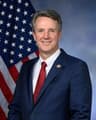 Ben Cline
Republican · Virginia
 Dan Crenshaw
Republican · Texas
 Mike Carey
Republican · Ohio
 Mike Collins
Republican · Georgia
 Juan Ciscomani
Republican · Arizona
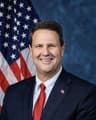 Jeff Crank
Republican · Colorado
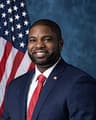 Byron Donalds
Republican · Florida
 Neal Dunn
Republican · Florida
 Troy Downing
Republican · Montana
 Gabe Evans
Republican · Colorado
 Randy Feenstra
Republican · Iowa
 Scott Franklin
Republican · Florida
 Brad Finstad
Republican · Minnesota
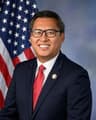 Vince Fong
Republican · California
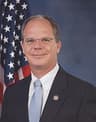 Brett Guthrie
Republican · Kentucky
 Bill Huizenga
Republican · Michigan
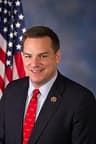 Richard Hudson
Republican · North Carolina
 J. Hill
Republican · Arkansas
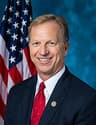 Kevin Hern
Republican · Oklahoma
 Ashley Hinson
Republican · Iowa
 Erin Houchin
Republican · Indiana
 Abraham Hamadeh
Republican · Arizona
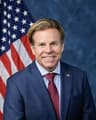 Mike Haridopolos
Republican · Florida
 Jeff Hurd
Republican · Colorado
 Pat Harrigan
Republican · North Carolina
 Jim Jordan
Republican · Ohio
 John Joyce
Republican · Pennsylvania
 John James
Republican · Michigan
 Mike Kelly
Republican · Pennsylvania
 David Kustoff
Republican · Tennessee
 Young Kim
Republican · California
 Kevin Kiley
Independent · California
 Darin LaHood
Republican · Illinois
 Julia Letlow
Republican · Louisiana
 Laurel Lee
Republican · Florida
 Nick LaLota
Republican · New York
 Michael Lawler
Republican · New York
 Nicholas Langworthy
Republican · New York
 Nancy Mace
Republican · South Carolina
 Nicole Malliotakis
Republican · New York
 Tracey Mann
Republican · Kansas
 John Moolenaar
Republican · Michigan
 Daniel Meuser
Republican · Pennsylvania
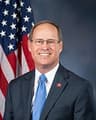 Gregory Murphy
Republican · North Carolina
 Mary Miller
Republican · Illinois
 Blake Moore
Republican · Utah
 Mariannette Miller-Meeks
Republican · Iowa
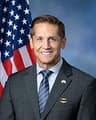 Richard McCormick
Republican · Georgia
 Max Miller
Republican · Ohio
 Nathaniel Moran
Republican · Texas
 Ryan Mackenzie
Republican · Pennsylvania
 Mark Messmer
Republican · Indiana
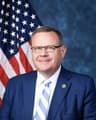 Tim Moore
Republican · North Carolina
 John McGuire
Republican · Virginia
 Burgess Owens
Republican · Utah
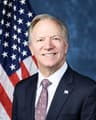 Robert Onder
Republican · Missouri
 Gary Palmer
Republican · Alabama
 David Rouzer
Republican · North Carolina
 John Rutherford
Republican · Florida
 John Rose
Republican · Tennessee
 Michael Rulli
Republican · Ohio
 Maria Salazar
Republican · Florida
 Pete Sessions
Republican · Texas
 Christopher Smith
Republican · New Jersey
 Elise Stefanik
Republican · New York
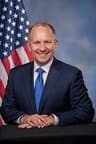 Lloyd Smucker
Republican · Pennsylvania
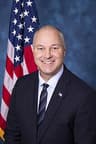 Pete Stauber
Republican · Minnesota
 Bryan Steil
Republican · Wisconsin
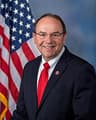 Thomas Tiffany
Republican · Wisconsin
 Michael Turner
Republican · Ohio
 Claudia Tenney
Republican · New York
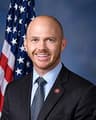 William Timmons
Republican · South Carolina
 Joe Wilson
Republican · South Carolina
 Tim Walberg
Republican · Michigan
 Daniel Webster
Republican · Florida
 Ann Wagner
Republican · Missouri
 Randy Weber
Republican · Texas
 Rudy Yakym
Republican · Indiana