

Blake D. Moore

Blake D. Moore

Republican · U.S. Representative for Utah's 1st district

43 sponsored · 249 cosponsored

Age 46 · In office since 2021

Contact their office: (202) 225-0453 · 1131 Longworth House Office Building, Washington, DC 20515 · Official website

What they got done

Most bills never get a vote. These are the ones they wrote or backed that got somewhere.

Became law (4)

  • Blake Moore (R-UT)

    Their bill

    MAPWaters Act of 2025

    H.R. 187 Public Lands and Natural Resources

    A Republican bill with 2 Democratic cosponsors. See the voting map.

    Became law

    The House voted 413–0 on Jan 22.

    This bill requires Federal land and water management agencies to standardize and digitize data regarding public outdoor recreational use of Federal waterways.

    Yes· 2 of 17

    • Scored +7

      Does this make what the government does easier for the public to see?

      Requires digitization and public online availability of previously fragmented waterway access and restriction data.

    • Scored +5

      Does this better protect public land such as parks and forests?

      Standardizes and digitizes recreational data across multiple federal land management agencies.

    No question was scored the opposite.
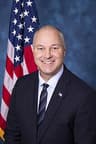
  • Pete Stauber (R-MN)

    Cosponsored

    Miracle on Ice Congressional Gold Medal Act

    H.R. 452 Sports and Recreation

    A Republican bill with 107 Democratic cosponsors.

    Became law

    This Act authorizes the award of 3 Congressional Gold Medals to the members of the 1980 U.S. Olympic Men's Ice Hockey Team. The medals recognize the team's victory over the Soviet Union during the 1980 Winter Olympics.

    Yes

    • Scored +1

      Is this likely to grow the economy?

      The sale of duplicate bronze medals provides a small influx of revenue to the United States Mint Public Enterprise Fund.

    No question was scored the opposite.

  • Steve Scalise (R-LA)

    Cosponsored

    Rescissions Act of 2025

    H.R. 4 Economics and Public Finance

    A Republican bill with 5 Republican cosponsors. See the voting map.

    Became law

    The Senate voted 51–48 on Jul 17.

    The Rescissions Act of 2025 cancels various budget authorizations as proposed by the President on June 3, 2025.

    The opposite· 2 of 15

    • Scored -5

      Does this make birth control easier to get?

      The bill rescinds $500,000,000 from Global Health Programs and explicitly notes that protections do not apply to family planning and reproductive health programs.

    • Scored -3

      Does this improve help for people hit by a disaster?

      Rescinding funds from International Disaster Assistance could negatively impact disaster relief efforts.

    No question was scored yes.

And 1 more on their Sponsored and Cosponsored pages.

Passed Congress — the President's turn (2)

Both chambers passed it. The President signs it into law or vetoes it, and a veto stands unless two-thirds of each chamber vote to pass it anyway. Everything Congress has sent the President →

  • Blake Moore (R-UT)

    Their bill

    To expand the sharing of information with respect to suspected violations of intellectual property rights in trade.

    H.R. 4930 Foreign Trade and International Finance

    A Republican bill with 2 Democratic cosponsors.

    Passed both chambers

    With no one objecting, no names recorded

    This bill updates the Tariff Act of 1930 to change how information is shared regarding suspected violations of intellectual property rights in trade.

    Yes· 2 of 4

    • Scored +6

      Does this make patent and copyright rules fairer?

      The bill strengthens the ability to identify and act upon suspected intellectual property violations in the trade stream.

    • Scored +5

      Would business owners be better off under this?

      Business owners who hold intellectual property rights benefit from more robust information sharing to combat counterfeits.

    The opposite

    • Scored -4

      Does this protect people from being watched or searched?

      The bill expands the scope of nonpublic information that can be shared with third parties involved in the interest of merchandise.

    • Scored -2

      Does this make what the government does easier for the public to see?

      The bill allows for the sharing of previously nonpublic information obtained from private entities like online marketplaces.

  • Lloyd Smucker (R-PA)

    Cosponsored

    Claiming Age Clarity Act

    H.R. 5284 Social Welfare

    A Republican bill with 3 Democratic cosponsors.

    Passed both chambers

    With no one objecting, no names recorded

    This bill requires the Social Security Administration to update the terminology used in its rules, regulations, guidance, and other materials.

    Yes· 2 of 3

    • Scored +2

      Would people over 65 be better off under this?

      The bill provides clearer terminology regarding retirement and benefit ages for seniors.

    • Scored +2

      Would retired people be better off under this?

      The updated terminology provides more clarity for retirees regarding their monthly benefit ages.

    No question was scored the opposite.

Passed one chamber, waiting on the other (18)

Halfway: the other chamber has to pass the same text before it can go to the President.

  • Blake Moore (R-UT)

    Their bill

    University of Utah Research Park Act

    H.R. 2876 Public Lands and Natural Resources

    A Republican bill with 3 Republican cosponsors.

    Passed the House

    By voice vote, no names recorded

    Now: arrived in the other chamber; nothing has happened to it there yet · Dec 16

    This Act aims to confirm the use of specific non-Federal land in Salt Lake City, Utah, for public purposes. It focuses on approximately 593.54 acres of land previously conveyed to the University of Utah.

    Yes· 2 of 12

    • Scored +3

      Would students be better off under this?

      The bill directly facilitates student housing and research opportunities.

    • Scored +3

      Is this likely to grow the economy?

      Confirming land use for a research park and transit hub supports regional economic activity.

    No question was scored the opposite.

  • Blake Moore (R-UT)

    Their bill

    Hershel Woody Williams National Medal of Honor Monument Location Act

    H.R. 186 Public Lands and Natural Resources

    A Republican bill with 2 Democratic cosponsors. See the voting map.

    Passed the House

    The House voted 414–0 on Jan 22.

    414–0

    This Act authorizes the National Medal of Honor Museum Foundation to establish a commemorative work on the National Mall. The purpose is to honor the valor, selfless service, and sacrifice of Medal of Honor recipients.

    Yes

    • Scored +7

      Would veterans be better off under this, taking everything together?

      The bill directly honors the service and sacrifice of Medal of Honor recipients.

    • Scored +5

      Does this increase the pay, pensions or support veterans receive?

      The bill honors the legacy and sacrifice of military personnel through a national monument.

    No question was scored the opposite.

  • Jefferson Shreve (R-IN)

    Cosponsored

    Protecting Domestic Mining Act of 2025

    H.R. 1501 Energy

    A Republican bill with 2 Republican cosponsors. See the voting map.

    Passed the House

    218201

    Now: handed to a committee to examine — Committee on Homeland Security and Governmental Affairs · Sep 14

    This bill aims to amend the FAST Act. It seeks to include specific mineral production activities as covered projects. Specifically, it adds "mining, mineral processing" to the definition of a covered project.

    Yes· 2 of 10

    • Scored +5

      Would business owners be better off under this?

      Mining and mineral processing companies benefit significantly from streamlined permitting processes.

    • Scored +4

      Would people in rural areas be better off under this?

      Mining projects often bring investment and infrastructure to rural communities.

    The opposite· 2 of 5

    • Scored -5

      Would Native Americans be better off under this?

      Increased mining activity often negatively impacts indigenous lands and tribal sovereignty.

    • Scored -4

      Does this better protect air, water and wildlife?

      Streamlining permits and blocking certain regulatory rules may reduce the rigor of environmental oversight.

And 15 more on their Sponsored and Cosponsored pages.

Resolutions of theirs that were adopted (2)

A resolution is a chamber speaking for itself — a position, a rule or a tribute. Adopting it puts it into effect, but it is not a law.

Still waiting, of the 43 bills they wrote: 1 cleared committee and waits for a first vote, 36 are in committee. Committee is where most bills end, whoever writes them — silence there, not a vote, is the usual way a bill dies.

What their bills would do

Every bill is scored against plain yes-or-no questions. These count their bills — the ones they wrote and the ones they cosponsored — by how each question was answered: yes, or the opposite. Open one to see those bills, where each stands, and why it was scored that way. Scores are made by AI ().

Who their bills would affect

What else they would change

How they voted lately

Their latest votes that decided something, and what each measure would do.

  • U.S. House · Nov 12, 2026

    Major Richard Star Act

    The vote on whether to pass the bill This is the real decision in this chamber. Passing here sends the bill to the other chamber, which must pass it too before it can go to the President.

    Their vote Nay

    This bill changes the rules to allow certain military retirees to receive both veterans' disability compensation and retired pay at the same time.

    • Scored +8

      Would veterans be better off under this, taking everything together?

      This bill provides significant financial relief to veterans with combat-related disabilities by allowing them to receive both retired pay and disability compensation concurrently.

  • U.S. House · Nov 12, 2026

    Providing for consideration of the bill (H.R. 2102) to amend title 10, United States Code, to provide for concurrent receipt of veterans' disability compensation and retired pay for disability retirees with combat-related disabilities, and for other purposes.

    The vote on whether to adopt the resolution A resolution is one chamber speaking for itself — setting its own rules, taking a position, honouring someone — and it never goes to the President. Agreeing to it is the whole decision.

    Their vote Nay

    H. Res. 1247 sets the rules for how the House of Representatives will consider the bill H.R. 2102, which is also known as the "Major Richard Star Act."

    • Scored +7

      Would people with disabilities be better off under this?

      The bill provides increased financial compensation for service-connected disabilities.

  • U.S. House · Nov 11, 2026

    Retirement Fairness for Charities and Educational Institutions Act of 2025

    The vote on whether to pass the bill This is the real decision in this chamber. Passing here sends the bill to the other chamber, which must pass it too before it can go to the President.

    Their vote Yea

    This bill amends Federal securities laws to enhance 403(b) retirement plans. The changes affect laws such as the Investment Company Act of 1940, the Securities Act of 1933, and the Securities Exchange Act of 1934.

    • Scored +5

      Does this give people more protection from unfair business practices?

      The bill enhances consumer protection by establishing fiduciary responsibilities for employers managing 403(b) investment options.

Every vote they cast, and how often they missed one →

On the President’s vetoes

A vetoed bill becomes law only if two-thirds of both chambers pass it again. The President can refuse to sign a bill both chambers passed. It becomes law anyway only if two-thirds of the House and two-thirds of the Senate vote to pass it again. A vote against the veto (a Yea) was a vote to make the bill law over the President’s objection; a vote for it (a Nay) was a vote to let the veto stand.

How busy they have been

How many bills they have put their name to over time — volume, not results: most bills never get a vote.

Legislative activity over time