
A Republican bill with 53 Republican cosponsors · See all 53 cosponsors
Last activity — Referred to the House Committee on Ways and Means.
In committee
Introduced and handed to a committee in the chamber it started in.
The committee holds it, and most bills are never heard from again. A hearing or a committee vote would be news; silence is the usual outcome, and it kills the bill without anyone voting against it.
Its path through Congress
- Introduced
- In Committee
What this bill would do
The TCJA Permanency Act aims to amend the Internal Revenue Code of 1986 to make specific provisions from the Tax Cuts and Jobs Act permanent. This bill includes changes to individual income tax rates, deductions, and credits for families and businesses. It addresses various tax topics such as student loan discharges, 529 accounts, and ABLE accounts. Additionally, the legislation modifies rules regarding charitable contributions and estate taxes. The bill also includes provisions related to the Alternative Minimum Tax.
Yes· 3 of 26
- Scored +7
Would people with substantial wealth be better off under this?
The bill substantially increases the estate and gift tax exemption.
- Scored +7
Would the very wealthiest people be better off under this?
The bill substantially increases the estate and gift tax exemption.
- Scored +7
Would billionaires be better off under this?
The bill significantly increases the estate and gift tax exemption.
The opposite
- Scored -2
Does this reduce what the federal government owes?
Tax cuts and increased exemptions generally reduce federal revenue.
- Scored -1
Does this raise the taxes companies pay?
The bill limits business loss deductions for taxpayers other than corporations.
- Scored -1
Does this raise taxes on the highest earners?
The bill modifies certain deductions which may affect high earners through limitations on state and local taxes and mortgage interest.
Who it would affect, and how
Potential Positive Impacts for People
-
Tax Rate Adjustments: The bill modifies tax rates for married individuals, heads of households, and unmarried individuals (Section 101).
-
Business Deductions: It includes a deduction for qualified business income for pass-thru entities (Section 111).
-
Increased Standard Deduction: The bill increases the standard deduction for individuals (Section 121).
-
Child Tax Credit Benefits: There are increases and modifications to the child tax credit (Section 122).
-
Charitable Giving: The bill increases the limitation for certain charitable contributions (Section 123).
-
Support for Disability Savings: Contributions to ABLE accounts are increased (Section 124), and the bill allows for rollovers from 529 programs to ABLE programs (Section 125).
-
Education Funding: The bill adjusts the treatment of student loan discharges (Section 131) and allows 529 account funding for various elementary and secondary expenses (Section 132).
-
Military Benefits: Certain moving expense reimbursements and deductions are limited to members of the Armed Forces (Section 148, Section 149).
-
Estate and Gift Tax: The bill increases the estate and gift tax exemption (Section 151).
-
Alternative Minimum Tax: The bill increases the exemption for individuals under the Alternative Minimum Tax (Section 201).
Potential Negative Impacts for People
-
Loss of Deductions: The bill repeals the deduction for personal exemptions (Section 141) and terminates the exclusion for qualified bicycle commuting reimbursement (Section 147).
-
Tax Limitations: There are limitations placed on deductions for State and local taxes (Section 142), qualified residence interest (Section 143), and personal casualty losses (Section 144).
-
Miscellaneous Deductions: The bill includes the termination of miscellaneous itemized deductions (Section 145).
-
Wagering Losses: The bill includes a limitation on wagering losses (Section 150).
Groups and Interests Ranking
Every group the model scored this bill for, from -10 to +10. Tap or hover a score for the reason it gave.
- Demographic And Interest Groups
- Would billionaires be better off under this? — The bill significantly increases the estate and gift tax exemption. Would people with substantial wealth be better off under this? — The bill substantially increases the estate and gift tax exemption. Would the very wealthiest people be better off under this? — The bill substantially increases the estate and gift tax exemption. Would high-income households be better off under this? — The bill significantly increases the estate and gift tax exemption. Would people with disabilities be better off under this? — The bill increases contribution limits for ABLE accounts. Would business owners be better off under this? — The bill makes the deduction for qualified business income permanent. Would children be better off under this? — The bill increases the child tax credit. Would middle-income households be better off under this? — The bill increases the standard deduction and modifies income tax rates. Would households on low incomes be better off under this? — Increased standard deductions and child tax credits benefit lower-income households. Would people in middle age be better off under this? — The bill increases the standard deduction and modifies tax rates. Would retired people be better off under this? — The bill increases the standard deduction for those aged 65 and older. Would people over 65 be better off under this? — The bill increases the standard deduction for those over 65. Would students be better off under this? — The bill adjusts the treatment of student loan discharges. Would people in their twenties and thirties be better off under this? — The bill addresses student loan discharges and 529 account flexibility.
- Economy And Finance
- Does this cut the tax on money left behind when someone dies? — The bill increases the estate and gift tax exemption to $10,000,000. Does this make it easier to run a small business? — The bill secures the deduction for qualified business income for pass-thru entities. Does this cut taxes for middle-income families? — The bill increases the standard deduction and modifies income tax rates to benefit various income levels. Does this cut taxes for small businesses? — The bill makes the deduction for qualified business income for pass-thru entities permanent. Is this likely to grow the economy? — Permanent tax reductions for businesses and individuals are intended to stimulate economic activity. Does this cut the tax on profits from selling investments? — The bill adjusts the application of income tax brackets to capital gains brackets. Does this reduce what the federal government owes? — Tax cuts and increased exemptions generally reduce federal revenue. Does this raise the taxes companies pay? — The bill limits business loss deductions for taxpayers other than corporations. Does this raise taxes on the highest earners? — The bill modifies certain deductions which may affect high earners through limitations on state and local taxes and mortgage interest.
- Social Issues And Justice
- Does this expand the rights of people with disabilities? — The bill increases contribution limits for ABLE accounts to support individuals with disabilities. Does this make child care cost less? — The bill increases and modifies the child tax credit. Is this likely to lift people out of poverty? — Increased standard deductions and child tax credits provide more financial support to lower-income families.
- Education And Technology
- Does this make college cost less? — The bill allows 529 account funding for a broader range of elementary and secondary expenses. Does this reduce what student borrowers owe or repay? — The bill provides specific treatment for student loan discharges due to death or disability.
- Environment Energy And Infrastructure
- Does this improve help for people hit by a disaster? — The bill modifies the deduction for personal casualty losses to be limited to federally declared disasters.
- 12/9/2025
- 1 Cosponsor added.
- 2/25/2025
- 1 Cosponsor added.
- 2/18/2025
- 2 Cosponsors added.
- 2/7/2025
- 1 Cosponsor added.
- 1/31/2025
- 2 Cosponsors added.
- 1/28/2025
- 1 Cosponsor added.
- 1/23/2025
- 8 Cosponsors added.
- 1/22/2025
- 2 Cosponsors added.
- 1/15/2025
- 1 Cosponsor added.
- 1/9/2025
- 4 Cosponsors added.
- 1/3/2025
- Referred to the House Committee on Ways and Means.
- 30 Cosponsors added.
- Introduced in House
3 bills Congress.gov lists as related to this one — companions in the other chamber, earlier versions, and bills this one absorbed or was folded into.
 Mark Amodei
Republican · Nevada
 Andy Barr
Republican · Kentucky
 Mike Bost
Republican · Illinois
 Aaron Bean
Republican · Florida
 Earl Carter
Republican · Georgia
 Andrew Clyde
Republican · Georgia
 Dan Crenshaw
Republican · Texas
 Mike Carey
Republican · Ohio
 Troy Downing
Republican · Montana
 Jake Ellzey
Republican · Texas
 Mike Ezell
Republican · Mississippi
 Ron Estes
Republican · Kansas
 Pat Fallon
Republican · Texas
 Randy Feenstra
Republican · Iowa
 Russ Fulcher
Republican · Idaho
 Brad Finstad
Republican · Minnesota
 Randy Fine
Republican · Florida
 Glenn Grothman
Republican · Wisconsin
 Mark Green
Republican · Tennessee
 Michael Guest
Republican · Mississippi
 Ashley Hinson
Republican · Iowa
 Erin Houchin
Republican · Indiana
 Jeff Hurd
Republican · Colorado
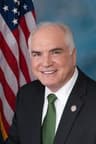 Mike Kelly
Republican · Pennsylvania
 David Kustoff
Republican · Tennessee
 Frank Lucas
Republican · Oklahoma
 Darin LaHood
Republican · Illinois
 John Moolenaar
Republican · Michigan
 Daniel Meuser
Republican · Pennsylvania
 Carol Miller
Republican · West Virginia
 Blake Moore
Republican · Utah
 Cory Mills
Republican · Florida
 Richard McCormick
Republican · Georgia
 Max Miller
Republican · Ohio
 Nathaniel Moran
Republican · Texas
 Tim Moore
Republican · North Carolina
 John McGuire
Republican · Virginia
 Zachary Nunn
Republican · Iowa
 David Rouzer
Republican · North Carolina
 John Rutherford
Republican · Florida
 Michael Rulli
Republican · Ohio
 Adrian Smith
Republican · Nebraska
 Marlin Stutzman
Republican · Indiana
 Keith Self
Republican · Texas
 Glenn Thompson
Republican · Pennsylvania
 Claudia Tenney
Republican · New York
 William Timmons
Republican · South Carolina
 Jefferson Van Drew
Republican · New Jersey
 Beth Van Duyne
Republican · Texas
 Ann Wagner
Republican · Missouri
 Randy Weber
Republican · Texas
 Roger Williams
Republican · Texas
 Rudy Yakym
Republican · Indiana