
A Republican bill with 4 Republican cosponsors · See all 5 cosponsors
Last activity — Referred to the House Committee on Ways and Means.
In committee
Introduced and handed to a committee in the chamber it started in.
The committee holds it, and most bills are never heard from again. A hearing or a committee vote would be news; silence is the usual outcome, and it kills the bill without anyone voting against it.
Its path through Congress
- Introduced
- In Committee
What this bill would do
This bill, known as the Student Empowerment Act, proposes to amend the Internal Revenue Code of 1986. It aims to allow 529 account funds to be used for various kindergarten through grade 12 educational expenses. These expenses can apply to students attending public, private, or religious schools, as well as those in a homeschool setting. The bill covers items such as tuition, curriculum, books, and various fees. It also includes provisions for tutoring and educational therapies.
Yes· 3 of 7
- Scored +6
Would people with disabilities be better off under this?
The bill specifically enables the use of 529 funds for licensed educational therapies such as occupational and speech-language therapies.
- Scored +6
Does this make it easier to use public money at a school other than the local one?
The bill increases school choice by allowing 529 funds to be used for tuition and materials at public, private, religious, or homeschool settings.
- Scored +5
Would children be better off under this?
The bill provides financial flexibility for K-12 educational expenses including tutoring and therapies.
The opposite
No question was scored the opposite.
Who it would affect, and how
Potential Positive Impacts for People
-
Broader Use of 529 Funds: The bill expands the definition of "qualified higher education expense" to include elementary and secondary costs, which allows families to use these accounts for younger students. Section 2(a)
-
Support for Various Learning Environments: The provisions apply to public, private, religious, and homeschool settings, providing flexibility for different educational choices. Section 2(a)
-
Access to Specialized Instruction: The bill allows for the use of funds for tutoring from licensed teachers, former instructors, or subject matter experts. Section 2(a)(E)
-
Coverage of Testing and Advanced Learning: Funds can be used for fees related to standardized achievement tests, advanced placement exams, college admission exams, and dual enrollment in higher education. Section 2(a)(F) and (G)
-
Support for Students with Disabilities: The bill permits the use of funds for educational therapies, such as occupational, behavioral, physical, and speech-language therapies, when provided by a licensed or accredited practitioner. Section 2(a)(H)
Potential Negative Impacts for People
- No specific negative impacts or burdens are explicitly listed in the provided text.
Groups and Interests Ranking
Every group the model scored this bill for, from -10 to +10. Tap or hover a score for the reason it gave.
- Demographic And Interest Groups
- Would people with disabilities be better off under this? — The bill specifically enables the use of 529 funds for licensed educational therapies such as occupational and speech-language therapies. Would children be better off under this? — The bill provides financial flexibility for K-12 educational expenses including tutoring and therapies. Would middle-income households be better off under this? — The bill allows families with 529 accounts to use those funds for a wider range of K-12 educational costs. Would people in their twenties and thirties be better off under this? — The bill assists young adults through coverage of dual enrollment and college admission exam fees.
- Education And Technology
- Does this make it easier to use public money at a school other than the local one? — The bill increases school choice by allowing 529 funds to be used for tuition and materials at public, private, religious, or homeschool settings. Does this make college cost less? — The bill allows 529 funds to cover dual enrollment and college admission exam fees, aiding the transition to higher education.
- Social Issues And Justice
- Does this expand the rights of people with disabilities? — The bill allows 529 funds to be used for essential educational therapies for students with disabilities.
- 5/5/2025
- 1 Cosponsor added.
- 3/18/2025
- 1 Cosponsor added.
- 2/4/2025
- Referred to the House Committee on Ways and Means.
- 3 Cosponsors added.
- Introduced in House
5 bills Congress.gov lists as related to this one — companions in the other chamber, earlier versions, and bills this one absorbed or was folded into.
 Ashley Hinson
Republican · Iowa
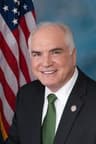 Mike Kelly
Republican · Pennsylvania
 Kevin Kiley
Independent · California
 Daniel Meuser
Republican · Pennsylvania
 Adrian Smith
Republican · Nebraska