A Republican bill with 17 Republican cosponsors · See all 17 cosponsors
Last activity — Read twice and referred to the Committee on the Judiciary.
In committee
Introduced and handed to a committee in the chamber it started in.
The committee holds it, and most bills are never heard from again. A hearing or a committee vote would be news; silence is the usual outcome, and it kills the bill without anyone voting against it.
Its path through Congress
- Introduced
- In Committee
What this bill would do
The "Stop Dangerous Sanctuary Cities Act" aims to facilitate cooperation between State and local law enforcement and Federal officials. It establishes that local officers complying with Department of Homeland Security detainers are considered agents of the Department of Homeland Security. The bill provides legal protections and immunity for these local officers and their jurisdictions when complying with such detainers. It defines "sanctuary jurisdiction" as any entity that restricts sharing immigration status information or complying with federal detainers. Furthermore, the Act makes such jurisdictions ineligible for certain federal funds, including Economic Development Administration grants and Community Development Block Grants. These changes are scheduled to take effect on October 1, 2025.
Yes· 3 of 4
- Scored +6
Does this give the federal government more power?
The bill increases federal authority over local law enforcement and restricts local policy-making through financial penalties.
- Scored +5
Does this tighten control of the border?
The bill facilitates cooperation between local law enforcement and federal officials to assist in immigration enforcement.
- Scored +3
Is this likely to grow the economy?
The bill reallocates federal grant funds from sanctuary jurisdictions to non-sanctuary jurisdictions.
The opposite· 3 of 7
- Scored -6
Would immigrants be better off under this?
The bill expands local law enforcement's role in cooperating with federal immigration authorities.
- Scored -5
Would households on low incomes be better off under this?
The loss of Community Development Block Grants may negatively impact low-income communities in sanctuary jurisdictions.
- Scored -5
Would Hispanic Americans be better off under this?
The bill targets jurisdictions based on immigration enforcement, which may affect communities with large Hispanic populations.
Who it would affect, and how
Potential Positive Impacts for People
-
Enhanced Law Enforcement Cooperation: The bill allows State and local law enforcement to act as agents of the Department of Homeland Security when complying with detainers, providing them with all available authority of the Department (Section 2(a)).
-
Legal Protection for Local Officers: Local officers who comply with Department of Homeland Security detainers are deemed to be acting within the scope of their employment as federal employees, which protects them in legal proceedings (Section 2(b)).
-
Legal Protection for Local Governments: The act states that no liability shall lie against a State or political subdivision for actions taken in compliance with a federal detainer (Section 2(b)(1)).
-
Protection for Crime Victims and Witnesses: Jurisdictions are not deemed "sanctuary jurisdictions" if their policies prevent sharing information specifically regarding individuals who come forward as a victim or a witness to a criminal offense (Section 3(b)).
Potential Negative Impacts for People
-
Loss of Federal Funding for Communities: Jurisdictions deemed "sanctuary jurisdictions" become ineligible for Economic Development Administration grants and Community Development Block Grants (Section 4(a) and Section 4(b)).
-
Mandatory Return of Grant Funds: If a State or local government is determined to be a sanctuary jurisdiction while receiving funds under Title I of the Housing and Community Development Act, they may be required to immediately return those amounts to the Secretary (Section 4(b)(2)(A)).
-
Redistribution of Funds Away from Certain Areas: Funds returned by sanctuary jurisdictions are reallocated to States and local governments that are not sanctuary jurisdictions (Section 4(b)(2)(A) and Section 4(b)(2)(B)).
Groups and Interests Ranking
Every group the model scored this bill for, from -10 to +10. Tap or hover a score for the reason it gave.
- Demographic And Interest Groups
- Would people in rural areas be better off under this? — The bill reallocates funds from sanctuary jurisdictions to other states and local governments. Would immigrants be better off under this? — The bill expands local law enforcement's role in cooperating with federal immigration authorities. Would Hispanic Americans be better off under this? — The bill targets jurisdictions based on immigration enforcement, which may affect communities with large Hispanic populations. Would households on low incomes be better off under this? — The loss of Community Development Block Grants may negatively impact low-income communities in sanctuary jurisdictions. Would people in cities be better off under this? — Sanctuary cities may lose significant federal funding for community development and public works. Would Black Americans be better off under this? — The loss of community development funding may disproportionately affect urban areas with high minority populations.
- Governance And Ideology
- Does this give the federal government more power? — The bill increases federal authority over local law enforcement and restricts local policy-making through financial penalties.
- Social Issues And Justice
- Does this tighten control of the border? — The bill facilitates cooperation between local law enforcement and federal officials to assist in immigration enforcement.
- Environment Energy And Infrastructure
- Does this repair or build roads and bridges? — Sanctuary jurisdictions lose eligibility for Economic Development Administration public works grants.
- Economy And Finance
- Is this likely to grow the economy? — The bill reallocates federal grant funds from sanctuary jurisdictions to non-sanctuary jurisdictions. Does this reduce what the federal government spends? — The bill reduces federal spending in sanctuary jurisdictions by making them ineligible for certain grants.
- 3/27/2025
- 1 Cosponsor added.
- 2/27/2025
- 2 Cosponsors added.
- 2/25/2025
- 1 Cosponsor added.
- 2/24/2025
- Read twice and referred to the Committee on the Judiciary.
- 13 Cosponsors added.
- Introduced in Senate
One bill Congress.gov lists as related to this one — companions in the other chamber, earlier versions, and bills this one absorbed or was folded into.
 Jim Banks
Republican · Indiana
 Ted Budd
Republican · North Carolina
 Katie Britt
Republican · Alabama
 Shelley Capito
Republican · West Virginia
 Kevin Cramer
Republican · North Dakota
 Deb Fischer
Republican · Nebraska
 Chuck Grassley
Republican · Iowa
 Bill Hagerty
Republican · Tennessee
 John Hoeven
Republican · North Dakota
 Cindy Hyde-Smith
Republican · Mississippi
 Ron Johnson
Republican · Wisconsin
 James Lankford
Republican · Oklahoma
 Bernie Moreno
Republican · Ohio
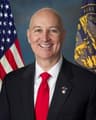 Pete Ricketts
Republican · Nebraska
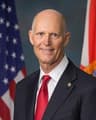 Rick Scott
Republican · Florida
 Eric Schmitt
Republican · Missouri
 Tim Sheehy
Republican · Montana