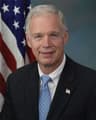
Ron Johnson (R-WI)
No WHO Pandemic Preparedness Treaty Without Senate Approval Act
A Republican bill with 18 Republican cosponsors · See all 18 cosponsors
Last activity — Read twice and referred to the Committee on Foreign Relations.
In committee
Introduced and handed to a committee in the chamber it started in.
The committee holds it, and most bills are never heard from again. A hearing or a committee vote would be news; silence is the usual outcome, and it kills the bill without anyone voting against it.
Its path through Congress
- Introduced
- In Committee
What this bill would do
This bill, titled the "No WHO Pandemic Preparedness Treaty Without Senate Approval Act," seeks to change how the United States handles international pandemic agreements. It targets any convention, agreement, or international instrument regarding pandemic prevention, preparedness, and response reached by the World Health Assembly. Specifically, it targets instruments resulting from the work of the International Negotiating Body. The act deems these instruments to be treaties that require the advice and consent of the Senate. To be approved, such agreements would require a two-thirds concurrence of the Senate.
Yes
- Scored +4
Does this make what the government does easier for the public to see?
The bill increases transparency by requiring high-threshold Senate ratification for international pandemic agreements.
The opposite· 3 of 4
- Scored -3
Does this make the country readier for the next outbreak?
The bill imposes a high two-thirds Senate threshold that may hinder the rapid adoption of international pandemic response frameworks.
- Scored -2
Does this strengthen ties with allied countries?
The stringent Senate approval requirement may complicate international cooperation and diplomatic relations with global health bodies.
- Scored -2
Does this give the federal government more power?
While it increases Senate oversight, it restricts the executive's ability to enter international agreements.
Who it would affect, and how
Potential Positive Impacts for People
-
Increased Accountability and Oversight: By requiring Senate ratification, the bill ensures that any international pandemic agreement is subject to the advice and consent of the Senate rather than being handled through other methods (Section 4).
-
Protection Against International Agreements Lacking Public Trust: The bill addresses findings that a segment of the American public is skeptical of the World Health Organization and its independence (Section 2, Findings 1 and 3; Section 3, Sense of the Senate 1). By requiring a two-thirds Senate vote, the bill aims to prevent the implementation of agreements that cannot garner significant legislative support (Section 3, Sense of the Senate 4).
Potential Negative Impacts for People
- Increased Difficulty in Approving International Agreements: Because the bill requires a two-thirds majority of Senators to concur for an agreement to be implemented, it creates a higher threshold for any pandemic-related instrument to be officially agreed to or implemented by the United States (Section 3, Sense of the Senate 2 and 4).
Groups and Interests Ranking
Every group the model scored this bill for, from -10 to +10. Tap or hover a score for the reason it gave.
- Healthcare
- Does this make the country readier for the next outbreak? — The bill imposes a high two-thirds Senate threshold that may hinder the rapid adoption of international pandemic response frameworks.
- National Security And Foreign Policy
- Does this strengthen ties with allied countries? — The stringent Senate approval requirement may complicate international cooperation and diplomatic relations with global health bodies. Does this favour talking over confrontation abroad? — The bill prioritizes domestic legislative oversight over streamlined international diplomatic processes.
- Governance And Ideology
- Does this make what the government does easier for the public to see? — The bill increases transparency by requiring high-threshold Senate ratification for international pandemic agreements. Does this give the federal government more power? — While it increases Senate oversight, it restricts the executive's ability to enter international agreements.
- 5/11/2026
- 1 Cosponsor added.
- 9/2/2025
- 1 Cosponsor added.
- 7/31/2025
- 1 Cosponsor added.
- 6/9/2025
- 1 Cosponsor added.
- 6/5/2025
- Read twice and referred to the Committee on Foreign Relations.
- 14 Cosponsors added.
- Introduced in Senate
One bill Congress.gov lists as related to this one — companions in the other chamber, earlier versions, and bills this one absorbed or was folded into.
 John Barrasso
Republican · Wyoming
 Ted Budd
Republican · North Carolina
 Mike Crapo
Republican · Idaho
 Kevin Cramer
Republican · North Dakota
 Joni Ernst
Republican · Iowa
 Chuck Grassley
Republican · Iowa
 Bill Hagerty
Republican · Tennessee
 John Hoeven
Republican · North Dakota
 Cynthia Lummis
Republican · Wyoming
 James Lankford
Republican · Oklahoma
 Mike Lee
Republican · Utah
 David McCormick
Republican · Pennsylvania
 Rand Paul
Republican · Kentucky
 James Risch
Republican · Idaho
 Rick Scott
Republican · Florida
 Tommy Tuberville
Republican · Alabama
 Thomas Tillis
Republican · North Carolina
 Roger Wicker
Republican · Mississippi