
A Republican bill with 11 Democratic cosponsors · See all 21 cosponsors
Last activity — Became Public Law No: 119-82.
Became law
Passed both chambers and was signed by the President, or became law without a signature.
Nothing more in Congress: it is law. When it takes effect depends on the dates written into it — some parts start at once, others a year or more later.
Its path through Congress
- Introduced
- Passed Senate unanimous consent
- Passed House voice vote
- To President
- Became Law
No one's position on it was recorded: the Senate by unanimous consent (no one objected, so there was no vote), and the House by voice vote (members called out yes or no together).
What this bill would do
This Act, known as the ``Holocaust Expropriated Art Recovery Act of 2025'', seeks to clarify and improve the existing 2016 Act. It aims to ensure that claims to recover Nazi-looted art are resolved on their actual merits rather than being dismissed due to various legal technicalities. The bill specifically targets defenses that rely on the passage of time or other non-merits discretionary factors. By doing so, it intends to permit claims regardless of the nationality or citizenship of the victim. These changes apply to both pending and future civil claims.
Yes
- Scored +7
Does this protect the right to fair treatment by the courts?
The bill enhances legal recourse for victims by precluding time-based and discretionary defenses.
The opposite
No question was scored the opposite.
Who it would affect, and how
Potential Positive Impacts for People
-
Facilitating Art Recovery: The Act intends to permit claims to recover Nazi-looted art to be resolved on the merits by precluding certain legal defenses (Section 2(a)(1)(A)).
-
Overcoming Time-Based Obstacles: The bill prohibits the use of defenses based on the passage of time, such as laches, adverse possession, acquisitive prescription, or usucapion (Section 2(a)(1)(A) and Section 2(a)(5)(f)). This helps those seeking to recover property despite how much time has passed since World War II.
-
Removing Discretionary Dismissals: It prohibits non-merits discretionary bases for dismissal, such as the act of state doctrine, international comity, forum non conveniens, and prudential exhaustion (Section 2(a)(1)(A) and Section 2(a)(5)(f)).
-
Ensuring Broad Eligibility: The Act intends to allow claims for the recovery of artwork or other property lost due to Nazi persecution, regardless of the nationality or citizenship of the alleged victim (Section 2(a)(1)(A)).
-
Bypassing Specific Legal Rules: The Act intends to allow claims notwithstanding the 'domestic takings' rule established in Federal Republic of Germany v. Philipp (Section 2(a)(1)(A)).
-
Clarifying Legal Standing: Any civil claim covered by the Act will be deemed an action where rights in violation of international law are in issue, regardless of the victim's nationality or citizenship (Section 2(a)(3)(B)).
-
Simplified Service of Process: For civil actions brought under this Act, process may be served in the judicial district where the case is brought or any other U.S. judicial district where the defendant can be found, resides, has an agent, or transacts business (Section 2(a)(3)(g)).
Potential Negative Impacts for People
- No specific negative impacts are explicitly detailed in the text provided.
Groups and Interests Ranking
Every group the model scored this bill for, from -10 to +10. Tap or hover a score for the reason it gave.
- Governance And Ideology
- Does this protect the right to fair treatment by the courts? — The bill enhances legal recourse for victims by precluding time-based and discretionary defenses.
- Public Law (4/14/2026)
The text as it became law
- Enrolled Bill
The final version, on its way to the President
- 4/13/2026
- Signed by President.
- Became Public Law No: 119-82.
- 4/2/2026
- Presented to President.
- 3/16/2026
- Motion to reconsider laid on the table Agreed to without objection.
- Passed/agreed to in House: On motion to suspend the rules and pass the bill Agreed to by voice vote. (text: CR H2497)
- On motion to suspend the rules and pass the bill Agreed to by voice vote. (text: CR H2497)
- DEBATE - The House proceeded with forty minutes of debate on S. 1884.
- Considered under suspension of the rules. (consideration: CR H2497-2500)
- Ms. Lee (FL) moved to suspend the rules and pass the bill.
- 12/11/2025
- Message on Senate action sent to the House.
- Held at the desk.
- Received in the House.
- 12/10/2025
- Passed/agreed to in Senate: Passed Senate with amendments by Unanimous Consent.
- Passed Senate with amendments by Unanimous Consent. (consideration: CR S8628-8629; text: CR S8629)
- 12/9/2025
- 2 Cosponsors added.
- 12/8/2025
- 1 Cosponsor added.
- 11/18/2025
- Committee on the Judiciary. Reported by Senator Grassley with amendments. Without written report.
- Placed on Senate Legislative Calendar under General Orders. Calendar No. 271.
- 11/6/2025
- Committee on the Judiciary. Ordered to be reported with amendments favorably.
- 3 Cosponsors added.
- 10/28/2025
- 1 Cosponsor added.
- 10/20/2025
- 1 Cosponsor added.
- 10/14/2025
- 2 Cosponsors added.
- 10/8/2025
- 1 Cosponsor added.
- 9/19/2025
- 1 Cosponsor added.
- 6/4/2025
- 1 Cosponsor added.
- 6/3/2025
- 1 Cosponsor added.
- 5/22/2025
- Read twice and referred to the Committee on the Judiciary.
- 7 Cosponsors added.
- Introduced in Senate
One bill Congress.gov lists as related to this one — companions in the other chamber, earlier versions, and bills this one absorbed or was folded into.
 Marsha Blackburn
Republican · Tennessee
 Richard Blumenthal
Democrat · Connecticut
 Cory Booker
Democrat · New Jersey
 Katie Britt
Republican · Alabama
 Christopher Coons
Democrat · Delaware
 Ted Cruz
Republican · Texas
 Richard Durbin
Democrat · Illinois
 John Fetterman
Democrat · Pennsylvania
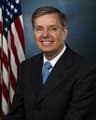 Lindsey Graham
Republican · South Carolina
 Chuck Grassley
Republican · Iowa
 Kirsten Gillibrand
Democrat · New York
 Bernie Moreno
Republican · Ohio
 David McCormick
Republican · Pennsylvania
 Jacky Rosen
Democrat · Nevada
 Adam Schiff
Democrat · California
 Elissa Slotkin
Democrat · Michigan
 Rick Scott
Republican · Florida
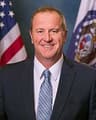 Eric Schmitt
Republican · Missouri
 Thomas Tillis
Republican · North Carolina
 Raphael Warnock
Democrat · Georgia
 Peter Welch
Democrat · Vermont