
A Republican bill with 24 Democratic cosponsors · See all 54 cosponsors
Last activity — Received in the Senate. Read twice. Placed on Senate Legislative Calendar under General Orders. Calendar No. 627.
Waiting for a floor vote in the other chamber
Passed one chamber and is on the other chamber's calendar.
The calendar is a queue, not a date. The majority leadership decides what comes to the floor and when; much of what is placed on it is never called, and a bill that is never called simply expires with the Congress.
Its path through Congress
- Introduced
- Passed House 414–7
- Awaiting Senate
- On Senate calendar
What this bill would do
This bill is known as the Guarding Unprotected Aging Retirees from Deception Act of 2026 or the GUARD Act of 2026. It allows State, local, and Tribal law enforcement agencies that receive certain Federal grant funds to use that money to investigate elder financial fraud, pig butchering, and general financial fraud. The legislation also clarifies that Federal law enforcement agencies can assist these local agencies with blockchain tracing tools and related technology. Additionally, the bill requires various reports to be submitted to Congress regarding fraud statistics, scam trends, and recovery efforts. Finally, it outlines definitions for financial crimes, scams, and eligible grant funds to guide law enforcement efforts.
Yes· 3 of 21
- Scored +9
Would people over 65 be better off under this?
The bill specifically prioritizes the investigation of elder financial fraud to protect seniors.
- Scored +9
Would retired people be better off under this?
Directly aims to protect retirees from deception and financial fraud.
- Scored +7
Does this give people more protection from unfair business practices?
The bill specifically targets the investigation of financial fraud, scams, and pig butchering to protect consumers.
The opposite
No question was scored the opposite.
What Congress actually voted on
One recorded vote has been taken on this bill.
- The House: a fast-track vote, needing two-thirds to pass The House sets aside its normal procedure to move quickly: no amendments, little debate, and a two-thirds bar instead of a simple majority. It is used for measures expected to be uncontroversial, so a bill that fails here failed despite broad expectations that it would not. Passed 414 yes · 7 no
09/15/2026 · Roll call 301 · recorded as “On Motion to Suspend the Rules and Pass, as Amended”
Who it would affect, and how
Potential Positive Impacts for People
-
Section 3(a): This section lets law enforcement agencies use specific Federal grant funds to hire personnel, obtain software, and train experts to investigate elder financial fraud, pig butchering, and general financial fraud. This could benefit individuals by providing better local protection and resources to fight complex financial scams that target everyday people.
-
Section 3(a)(2)(B): This part allows grant funds to be used for training specifically focused on assisting victims of financial fraud and exploitation. This is positive because it directly supports victims who have suffered financial losses.
-
Section 7: This provision clarifies that Federal law enforcement agencies may assist State, local, and Tribal law enforcement agencies and fusion centers in using tracing tools for blockchain and related technology. This could help catch scammers who use cryptocurrency and digital assets to hide stolen money.
Potential Negative Impacts for People
- Section 3(b): This section requires law enforcement agencies and grantees that use these Federal funds for fraud investigations to submit a report to the Federal agency that provided the grant within one year. While meant for accountability, the administrative paperwork and reporting burden could potentially pull law enforcement officers away from active investigations to write reports.
Groups and Interests Ranking
Every group the model scored this bill for, from -10 to +10. Tap or hover a score for the reason it gave.
- Demographic And Interest Groups
- Would retired people be better off under this? — Directly aims to protect retirees from deception and financial fraud. Would people over 65 be better off under this? — The bill specifically prioritizes the investigation of elder financial fraud to protect seniors. Would people with disabilities be better off under this? — The bill specifically mentions protecting adults with disabilities from financial exploitation. Would households on low incomes be better off under this? — Protects those who cannot afford to lose money to fraudulent schemes. Would middle-income households be better off under this? — Protects middle-class savings from sophisticated financial scams. Would billionaires be better off under this? — General reduction in systemic financial fraud benefits all asset holders. Would high-income households be better off under this? — Reduces the risk of financial loss through investment fraud. Would people with substantial wealth be better off under this? — Provides better investigative tools for recovering assets from high-value scams. Would people in middle age be better off under this? — Protects adults of all ages from general financial fraud and scams. Would Native Americans be better off under this? — Explicitly allows Tribal law enforcement agencies to use these federal grants. Would the very wealthiest people be better off under this? — Reduces the efficacy of sophisticated financial crimes. Would people in their twenties and thirties be better off under this? — Young adults who use cryptocurrency are often targets of pig butchering scams.
- Economy And Finance
- Does this give people more protection from unfair business practices? — The bill specifically targets the investigation of financial fraud, scams, and pig butchering to protect consumers. Is this likely to create jobs? — The bill allows grant funds to be used for hiring analysts, agents, and experts in law enforcement. Is this likely to grow the economy? — Reducing financial fraud and scams can protect consumer assets and economic stability.
- Governance And Ideology
- Does this make what the government does easier for the public to see? — The bill mandates several comprehensive reports to Congress on the state of scams and use of funds. Does this leave more decisions to the states? — It provides State, local, and Tribal agencies more flexibility in using federal grant funds. Does this give the federal government more power? — The bill increases federal oversight through reporting requirements and federal assistance to local agencies.
- National Security And Foreign Policy
- Does this better protect the country from computer attacks? — The bill enhances the ability of law enforcement to trace blockchain transactions and investigate cyber-enabled financial crimes.
- Social Issues And Justice
- Does this expand the rights of people with disabilities? — The bill explicitly includes adults with disabilities in the definition of elder financial fraud victims. Is this likely to lift people out of poverty? — Reducing financial losses from scams helps prevent individuals from falling into poverty.
- 9/16/2026
- Received in the Senate. Read twice. Placed on Senate Legislative Calendar under General Orders. Calendar No. 627.
- 9/15/2026
- Motion to reconsider laid on the table Agreed to without objection.
- Passed/agreed to in House: On motion to suspend the rules and pass the bill, as amended Agreed to by the Yeas and Nays: (2/3 required): 414 - 7 (Roll no. 301). (text: CR H5602-5603)
- On motion to suspend the rules and pass the bill, as amended Agreed to by the Yeas and Nays: (2/3 required): 414 - 7 (Roll no. 301). (text: CR H5602-5603)
- Considered as unfinished business. (consideration: CR H5822)
- 9/14/2026
- At the conclusion of debate, the Yeas and Nays were demanded and ordered. Pursuant to the provisions of clause 8, rule XX, the Chair announced that further proceedings on the motion would be postponed.
- DEBATE - The House proceeded with forty minutes of debate on H.R. 2978.
- Considered under suspension of the rules. (consideration: CR H5602-5605)
- Ms. De La Cruz moved to suspend the rules and pass the bill, as amended.
- 1 Cosponsor added.
- 9/3/2026
- 2 Cosponsors added.
- 6/24/2026
- Reported (Amended) by the Committee on Financial Services. H. Rept. 119-709, Part I.
- 6/10/2026
- 1 Cosponsor added.
- 6/4/2026
- 1 Cosponsor added.
- 6/3/2026
- 2 Cosponsors added.
- 6/2/2026
- 2 Cosponsors added.
- 5/19/2026
- 2 Cosponsors added.
- 5/14/2026
- 2 Cosponsors added.
- 5/13/2026
- Committee Consideration and Mark-up Session Held
- Ordered to be Reported (Amended) by the Yeas and Nays: 52 - 0.
- 1 Cosponsor added.
- 5/12/2026
- 2 Cosponsors added.
- 5/11/2026
- 1 Cosponsor added.
- 4/23/2026
- 2 Cosponsors added.
- 4/22/2026
- 2 Cosponsors added.
- 4/21/2026
- 1 Cosponsor added.
- 4/15/2026
- 1 Cosponsor added.
- 4/14/2026
- 1 Cosponsor added.
- 3/18/2026
- 1 Cosponsor added.
- 2/24/2026
- 2 Cosponsors added.
- 2/23/2026
- 4 Cosponsors added.
- 2/20/2026
- 1 Cosponsor added.
- 2/10/2026
- 2 Cosponsors added.
- 12/18/2025
- 2 Cosponsors added.
- 12/17/2025
- 2 Cosponsors added.
- 12/9/2025
- 2 Cosponsors added.
- 11/19/2025
- 1 Cosponsor added.
- 11/18/2025
- 1 Cosponsor added.
- 11/17/2025
- 2 Cosponsors added.
- 10/24/2025
- 1 Cosponsor added.
- 10/14/2025
- 1 Cosponsor added.
- 9/26/2025
- 4 Cosponsors added.
- 9/15/2025
- 1 Cosponsor added.
- 8/1/2025
- 1 Cosponsor added.
- 4/21/2025
- Referred to the Committee on the Judiciary, and in addition to the Committee on Financial Services, for a period to be subsequently determined by the Speaker, in each case for consideration of such provisions as fall within the jurisdiction of the committee concerned.
- 2 Cosponsors added.
- Introduced in House
One bill Congress.gov lists as related to this one — companions in the other chamber, earlier versions, and bills this one absorbed or was folded into.
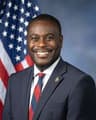 Gabe Amo
Democrat · Rhode Island
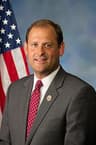 Andy Barr
Republican · Kentucky
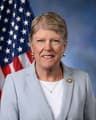 Julia Brownley
Democrat · California
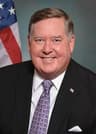 Ken Calvert
Republican · California
 Sean Casten
Democrat · Illinois
 Angie Craig
Democrat · Minnesota
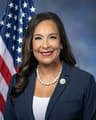 Monica De La Cruz
Republican · Texas
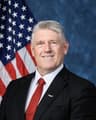 Troy Downing
Republican · Montana
 Gabe Evans
Republican · Colorado
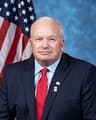 Scott Fitzgerald
Republican · Wisconsin
 Julie Fedorchak
Republican · North Dakota
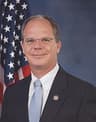 Brett Guthrie
Republican · Kentucky
 Glenn Grothman
Republican · Wisconsin
 Josh Gottheimer
Democrat · New Jersey
 Laura Gillen
Democrat · New York
 Maggie Goodlander
Democrat · New Hampshire
 Jahana Hayes
Democrat · Connecticut
 Josh Harder
Democrat · California
 Ashley Hinson
Republican · Iowa
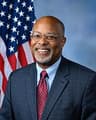 Glenn Ivey
Democrat · Maryland
 Julie Johnson
Democrat · Texas
 Young Kim
Republican · California
 Jennifer Kiggans
Republican · Virginia
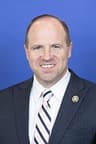 Timothy Kennedy
Democrat · New York
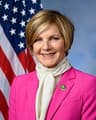 Susie Lee
Democrat · Nevada
 Michael Lawler
Republican · New York
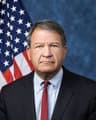 George Latimer
Democrat · New York
 Tracey Mann
Republican · Kansas
 Daniel Meuser
Republican · Pennsylvania
 Barry Moore
Republican · Alabama
 John Mannion
Democrat · New York
 Tim Moore
Republican · North Carolina
 Sarah McBride
Democrat · Delaware
 Dave Min
Democrat · California
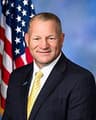 Troy Nehls
Republican · Texas
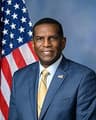 Burgess Owens
Republican · Utah
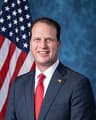 August Pfluger
Republican · Texas
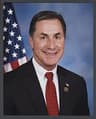 Gary Palmer
Republican · Alabama
 Maria Salazar
Republican · Florida
 Adam Smith
Democrat · Washington
 Marlin Stutzman
Republican · Indiana
 Thomas Suozzi
Democrat · New York
 Eric Sorensen
Democrat · Illinois
 Derek Schmidt
Republican · Kansas
 Jefferson Shreve
Republican · Indiana
 Suhas Subramanyam
Democrat · Virginia
 Thomas Tiffany
Republican · Wisconsin
 Derek Tran
Democrat · California
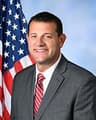 David Valadao
Republican · California
 Jefferson Van Drew
Republican · New Jersey
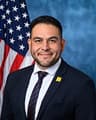 Gabe Vasquez
Democrat · New Mexico
 Robert Wittman
Republican · Virginia
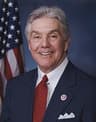 Roger Williams
Republican · Texas
 George Whitesides
Democrat · California