
A Republican bill with 6 Democratic cosponsors · See all 14 cosponsors
Last activity — Placed on Senate Legislative Calendar under General Orders. Calendar No. 317.
Cleared committee, waiting for its first floor vote
A committee approved it and it is on the calendar of the chamber it started in.
This is further than most bills get, and still no promise of a vote: the calendar is a queue, and the majority leadership decides what is called. A bill can sit here until the Congress ends.
Its path through Congress
- Introduced
- On Calendar
What this bill would do
The GUARD Act allows State, local, and Tribal law enforcement agencies to use specific Federal grant funds to investigate elder financial fraud, pig butchering, and general financial fraud. These funds can be used for hiring experts, providing specialized training, and obtaining technical software. The bill also permits Federal law enforcement to assist local agencies with blockchain tracing tools. Law enforcement agencies must submit reports to their grant providers detailing how the money was used and its impact on fraud statistics. Additionally, the Treasury Department is required to submit comprehensive reports to Congress regarding the state of scams in the United States.
Yes· 3 of 9
- Scored +8
Would people over 65 be better off under this?
The bill specifically aims to protect seniors from elder financial fraud and exploitation.
- Scored +7
Does this give people more protection from unfair business practices?
The bill enhances protections against financial fraud, pig butchering, and scams through better law enforcement training and tools.
- Scored +6
Would people with disabilities be better off under this?
The bill's definitions include protecting adults with disabilities from financial exploitation.
The opposite
No question was scored the opposite.
Who it would affect, and how
Potential Positive Impacts for People
-
Enhanced Investigation Capabilities: Law enforcement agencies can use funds to hire analysts and experts, provide training on complex investigations, and obtain necessary software and technical tools (Section 3(a)).
-
Improved Coordination: The bill allows for training that encourages better collaboration between different levels of law enforcement and supports tabletop exercises to improve communication between financial institutions and law enforcement (Section 3(a)).
-
Blockchain Tracing Assistance: Federal law enforcement agencies are authorized to assist State, local, and Tribal law enforcement agencies and fusion centers in using tools to trace blockchain and related technology (Section 7).
-
Increased Information Sharing: The act allows for the designation of financial sector liaisons to help financial institutions share relevant information with law enforcement agencies (Section 3(a)).
-
Better Data and Oversight: By requiring detailed reports on fraud statistics, consumer losses, and the effectiveness of enforcement actions, the bill seeks to provide a clearer picture of the state of scams in the country (Section 5).
Potential Negative Impacts for People
-
Increased Reporting Burdens: Law enforcement agencies that use these funds must submit annual reports to their Federal grant providers, which include explanations of spending, crime statistics, and assessments of their ability to deter fraud (Section 3(b)).
-
Requirement for Federal Reporting: Federal agencies that provide these grants must issue annual reports to specific Congressional committees regarding the information received from law enforcement agencies (Section 6).
Groups and Interests Ranking
Every group the model scored this bill for, from -10 to +10. Tap or hover a score for the reason it gave.
- Demographic And Interest Groups
- Would people over 65 be better off under this? — The bill specifically aims to protect seniors from elder financial fraud and exploitation. Would people with disabilities be better off under this? — The bill's definitions include protecting adults with disabilities from financial exploitation. Would households on low incomes be better off under this? — Protecting consumers from scams helps prevent the loss of critical financial assets.
- Social Issues And Justice
- Does this change how police departments operate? — The bill improves law enforcement capabilities to investigate complex financial crimes and collaborate across jurisdictions. Is this likely to lift people out of poverty? — By combating financial fraud targeting the elderly, the bill helps protect the assets of vulnerable populations.
- Economy And Finance
- Does this give people more protection from unfair business practices? — The bill enhances protections against financial fraud, pig butchering, and scams through better law enforcement training and tools.
- National Security And Foreign Policy
- Does this better protect the country from computer attacks? — The bill provides resources for investigating blockchain-related crimes and emerging technological threats.
- Governance And Ideology
- Does this make what the government does easier for the public to see? — The bill mandates detailed reports to Congress on the state of scams and the use of fraud-prevention funds.
- Education And Technology
- Does this give people more control over their personal data? — The bill targets the theft of personal and sensitive information used in financial scams.
- 8/6/2026
- 1 Cosponsor added.
- 7/30/2026
- 1 Cosponsor added.
- 7/15/2026
- 1 Cosponsor added.
- 6/24/2026
- 1 Cosponsor added.
- 6/16/2026
- 1 Cosponsor added.
- 2/9/2026
- Committee on the Judiciary. Reported by Senator Grassley without amendment. Without written report.
- Placed on Senate Legislative Calendar under General Orders. Calendar No. 317.
- 2/5/2026
- Committee on the Judiciary. Ordered to be reported without amendment favorably.
- 3 Cosponsors added.
- 2/4/2026
- 2 Cosponsors added.
- 12/11/2025
- 2 Cosponsors added.
- 7/30/2025
- Read twice and referred to the Committee on the Judiciary.
- 2 Cosponsors added.
- Introduced in Senate
One bill Congress.gov lists as related to this one — companions in the other chamber, earlier versions, and bills this one absorbed or was folded into.
 Christopher Coons
Democrat · Delaware
 Ted Cruz
Republican · Texas
 Chuck Grassley
Republican · Iowa
 Kirsten Gillibrand
Democrat · New York
 Maggie Hassan
Democrat · New Hampshire
 Amy Klobuchar
Democrat · Minnesota
 Angus King
Independent · Maine
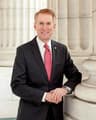 James Lankford
Republican · Oklahoma
 Ashley Moody
Republican · Florida
 Pete Ricketts
Republican · Nebraska
 Jeanne Shaheen
Democrat · New Hampshire
 Dan Sullivan
Republican · Alaska
 Rick Scott
Republican · Florida
 Raphael Warnock
Democrat · Georgia