
Steve Daines (R-MT)
A resolution expressing support for the designation of May 5, 2026, as "National Day of Awareness for Missing and Murdered Indigenous Women and Girls".
A Republican resolution with 15 Democratic cosponsors · See all 22 cosponsors
Last activity — Submitted in the Senate, considered, and agreed to without amendment and with a preamble by Unanimous Consent. (consideration: CR S2241; text: CR S2240-2241)
Adopted
The chamber formally agreed to it, and for a resolution that is the finish line: what it says is now officially the chamber's position, rule or tribute.
Nothing more is needed. A resolution is how a chamber speaks for itself or sets its own rules, so adopting it is what puts it into effect. It is not a law, so there is nothing for the President to sign.
Its path through Congress
- Introduced
- Officially Recorded
- Adopted by the Senate unanimous consent
A Senate resolution is the Senate speaking for itself: stating a position, honouring someone, or setting its own rules. Adopting it is the whole process. Once the Senate agrees to it, it is officially the Senate's word; it is not a law, so the House and the President have no part in it.
The Senate by unanimous consent (no one objected, so there was no vote): no senator's position on it was recorded.
What this bill would do
This resolution expresses support for designating May 5, 2026, as the "National Day of Awareness for Missing and Murdered Indigenous Women and Girls." It aims to commemorate the lives of missing and murdered American Indian, Alaska Native, and Native Hawaiian women. The resolution also calls on the public and interested groups to show solidarity with the victims' families. Additionally, it recommends that the Department of Justice's National Institute of Justice conduct a new study to provide up-to-date statistics on this crisis. The Senate recognizes that further work is required to address this nationwide issue.
Yes· 3 of 4
- Scored +6
Would Native Americans be better off under this?
The resolution honors Native women and calls for updated statistical data to better address the violence they face.
- Scored +5
Would women be better off under this?
The resolution focuses on raising awareness and gathering data regarding the crisis of missing and murdered women.
- Scored +5
Does this narrow racial gaps in how people are treated?
The resolution addresses the disproportionately high rates of violence and murder facing American Indian, Alaska Native, and Native Hawaiian women.
The opposite
No question was scored the opposite.
Who it would affect, and how
Potential Positive Impacts for People
-
Designation of a National Day of Awareness: By designating May 5, 2026, as a specific day, the resolution provides a way to honor the lives of American Indian, Alaska Native, and Native Hawaiian women (Section 1).
-
Commemoration and Solidarity: The resolution calls for the public to commemorate documented and undocumented cases and demonstrate solidarity with the families of victims (Section 2, A and B).
-
Updated Statistical Data: The resolution recommends a new study by the National Institute of Justice to ensure that current statistics regarding the crisis are made public, noting that the previous study is 10 years old (Section 3).
Potential Negative Impacts for People
- No specific negative impacts or burdens are explicitly mentioned in the text of this resolution.
Groups and Interests Ranking
Every group the model scored this bill for, from -10 to +10. Tap or hover a score for the reason it gave.
- Demographic And Interest Groups
- Would Native Americans be better off under this? — The resolution honors Native women and calls for updated statistical data to better address the violence they face. Would women be better off under this? — The resolution focuses on raising awareness and gathering data regarding the crisis of missing and murdered women.
- Social Issues And Justice
- Does this narrow racial gaps in how people are treated? — The resolution addresses the disproportionately high rates of violence and murder facing American Indian, Alaska Native, and Native Hawaiian women. Does this change how police departments operate? — The bill recommends a new study to improve the understanding of the MMIW crisis, which supports more effective law enforcement responses.
- 5/12/2026
- Passed/agreed to in Senate: Submitted in the Senate, considered, and agreed to without amendment and with a preamble by Unanimous Consent.
- Submitted in the Senate, considered, and agreed to without amendment and with a preamble by Unanimous Consent. (consideration: CR S2241; text: CR S2240-2241)
- 22 Cosponsors added.
- Bill introduced.
One bill Congress.gov lists as related to this one — companions in the other chamber, earlier versions, and bills this one absorbed or was folded into.
 Tammy Baldwin
Democrat · Wisconsin
 Maria Cantwell
Democrat · Washington
 Kevin Cramer
Republican · North Dakota
 Catherine Cortez Masto
Democrat · Nevada
 Ruben Gallego
Democrat · Arizona
 John Hickenlooper
Democrat · Colorado
 Mazie Hirono
Democrat · Hawaii
 Martin Heinrich
Democrat · New Mexico
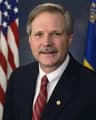 John Hoeven
Republican · North Dakota
 Amy Klobuchar
Democrat · Minnesota
 Mark Kelly
Democrat · Arizona
 Ben Luján
Democrat · New Mexico
 James Lankford
Republican · Oklahoma
 Patty Murray
Democrat · Washington
 Lisa Murkowski
Republican · Alaska
 Alex Padilla
Democrat · California
 Mike Rounds
Republican · South Dakota
 Jacky Rosen
Democrat · Nevada
 Brian Schatz
Democrat · Hawaii
 Dan Sullivan
Republican · Alaska
 Tina Smith
Democrat · Minnesota
 Tim Sheehy
Republican · Montana