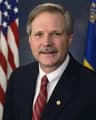
John Hoeven (R-ND)
A resolution designating November 1, 2025, as "National Bison Day".
A Republican resolution with 12 Democratic cosponsors · See all 25 cosponsors
Last activity — Submitted in the Senate, considered, and agreed to without amendment and with a preamble by Unanimous Consent. (consideration: CR S7830-7831; text: CR S7830)
Adopted
The chamber formally agreed to it, and for a resolution that is the finish line: what it says is now officially the chamber's position, rule or tribute.
Nothing more is needed. A resolution is how a chamber speaks for itself or sets its own rules, so adopting it is what puts it into effect. It is not a law, so there is nothing for the President to sign.
Its path through Congress
- Introduced
- Officially Recorded
- Adopted by the Senate unanimous consent
A Senate resolution is the Senate speaking for itself: stating a position, honouring someone, or setting its own rules. Adopting it is the whole process. Once the Senate agrees to it, it is officially the Senate's word; it is not a law, so the House and the President have no part in it.
The Senate by unanimous consent (no one objected, so there was no vote): no senator's position on it was recorded.
What this bill would do
S. Res. 475 designates November 1, 2025, as "National Bison Day". The resolution recognizes the bison as a historical, cultural, and economic symbol of the United States. It highlights the animal's importance to Indian Tribes, private producers, and the environment. The Senate encourages people in the United States to observe the day with activities and ceremonies.
Yes· 3 of 12
- Scored +5
Would Native Americans be better off under this?
Strongly recognizes the spiritual, cultural, and economic ties of Indian Tribes to bison.
- Scored +3
Would farmers be better off under this?
Supports the recognition of bison producers and livestock management.
- Scored +3
Would people in rural areas be better off under this?
Bison provide significant economic value to rural communities.
The opposite
No question was scored the opposite.
Who it would affect, and how
Potential Positive Impacts for People
-
Cultural and Spiritual Recognition: The resolution acknowledges that bison are linked to the economic and spiritual lives of many Indian Tribes through sacred ceremonies and trade.
-
Economic Support: The text notes that bison provide economic value for rural communities, Tribal groups, and private producers, including the creation of jobs.
-
Food Security: According to the Department of Agriculture estimate from 2022, bison under the stewardship of private producers contribute to food security by providing a healthy and sustainable meat source.
-
Environmental Health: The resolution states that bison play an important role in the health of United States grasslands, landscapes, and wildlife.
Potential Negative Impacts for People
- No negative impacts for people are mentioned in the provided text.
Groups and Interests Ranking
Every group the model scored this bill for, from -10 to +10. Tap or hover a score for the reason it gave.
- Demographic And Interest Groups
- Would Native Americans be better off under this? — Strongly recognizes the spiritual, cultural, and economic ties of Indian Tribes to bison. Would farmers be better off under this? — Supports the recognition of bison producers and livestock management. Would people in rural areas be better off under this? — Bison provide significant economic value to rural communities. Would business owners be better off under this? — Positively recognizes the role of private bison producers.
- Environment Energy And Infrastructure
- Does this better protect air, water and wildlife? — Highlights the bison's role in the health of grasslands, landscapes, and wildlife. Does this invest in rural communities? — Promotes the economic value of bison for rural communities. Does this better protect public land such as parks and forests? — Cites the importance of bison in national wildlife refuges and parks.
- Economy And Finance
- Is this likely to grow the economy? — Recognizing the economic value of bison supports rural and Tribal economic activities. Does this make it easier to run a small business? — Provides recognition for private bison producers and their economic contribution. Is this likely to create jobs? — The bill acknowledges that bison production creates jobs in rural and Tribal communities.
- Social Issues And Justice
- Does this narrow racial gaps in how people are treated? — Recognizes the cultural and spiritual significance of bison to Indian Tribes. Does this protect the freedom to practise a religion? — Acknowledges bison as part of sacred ceremonies for Indian Tribes.
- 10/29/2025
- Passed/agreed to in Senate: Submitted in the Senate, considered, and agreed to without amendment and with a preamble by Unanimous Consent.
- Submitted in the Senate, considered, and agreed to without amendment and with a preamble by Unanimous Consent. (consideration: CR S7830-7831; text: CR S7830)
- 25 Cosponsors added.
- Introduced in Senate
 Tammy Baldwin
Democrat · Wisconsin
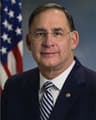 John Boozman
Republican · Arkansas
 John Barrasso
Republican · Wyoming
 Michael Bennet
Democrat · Colorado
 Cory Booker
Democrat · New Jersey
 Christopher Coons
Democrat · Delaware
 Kevin Cramer
Republican · North Dakota
 Tammy Duckworth
Democrat · Illinois
 John Hickenlooper
Democrat · Colorado
 Martin Heinrich
Democrat · New Mexico
 Cindy Hyde-Smith
Republican · Mississippi
 Amy Klobuchar
Democrat · Minnesota
 Ben Luján
Democrat · New Mexico
 Cynthia Lummis
Republican · Wyoming
 Jerry Moran
Republican · Kansas
 Markwayne Mullin
Republican · Oklahoma
 Roger Marshall
Republican · Kansas
 Mike Rounds
Republican · South Dakota
 Pete Ricketts
Republican · Nebraska
 Tina Smith
Democrat · Minnesota
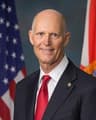 Rick Scott
Republican · Florida
 Tim Sheehy
Republican · Montana
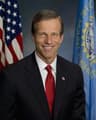 John Thune
Republican · South Dakota
 Sheldon Whitehouse
Democrat · Rhode Island
 Elizabeth Warren
Democrat · Massachusetts