
A Republican bill with 10 Democratic cosponsors · See all 20 cosponsors
Last activity — Read twice and referred to the Committee on Health, Education, Labor, and Pensions.
In committee
Introduced and handed to a committee in the chamber it started in.
The committee holds it, and most bills are never heard from again. A hearing or a committee vote would be news; silence is the usual outcome, and it kills the bill without anyone voting against it.
Its path through Congress
- Introduced
- In Committee
What this bill would do
The "Give Kids a Chance Act of 2025" aims to amend the Federal Food, Drug, and Cosmetic Act regarding molecularly targeted pediatric cancer investigations. It expands the scope of investigations to include drugs or biological products used in combination with other ingredients that are part of the standard of care or treat adult cancers. The bill also requires these investigations to provide clinically meaningful data on dosing, safety, and efficacy for various age groups. Additionally, it extends the authority to issue priority review vouchers to encourage the development of treatments for rare pediatric diseases. The Act mandates several studies and reports to evaluate the effectiveness of these programs and their impact on drug development.
Yes· 3 of 7
- Scored +8
Would children be better off under this?
The bill specifically targets and incentivizes treatments for pediatric cancer.
- Scored +7
Does this make health care easier to get in general?
The bill facilitates development of treatments for rare pediatric diseases and pediatric cancers.
- Scored +5
Does this put more money into medical research?
The bill expands research scope and incentivizes development through priority review vouchers.
The opposite
No question was scored the opposite.
Who it would affect, and how
Potential Positive Impacts for People
-
Improved Pediatric Cancer Treatment Data: The bill requires investigations to be designed to yield clinically meaningful data regarding dosing, safety, and preliminary efficacy for different age groups (Section 2(a)(1)(B)(i)).
-
Expanded Research Scope: Investigations can now include a drug or biological product used in combination with an active ingredient that is part of the standard of care for treating a pediatric cancer (Section 2(a)(1)(A)(ii)(I)(bb)).
-
Targeted Adult-to-Pediatric Research: Investigations may involve an active ingredient of a drug used to treat an adult cancer, provided it is directed at a molecular target relevant to the growth or progression of a pediatric cancer (Section 2(a)(1)(A)(ii)(II)(aa) and (bb)).
-
Encouragement of Rare Disease Treatments: The bill extends the authority to issue priority review vouchers, which is intended to encourage the development of treatments for rare pediatric diseases (Section 3(a)).
Potential Negative Impacts for People
-
Potential Burdens on Drug Development: The Government Accountability Office (GAO) is tasked with studying whether these requirements create burdens on pediatric cancer drug development (Section 2(d)(2)(A)).
-
FDA Workload Concerns: The GAO study will examine the impact of priority review vouchers on the workload and review process of the Food and Drug Administration (Section 3(c)(1)(B)(xi)).
Groups and Interests Ranking
Every group the model scored this bill for, from -10 to +10. Tap or hover a score for the reason it gave.
- Healthcare
- Does this make health care easier to get in general? — The bill facilitates development of treatments for rare pediatric diseases and pediatric cancers. Does this put more money into medical research? — The bill expands research scope and incentivizes development through priority review vouchers.
- Demographic And Interest Groups
- Would children be better off under this? — The bill specifically targets and incentivizes treatments for pediatric cancer. Would business owners be better off under this? — The bill provides incentives for pharmaceutical companies through priority review vouchers.
- Education And Technology
- Does this put more money into scientific research? — The bill promotes investigation into molecularly targeted pediatric cancer drugs.
- Governance And Ideology
- Does this make what the government does easier for the public to see? — The bill mandates several GAO reports and studies to track effectiveness. Does this give the federal government more power? — The bill expands FDA authority regarding pediatric cancer investigations.
- 11/19/2025
- 1 Cosponsor added.
- 11/18/2025
- 3 Cosponsors added.
- 11/6/2025
- 2 Cosponsors added.
- 10/30/2025
- 2 Cosponsors added.
- 10/23/2025
- 6 Cosponsors added.
- 4/8/2025
- 2 Cosponsors added.
- 4/4/2025
- 3 Cosponsors added.
- 3/11/2025
- Read twice and referred to the Committee on Health, Education, Labor, and Pensions.
- 1 Cosponsor added.
- Introduced in Senate
5 bills Congress.gov lists as related to this one — companions in the other chamber, earlier versions, and bills this one absorbed or was folded into.
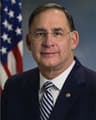 John Boozman
Republican · Arkansas
 Michael Bennet
Democrat · Colorado
 Susan Collins
Republican · Maine
 Shelley Capito
Republican · West Virginia
 Christopher Coons
Democrat · Delaware
 Tammy Duckworth
Democrat · Illinois
 John Hickenlooper
Democrat · Colorado
 Jon Husted
Republican · Ohio
 Amy Klobuchar
Democrat · Minnesota
 Mark Kelly
Democrat · Arizona
 John Kennedy
Republican · Louisiana
 Andy Kim
Democrat · New Jersey
 Roger Marshall
Republican · Kansas
 Ashley Moody
Republican · Florida
 John Reed
Democrat · Rhode Island
 Adam Schiff
Democrat · California
 Jeanne Shaheen
Democrat · New Hampshire
 Rick Scott
Republican · Florida
 Eric Schmitt
Republican · Missouri
 Tim Sheehy
Republican · Montana