
A Democratic bill with 9 Republican cosponsors · See all 16 cosponsors
Last activity — Read twice and referred to the Committee on Finance.
In committee
Introduced and handed to a committee in the chamber it started in.
The committee holds it, and most bills are never heard from again. A hearing or a committee vote would be news; silence is the usual outcome, and it kills the bill without anyone voting against it.
Its path through Congress
- Introduced
- In Committee
What this bill would do
The ``Freedom to Invest in Tomorrow's Workforce Act'' aims to amend the Internal Revenue Code of 1986. It proposes to treat certain postsecondary credentialing expenses as qualified higher education expenses for 529 accounts. This change would include expenses like tuition, fees, books, and equipment for recognized credential programs. It also covers testing fees required to obtain or maintain a credential and continuing education fees. The bill defines what constitutes a recognized program and a recognized credential through various standards. These changes would apply to distributions made after the bill is enacted.
Yes· 3 of 9
- Scored +5
Would veterans be better off under this, taking everything together?
The bill specifically includes credentials listed in the Veterans Benefits Administration's directory as eligible expenses.
- Scored +5
Would students be better off under this?
The bill expands the range of educational expenses that can be covered by tax-advantaged 529 accounts.
- Scored +5
Does this make college cost less?
The bill increases the utility of 529 accounts by allowing them to be used for postsecondary credentialing, testing, and continuing education expenses.
The opposite
No question was scored the opposite.
Who it would affect, and how
Potential Positive Impacts for People
-
Expanded use of 529 accounts: Individuals can use 529 account funds for tuition, fees, books, supplies, and equipment required for enrollment in recognized postsecondary credential programs (Section 2(b)(1)(A)).
-
Support for professional certification: The bill allows for the use of funds for testing fees required to obtain or maintain a recognized postscondary credential (Section 2(b)(1)(B)).
-
Support for lifelong learning: Funds can be used for continuing education fees if that education is required to maintain a recognized postsecondary credential (Section 2(b)(1)(C)).
-
Recognition of diverse paths: The bill recognizes several types of credentials, such as industry-recognized employment credentials, registered apprenticeship certificates, and occupational or professional licenses (Section 2(b)(3)).
Potential Negative Impacts for People
- No negative impacts are explicitly stated in the provided text.
Groups and Interests Ranking
Every group the model scored this bill for, from -10 to +10. Tap or hover a score for the reason it gave.
- Demographic And Interest Groups
- Would students be better off under this? — The bill expands the range of educational expenses that can be covered by tax-advantaged 529 accounts. Would veterans be better off under this, taking everything together? — The bill specifically includes credentials listed in the Veterans Benefits Administration's directory as eligible expenses. Would people in their twenties and thirties be better off under this? — The bill benefits young adults seeking to enter the workforce through specialized postsecondary credential programs. Would households on low incomes be better off under this? — The expansion of 529 uses helps lower the financial barrier for individuals pursuing vocational or professional licenses. Would middle-income households be better off under this? — The bill provides more flexibility for middle-income families to use 529 savings for various professional training needs.
- Education And Technology
- Does this make college cost less? — The bill increases the utility of 529 accounts by allowing them to be used for postsecondary credentialing, testing, and continuing education expenses.
- National Security And Foreign Policy
- Does this increase the pay, pensions or support veterans receive? — The bill explicitly includes programs listed in the Veterans Benefits Administration's WEAMS directory as recognized credential programs.
- Economy And Finance
- Is this likely to create jobs? — By expanding the use of 529 accounts for professional credentials, the bill facilitates workforce skill development which can aid job access.
- Social Issues And Justice
- Is this likely to lift people out of poverty? — The bill helps reduce barriers to obtaining industry-recognized credentials that lead to higher-paying employment.
- 6/5/2025
- 1 Cosponsor added.
- 6/3/2025
- 1 Cosponsor added.
- 5/21/2025
- 1 Cosponsor added.
- 4/30/2025
- 5 Cosponsors added.
- 4/28/2025
- 5 Cosponsors added.
- 2/26/2025
- Read twice and referred to the Committee on Finance.
- 3 Cosponsors added.
- Introduced in Senate
2 bills Congress.gov lists as related to this one — companions in the other chamber, earlier versions, and bills this one absorbed or was folded into.
 Katie Britt
Republican · Alabama
 Susan Collins
Republican · Maine
 Tammy Duckworth
Democrat · Illinois
 John Fetterman
Democrat · Pennsylvania
 John Hickenlooper
Democrat · Colorado
 Cindy Hyde-Smith
Republican · Mississippi
 Mark Kelly
Democrat · Arizona
 Angus King
Independent · Maine
 Jerry Moran
Republican · Kansas
 Roger Marshall
Republican · Kansas
 Jacky Rosen
Democrat · Nevada
 Dan Sullivan
Republican · Alaska
 Eric Schmitt
Republican · Missouri
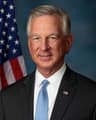 Tommy Tuberville
Republican · Alabama
 Thomas Tillis
Republican · North Carolina
 Peter Welch
Democrat · Vermont