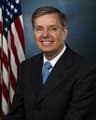
Lindsey Graham (R-SC)
Federal Firearms Licensee Protection Act of 2026
A Republican bill with 28 Republican cosponsors · See all 28 cosponsors
Last activity — Read twice and referred to the Committee on the Judiciary.
In committee
Introduced and handed to a committee in the chamber it started in.
The committee holds it, and most bills are never heard from again. A hearing or a committee vote would be news; silence is the usual outcome, and it kills the bill without anyone voting against it.
Its path through Congress
- Introduced
- In Committee
What this bill would do
This bill, known as the ``Federal Firearms Licensee Protection Act of 2026'', aims to amend title 18 of the United States Code. The primary goal is to increase penalties for those who steal firearms from a Federal firearms licensee. It modifies section 924 to include specific prison terms for certain crimes. Specifically, it targets violations that occur during a burglary or a robbery. The bill also clarifies the definition of burglary within the context of business premises for licensed importers, manufacturers, or dealers.
Yes· 3 of 5
- Scored +6
Does this protect the right to own guns?
By increasing penalties for stealing firearms from federally licensed dealers, the bill provides stronger safeguards for lawful gun businesses and property.
- Scored +5
Would business owners be better off under this?
Provides enhanced legal protections and security for federally licensed firearm dealers and manufacturers against theft.
- Scored +5
Would gun owners be better off under this?
Strengthens the regulatory and penal framework protecting lawful firearm businesses and reducing illicit firearm diversion.
The opposite
- Scored -4
Does this shorten or soften prison sentences?
The bill increases criminal penalties and imposes mandatory minimum sentences for firearm thefts, which limits judicial flexibility.
- Scored -3
Does this protect the right to fair treatment by the courts?
Mandatory minimum prison sentences restrict judges' discretion in considering individual circumstances during sentencing.
Who it would affect, and how
Potential Positive Impacts for People
-
Increased Penalties for Burglary: Under Section 2, a person committing a violation during a burglary would face a term of imprisonment of not less than 3 years. This provides a specific consequence for unlawful entry into the business premises of a licensed importer, manufacturer, or dealer with the intent to commit a crime.
-
Increased Penalties for Robbery: Under Section 2, a person committing a violation during a robbery would face a term of imprisonment of not less than 5 years.
-
General Penalty Enhancements: The bill increases the potential punishment for knowingly violating or attempting to violate section 922(u) to a fine and/or imprisonment for not more than 20 years.
Potential Negative Impacts for People
- No specific negative impacts or burdens are explicitly listed in the provided text.
Groups and Interests Ranking
Every group the model scored this bill for, from -10 to +10. Tap or hover a score for the reason it gave.
- Demographic And Interest Groups
- Would business owners be better off under this? — Provides enhanced legal protections and security for federally licensed firearm dealers and manufacturers against theft. Would gun owners be better off under this? — Strengthens the regulatory and penal framework protecting lawful firearm businesses and reducing illicit firearm diversion.
- Social Issues And Justice
- Does this protect the right to own guns? — By increasing penalties for stealing firearms from federally licensed dealers, the bill provides stronger safeguards for lawful gun businesses and property. Does this put more limits on buying or owning guns? — The legislation enhances protections and penalties against the theft of firearms from licensed dealers, supporting public safety. Does this shorten or soften prison sentences? — The bill increases criminal penalties and imposes mandatory minimum sentences for firearm thefts, which limits judicial flexibility.
- Governance And Ideology
- Does this give the federal government more power? — The bill expands federal criminal penalties for firearm theft from federally licensed dealers. Does this protect the right to fair treatment by the courts? — Mandatory minimum prison sentences restrict judges' discretion in considering individual circumstances during sentencing.
- 9/16/2026
- 3 Cosponsors added.
- 9/14/2026
- 1 Cosponsor added.
- 6/18/2026
- 1 Cosponsor added.
- 6/16/2026
- 5 Cosponsors added.
- 6/3/2026
- Read twice and referred to the Committee on the Judiciary.
- 18 Cosponsors added.
- Introduced in Senate
4 bills Congress.gov lists as related to this one — companions in the other chamber, earlier versions, and bills this one absorbed or was folded into.
 Marsha Blackburn
Republican · Tennessee
 Jim Banks
Republican · Indiana
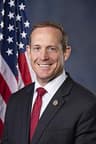 Ted Budd
Republican · North Carolina
 Katie Britt
Republican · Alabama
 Mike Crapo
Republican · Idaho
 Shelley Capito
Republican · West Virginia
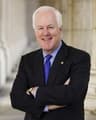 John Cornyn
Republican · Texas
 Bill Cassidy
Republican · Louisiana
 Tom Cotton
Republican · Arkansas
 Kevin Cramer
Republican · North Dakota
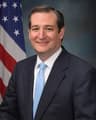 Ted Cruz
Republican · Texas
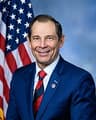 John Curtis
Republican · Utah
 Steve Daines
Republican · Montana
 Deb Fischer
Republican · Nebraska
 Chuck Grassley
Republican · Iowa
- Darline Graham
Republican · South Carolina
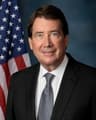 Bill Hagerty
Republican · Tennessee
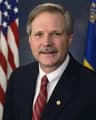 John Hoeven
Republican · North Dakota
 Cindy Hyde-Smith
Republican · Mississippi
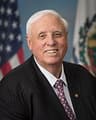 James Justice
Republican · West Virginia
 John Kennedy
Republican · Louisiana
 James Lankford
Republican · Oklahoma
 Roger Marshall
Republican · Kansas
 James Risch
Republican · Idaho
 Pete Ricketts
Republican · Nebraska
 Tim Sheehy
Republican · Montana
 Thomas Tillis
Republican · North Carolina
 Todd Young
Republican · Indiana