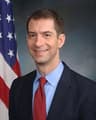
Tom Cotton (R-AR)
PLO and PA Terror Payments Accountability Act of 2025
A Republican bill with 11 Republican cosponsors · See all 11 cosponsors
Last activity — Read twice and referred to the Committee on Banking, Housing, and Urban Affairs.
In committee
Introduced and handed to a committee in the chamber it started in.
The committee holds it, and most bills are never heard from again. A hearing or a committee vote would be news; silence is the usual outcome, and it kills the bill without anyone voting against it.
Its path through Congress
- Introduced
- In Committee
What this bill would do
The "PLO and PA Terror Payments Accountability Act of 2025" aims to impose sanctions on the Palestine Liberation Organization (PLO) and the Palestinian Authority (PA) regarding their compensation systems for terrorists. The bill identifies these systems as providing payments, salaries, and benefits that encourage and reward acts of terrorism. Under this Act, the President must impose sanctions on specific foreign persons and entities involved in these payments. Sanctions include blocking property and revoking visas or entry documentation. Additionally, the bill targets foreign financial institutions that facilitate these transactions. These sanctions remain in place until the Secretary of State certifies that the compensation system has ceased.
Yes· 3 of 7
- Scored +2
Does this strengthen ties with allied countries?
The bill aligns U.S. policy with efforts to disrupt terrorist financing, which can strengthen security-focused international partnerships.
- Scored +1
Does this better protect the country from computer attacks?
By targeting the financial mechanisms of organizations that support terrorism, it reinforces national security against non-state actors.
- Scored +1
Would middle-income households be better off under this?
The bill aims to disrupt terrorist financing which is a matter of national security and stability.
The opposite
- Scored -1
Would people with substantial wealth be better off under this?
The bill's targeting of large-scale financial transactions could affect those managing or transferring significant international assets.
Who it would affect, and how
Potential Positive Impacts for People
-
Accountability for Terrorist Support: The bill seeks to hold the PLO and Palestinian Authority accountable for providing hundreds of millions of dollars in payments, salaries, and benefits to terrorists and their families (Section 2(a)).
-
Restriction of Financial Resources: By blocking the property and interests of foreign persons involved in the compensation system, the bill aims to disrupt the financial movement of these funds (Section 4(b)(1)).
-
Travel Restrictions on Sanctioned Individuals: The bill makes certain individuals inadmissible to the United States and revokes any existing visas to prevent those involved in the compensation system from entering the country (Section 4(b)(2)).
-
Regulation of Financial Institutions: The Act places strict conditions or prohibitions on foreign financial institutions that process payments related to the compensation system, aiming to stop the flow of money through the banking system (Section 5(c)).
Potential Negative Impacts for People
-
Impact on Foreign Officials and Employees: Individuals serving as representatives, ministers, or employees of the PLO or Palestinian Authority may face the loss of their property and the revocation of their visas (Section 4(a)(1) and 4(b)).
-
Restrictions on Financial Institutions: Foreign financial institutions that engage in transactions related to the compensation system face prohibitions on opening or maintaining correspondent or payable-through accounts in the United States (Section 5(b) and 5(c)).
-
Consequences for Significant Transaction Participants: Foreign persons who knowingly provide financial or material support to sanctioned entities may also face the imposition of sanctions (Section 4(a)(3)).
Groups and Interests Ranking
Every group the model scored this bill for, from -10 to +10. Tap or hover a score for the reason it gave.
- National Security And Foreign Policy
- Does this strengthen ties with allied countries? — The bill aligns U.S. policy with efforts to disrupt terrorist financing, which can strengthen security-focused international partnerships. Does this better protect the country from computer attacks? — By targeting the financial mechanisms of organizations that support terrorism, it reinforces national security against non-state actors.
- Demographic And Interest Groups
- Would middle-income households be better off under this? — The bill aims to disrupt terrorist financing which is a matter of national security and stability. Would union members be better off under this? — The bill targets organizations that fund violence, which can be seen as protecting the stability required for labor markets. Would people with substantial wealth be better off under this? — The bill's targeting of large-scale financial transactions could affect those managing or transferring significant international assets.
- Economy And Finance
- Does this give people more protection from unfair business practices? — The bill targets financial systems that facilitate terrorist payments, which indirectly promotes global financial integrity.
- Governance And Ideology
- Does this protect people from being watched or searched? — The bill exercises government oversight through the blocking of property and financial transactions.
- Social Issues And Justice
- Does this tighten control of the border? — The bill restricts the entry of individuals involved in terrorist compensation systems through visa revocations and inadmissibility.
- 3/25/2025
- 1 Cosponsor added.
- 1/23/2025
- 2 Cosponsors added.
- 1/22/2025
- Read twice and referred to the Committee on Banking, Housing, and Urban Affairs.
- 8 Cosponsors added.
- Introduced in Senate
One bill Congress.gov lists as related to this one — companions in the other chamber, earlier versions, and bills this one absorbed or was folded into.
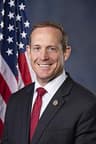 Ted Budd
Republican · North Carolina
 John Cornyn
Republican · Texas
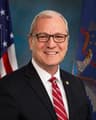 Kevin Cramer
Republican · North Dakota
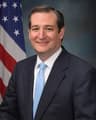 Ted Cruz
Republican · Texas
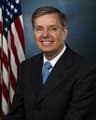 Lindsey Graham
Republican · South Carolina
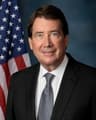 Bill Hagerty
Republican · Tennessee
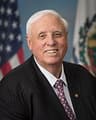 James Justice
Republican · West Virginia
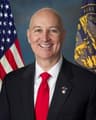 Pete Ricketts
Republican · Nebraska
 Tim Scott
Republican · South Carolina
 Rick Scott
Republican · Florida
 Eric Schmitt
Republican · Missouri