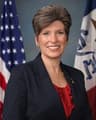
A Republican bill with 19 Republican cosponsors · See all 19 cosponsors
Last activity — Read twice and referred to the Committee on Health, Education, Labor, and Pensions.
In committee
Introduced and handed to a committee in the chamber it started in.
The committee holds it, and most bills are never heard from again. A hearing or a committee vote would be news; silence is the usual outcome, and it kills the bill without anyone voting against it.
Its path through Congress
- Introduced
- In Committee
What this bill would do
This bill, titled the "Protect Funding for Women's Health Care Act," seeks to prohibit the federal government from providing funds to the Planned Parenthood Federation of America. The prohibition extends to all of its affiliates, subsidiaries, successors, or clinics. According to the text, the bill finds that other health entities will continue to provide essential services to women. It also states that funds no longer provided to Planned Parenthood will be made available to other eligible entities.
Yes
No question was scored yes.
The opposite· 3 of 7
- Scored -7
Does this make abortion easier to get?
The bill prohibits federal funding to Planned Parenthood, which is a major provider of reproductive health services.
- Scored -6
Would women be better off under this?
The bill prohibits funding for one of the largest providers of women's health services, including prenatal and family planning care.
- Scored -5
Would households on low incomes be better off under this?
The loss of funding for Planned Parenthood may reduce access to affordable healthcare services for low-income households.
Who it would affect, and how
Potential Positive Impacts for People
-
Redirection of Funds: The bill states that funds no longer available to Planned Parenthood will continue to be made available to other eligible entities to provide women's health care services (Section 2, paragraph 3).
-
Maintenance of Health Services: The bill finds that state and county health departments, community health centers, hospitals, and physician offices will continue to provide health services such as prenatal care, immunizations, and cancer screenings (Section 2, paragraph 1).
-
Support for Underserved Areas: The text notes that many entities providing these services serve all persons regardless of ability to pay and operate in medically underserved areas and populations (Section 2, paragraph 2).
Potential Negative Impacts for People
- Prohibition of Federal Funding: No Federal funds may be made available to Planned Parenthood Federation of America, its affiliates, subsidiaries, successors, or clinics (Section 3, paragraph a).
Groups and Interests Ranking
Every group the model scored this bill for, from -10 to +10. Tap or hover a score for the reason it gave.
- Demographic And Interest Groups
- Would women be better off under this? — The bill prohibits funding for one of the largest providers of women's health services, including prenatal and family planning care. Would households on low incomes be better off under this? — The loss of funding for Planned Parenthood may reduce access to affordable healthcare services for low-income households. Would Hispanic Americans be better off under this? — The bill may reduce access to reproductive health services often utilized by underserved populations including Hispanic communities.
- Healthcare
- Does this make abortion easier to get? — The bill prohibits federal funding to Planned Parenthood, which is a major provider of reproductive health services. Does this make health care easier to get in general? — By defunding Planned Parenthood, the bill may reduce access to reproductive and preventative healthcare services for many individuals.
- Social Issues And Justice
- Does this narrow the gap between how men and women are treated? — The prohibition of funding for a primary women's health provider could disproportionately impact women's access to essential reproductive care. Is this likely to lift people out of poverty? — The removal of funding for a major provider of low-cost healthcare services may increase the financial burden on low-income individuals seeking care.
- 7/20/2026
- 1 Cosponsor added.
- 3/19/2026
- 1 Cosponsor added.
- 9/3/2025
- 1 Cosponsor added.
- 3/14/2025
- 1 Cosponsor added.
- 1/22/2025
- Read twice and referred to the Committee on Health, Education, Labor, and Pensions.
- 15 Cosponsors added.
- Introduced in Senate
One bill Congress.gov lists as related to this one — companions in the other chamber, earlier versions, and bills this one absorbed or was folded into.
 Marsha Blackburn
Republican · Tennessee
 John Barrasso
Republican · Wyoming
 Jim Banks
Republican · Indiana
 Ted Budd
Republican · North Carolina
 John Cornyn
Republican · Texas
 Bill Cassidy
Republican · Louisiana
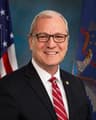 Kevin Cramer
Republican · North Dakota
 Steve Daines
Republican · Montana
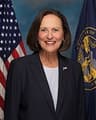 Deb Fischer
Republican · Nebraska
 Chuck Grassley
Republican · Iowa
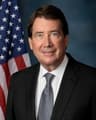 Bill Hagerty
Republican · Tennessee
 Josh Hawley
Republican · Missouri
 Cynthia Lummis
Republican · Wyoming
 James Lankford
Republican · Oklahoma
 James Risch
Republican · Idaho
 Tim Sheehy
Republican · Montana
 John Thune
Republican · South Dakota
 Thomas Tillis
Republican · North Carolina
 Roger Wicker
Republican · Mississippi