Rules Committee · Dec 10, 2025
H.Amdt. 116: Its purpose is not yet published.
Adopted
With no one objecting, no names recorded

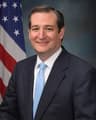
John Cornyn (R-TX)
A Republican bill with 1 Republican cosponsor · See the cosponsor
Last activity — Became Public Law No: 119-60.
Became law
Passed both chambers and was signed by the President, or became law without a signature.
Nothing more in Congress: it is law. When it takes effect depends on the dates written into it — some parts start at once, others a year or more later.
Its path through Congress
The Senate by unanimous consent (no one objected, so there was no vote): no senator's position on it was recorded.
This Act authorizes appropriations for fiscal year 2026 for the Department of Defense, military construction, and Department of Energy defense activities. It establishes military personnel end strengths for active and reserve forces and outlines general provisions and authorities for the Armed Forces. The legislation includes intelligence authorizations for fiscal year 2026 and provides the Coast Guard Authorization Act of 2025. Additionally, the Act addresses various foreign affairs matters, financial services policies, and judiciary matters.
Does this strengthen ties with allied countries?
Strongly emphasizes multilateral coordination with NATO, AUKUS, and Indo-Pacific partners.
Does this put more money into medical research?
Authorizes massive R&D spending in AI, biotechnology, nuclear physics, and infectious diseases.
Does this put more money into scientific research?
Authorizes massive R&D spending in AI, biotechnology, nuclear physics, and hypersonics.
Does this reduce what is spent on the military?
Massively increases spending across all military branches, nuclear modernization, and intelligence procurement.
Does this reduce what the federal government spends?
Substantially increases spending for defense platforms, intelligence, infrastructure, and international development.
Would LGBTQ people be better off under this?
Prohibits employee resource groups based on sexual orientation or gender identity.
5 recorded votes have been taken on this bill. 2 of them decided something; the rest moved it along.
12/10/2025 · Roll call 320 · recorded as “On Passage”
12/17/2025 · Roll call 648 · recorded as “On the Motion (Motion to Concur in the House Amendment to S. 1071)”
12/10/2025 · Roll call 319 · recorded as “On Motion to Commit”
12/11/2025 · Roll call 646 · recorded as “On the Motion to Proceed S. 1071”
12/15/2025 · Roll call 647 · recorded as “On the Cloture Motion S. 1071”
Section 317 - Requires the Secretary of Defense to offer alternative drinking water to households downgradient from military installations whose private drinking water wells are contaminated with perfluorooctanesulfonic acid and perfluorooctanoic acid substances from Department activities, helping protect public health and secure safe drinking water.
Section 521 - Codifies and expands the Individual Longitudinal Exposure Record to compile and provide available occupational and environmental exposure information to support the health care and compensation needs of members of the Armed Forces and veterans.
Section 571 - Improves the Transition Assistance Program by encouraging in-person pre-separation counseling and requiring the Department of Veterans Affairs to maintain a website allowing veterans and their dependents to search for support programs by ZIP code.
Section 584 - Authorizes dual or concurrent enrollment programs for students of Defense Dependent Schools to access post-secondary course credit, providing educational advancement opportunities for military families.
Section 734 - Establishes a pilot program to assist certain members of the Armed Forces and dependents with additional supplemental coverage relating to the screening, diagnosis, and treatment of cancer.
Section 901 - Prohibits diversity, equity, and inclusion (DEI) programs within the Department of Defense, requiring the removal of offices, chief officers, training courses, and data dashboards related to diversity, equity, inclusion, and accessibility, which may remove support systems for diverse servicemembers and civilian personnel.
Section 559A - Prohibits males from participating in athletic programs or activities at military service academies that are designated for women or girls, which limits athletic participation options based on biological sex at birth.
Section 842 - Prohibits the acquisition of advanced batteries and cells whose functional cell components and technology are sourced, refined, or produced from a foreign entity of concern, which may restrict supply chains and increase costs for certain technologies.
Section 851 - Prohibits executive agencies from procuring biotechnology equipment or services produced or provided by specific biotechnology companies of concern, potentially increasing procurement costs or limiting available medical and technological supply options.
Every group the model scored this bill for, from -10 to +10. Tap or hover a score for the reason it gave.
The text as it became law
The final version, on its way to the President
The changes one chamber made to the other chamber’s version, as it passed them
Rules Committee · Dec 10, 2025
Adopted
With no one objecting, no names recorded

John Thune (R-SD)· Dec 17, 2025
Withdrawn
Proposed amendment SA 3961 withdrawn when motion by Senator Thune to concur in the House amendment to S. 1071 withdrawn in Senate.
John Thune (R-SD)· Dec 17, 2025
Withdrawn
SA 3962 fell when SA 3961 withdrawn.
John Thune (R-SD)· Dec 15, 2025
Withdrawn
SA 3963 (the instructions of the motion to refer) fell when cloture invoked on the motion to concur in the House amendment to S. 1071 agreed to.
John Thune (R-SD)· Dec 15, 2025
Withdrawn
SA 3964 fell when SA 3963 (the instructions of the motion to refer) fell.
John Thune (R-SD)· Dec 15, 2025
Withdrawn
SA 3965 fell when SA 3964 fell.
77 bills Congress.gov lists as related to this one — companions in the other chamber, earlier versions, and bills this one absorbed or was folded into.
Republican · Texas