
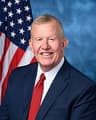
Sam Graves (R-MO)
Coast Guard Authorization Act of 2025
A Republican bill with 2 Democratic cosponsors · See all 4 cosponsors
Last activity — Received in the Senate and Read twice and referred to the Committee on Commerce, Science, and Transportation.
In the other chamber's committee
Passed one chamber and has been handed to a committee in the other.
The committee decides whether it goes any further, and most bills that reach a committee never leave it. A committee that simply does nothing kills a bill without anyone ever voting against it, so no news from here is usually the news.
Its path through Congress
- Introduced
- Passed House 399–12
- In Senate committee
What this bill would do
The Coast Guard Authorization Act of 2025 establishes the position of Secretary of the Coast Guard and defines the primary duties of the service. It provides specific appropriation levels for fiscal years 2025 through 2029 while authorizing increased military strength, training, and several pilot programs. The legislation addresses personnel matters such as family leave, career flexibility, and behavioral health, alongside maritime safety and vessel security. It also includes mandates for studies on Arctic maritime traffic, the Coast Guard Academy, and various safety infrastructures. Furthermore, the bill implements extensive new policies regarding the reporting, investigation, and support of sexual misconduct and harassment.
Yes· 3 of 29
- Scored +6
Would Native Americans be better off under this?
The creation of a Special Advisor to the Commandant for Tribal and Native Hawaiian Affairs aims to strengthen engagement with Indian Tribes.
- Scored +6
Would students be better off under this?
The bill offers precommissioning initiatives, tuition assistance, and advanced education pilot programs.
- Scored +6
Does this do more about addiction and overdose deaths?
The bill requires updating policies to ensure naloxone is available on all Coast Guard installations and operational environments.
The opposite
No question was scored the opposite.
What Congress actually voted on
One recorded vote has been taken on this bill.
- The House: a fast-track vote, needing two-thirds to pass The House sets aside its normal procedure to move quickly: no amendments, little debate, and a two-thirds bar instead of a simple majority. It is used for measures expected to be uncontroversial, so a bill that fails here failed despite broad expectations that it would not. Passed 399 yes · 12 no
07/23/2025 · Roll call 218 · recorded as “On Motion to Suspend the Rules and Pass, as Amended”
Who it would affect, and how
Potential Positive Impacts for People
-
Enhanced Tribal and Native Hawaiian Engagement: The creation of a Special Advisor to the Commandant for Tribal and Native Hawaiian Affairs aims to ensure meaningful and timely government-to-government consultation and engagement with Indian Tribes and Native Hawaiian organizations (Section 203).
-
Improved Family Leave Policies: The bill modifies family leave to include the placement of a minor child for long-term foster care or adoption, providing more flexibility for Coast Guard members (Section 241).
-
Increased Personnel Benefits and Support: Provisions include the authorization of a maternity uniform allowance for officers (Section 245), travel allowances for members assigned to Alaska (Section 249), and a tuition assistance and advanced education pilot program (Section 250).
-
Direct Hire Authority for Critical Roles: This allows for faster hiring of professionals in medical, childcare, housing, and investigative positions, which helps fill essential service gaps (Section 243(a)).
-
Command Sponsorship for Dependents: Members of the Coast Guard assigned to Unalaska, Alaska, can request command sponsorship for their dependents (Section 244).
-
College Student Precommissioning Initiative: This program provides financial assistance for eligible undergraduate students to enlist in the Coast Guard Reserve and work toward a commission (Section 246).
-
Embedded Behavioral Health Technician Program: This pilot program aims to provide integrated behavioral health care, psychological assessments, and increased access to care at the clinic level (Section 248(a)).
-
Additional Behavioral Health Specialists: The bill requires the hiring and deployment of at least five additional specialists, with a focus on treating military sexual trauma (Section 248(b)).
-
Tuition Assistance for Sea Duty: A pilot program provides financial assistance and reduced service obligations for active-duty members completing sea duty tours (Section 250).
-
Incentives for Remote Civilian Firefighters: Establishes recruitment, relocation, and retention bonuses for civilian firefighters in remote locations (Section 251).
-
Merchant Mariner Credentialing Updates: The bill makes it easier to obtain credentials by allowing certain training programs to substitute for sea service requirements (Section 301).
-
Enhanced Safety for Arctic Maritime Operations: By requiring a study on Bering Strait traffic and emergency response capabilities, the bill aims to address navigation safety risks and the potential impacts of maritime accidents on Native Alaskan village communities (Section 322).
-
Protection of Submerged Infrastructure: The mandate to restructure federal anchorages and identify areas where anchorages are too close to pipelines is designed to prevent accidents such as those involving underwater pipelines (Section 323).
-
Improved Response to Maritime Casualties: The bill allows for the periodic inspection of vessels and the verification of their ability to respond to marine casualties, including firefighting, which could improve safety during emergencies (Section 401).
-
Victim Support and Evidence Preservation: The establishment of a comprehensive policy for the retention of and access to evidence and records related to sexual misconduct aims to ensure that victims can pursue claims for veterans benefits and support legal proceedings (Section 502).
-
Support for Academy Cadets: The bill provides for the consideration of requests from Coast Guard Academy cadets to transfer to other institutions following incidents of sexual assault or related offenses, which can be done expeditiously (Section 503).
-
Standardized Policies for Misconduct: The creation of a "Safe-to-Report" policy is intended to handle minor collateral misconduct that may occur during the reporting of a sexual assault, aiming to protect those who come forward (Section 505).
-
Enhanced Victim Support: The bill requires the Coast Guard to develop policies for the care and support of members who are alleged victims of covered misconduct, ensuring they receive care without unreasonable delay (Section 515).
-
Improved Safety via Expedited Transfers: New policies will implement an expedited transfer process to help individuals move away from environments where they have experienced sexual assault or domestic violence (Section 528).
-
Expanded Medical and Mental Health Access: Members who have experienced sexual assault are provided the opportunity to request medical examinations to evaluate signs and symptoms of mental, behavioral, or emotional disorders (Section 517).
-
Stronger Accountability for Senior Leaders: The bill establishes a policy to improve oversight and investigations regarding alleged misconduct by senior leaders, including a requirement to report allegations to the Inspector General within 72 hours (Section 519).
-
Protection Against Retaliation: New policies require the review of proposed involuntary separations for members who have reported misconduct to ensure the separation was not retaliatory (Section 527).
-
Increased Training Standards: The bill mandates annual covered misconduct prevention and response training for all members and civilian employees (Section 532).
Potential Negative Impacts for People
-
Restrictions on Foreign Vessel Procurement: The bill contains a restriction that prohibits the Coast Guard from procuring vessels that have major components constructed in foreign shipyards, which may limit procurement options (Section 233).
-
Budgetary Constraints on Aviation: The bill limits the ability to obligate funds for the procurement or modernization of helicopters until a specific report regarding aircraft alternatives is submitted (Section 115).
-
New Requirements for Service Members: The bill mandates a training course on the workings of Congress, which may represent an additional requirement for personnel serving in specific liaison or administrative roles (Section 204).
-
Service Obligations for Students: Participants in the precommissioning initiative must enter into written agreements to serve active duty for a minimum of 3 years following graduation (Section 246(c)(2)(C)).
-
Penalties for Breach of Agreement: Members who break their educational assistance agreements can be ordered to active duty for up to 4 years (Section 246(c)(5)(A)).
-
Restrictions on Vessel Operations: The implementation of a performance-driven examination schedule may restrict vessel eligibility if they have a history of violations or accidents (Section 312(a)(3)).
-
Liability for Negligent Operation: Operating a vessel in a grossly negligent manner that results in serious bodily injury can now lead to felony charges and significant civil penalties (Section 311).
-
Increased Risk to the Arctic Environment: The study on the Bering Strait identifies a potential increase in maritime accidents and spill events, which could negatively impact the Arctic maritime environment and local communities (Section 322).
-
Potential Burdens on Small Uncrewed Systems: While a pilot program exists to ease regulations for certain oceanographic surveys, the Coast Guard still maintains authority to intervene if there is an immediate safety or security concern (Section 332).
-
Restrictions on Vessel Owners: Under the new rules for abandoned and derelict vessels, owners or operators may face civil penalties of up to $500 and be held liable for the removal of their vessels (Section 347).
-
Increased Oversight for Vessel Operators: The bill allows the President to require periodic inspections of vessels and their equipment to ensure they can respond to marine casualties, which may impose new requirements on operators (Section s 401).
-
Changes to Discharge Status: Under new provisions, a board of review may downgrade an honorable discharge to a general discharge if a former member is found to have committed sexual assault or sexual harassment (Section 508).
-
Involuntary Separation Reviews: Members who report misconduct and are recommended for involuntary separation within two years may face a mandatory review process by a flag officer (Section 527).
-
Personnel Record Notations: Members may have a notation of conviction or punitive action for covered misconduct placed in their personnel service records, which is intended to alert future supervisors (Section s 526).
-
Administrative Assignment of Subjects: The expedited transfer process allows for a subject of an investigation to be administratively assigned to another unit, which is intended to be non-punitive but changes their work environment (Section 528).
Groups and Interests Ranking
Every group the model scored this bill for, from -10 to +10. Tap or hover a score for the reason it gave.
- Demographic And Interest Groups
- Would Native Americans be better off under this? — The creation of a Special Advisor to the Commandant for Tribal and Native Hawaiian Affairs aims to strengthen engagement with Indian Tribes. Would students be better off under this? — The bill offers precommissioning initiatives, tuition assistance, and advanced education pilot programs. Would women be better off under this? — The bill provides maternity uniform allowances and implements comprehensive reforms to prevent and respond to sexual misconduct. Would people in their twenties and thirties be better off under this? — The bill provides financial assistance for precommissioning, simplifies sea service requirements, and enhances training resources. Would veterans be better off under this, taking everything together? — The bill improves evidence retention for benefits and facilitates better sharing of medical records with the VA. Would business owners be better off under this? — The bill includes measures to modernize maritime examinations and streamline vessel inspections. Would households on low incomes be better off under this? — The bill provides tuition assistance and directs a study to align housing allowances with actual costs. Would people with disabilities be better off under this? — The bill updates harassment definitions to include protections related to the Americans with Disabilities Act.
- Social Issues And Justice
- Does this tighten control of the border? — The bill enhances maritime security through enhanced cutter capabilities and better policing of maritime borders. Does this narrow the gap between how men and women are treated? — The bill implements comprehensive policies to prevent, respond to, and support victims of sexual assault and harassment. Does this narrow racial gaps in how people are treated? — The creation of a Special Advisor for Tribal and Native Hawaiian Affairs aims to improve government-to-government consultation. Does this change how police departments operate? — The bill mandates new oversight, transparency, and investigation protocols for allegations of misconduct against senior leaders. Does this make child care cost less? — The bill creates direct hire authority for childcare services within the Coast Guard. Does this expand the rights of people with disabilities? — The bill updates definitions of harassment to include protections related to the Americans with Disabilities Act.
- Healthcare
- Does this do more about addiction and overdose deaths? — The bill requires updating policies to ensure naloxone is available on all Coast Guard installations and operational environments. Does this make mental health care easier to get? — The bill establishes a pilot program for embedded behavioral health technicians and mandates reviews of behavioral health resource availability.
- Economy And Finance
- Is this likely to create jobs? — The bill authorizes increased end strength for the Coast Guard and implements direct hire authority for critical positions. Is this likely to grow the economy? — The bill requires the Coast Guard to prioritize life-cycle costs and competitive contracting for acquisitions. Does this make the government pay for what it commits to? — The bill provides specific, multi-year authorization of appropriations to ensure funded mandates are met. Does this make it easier to run a small business? — The bill mandates competitive contracting processes and includes reviews of research and development programs that may benefit maritime industries.
- Education And Technology
- Does this make college cost less? — The bill establishes a college student precommissioning initiative and provides financial assistance for tuition and fees. Does this put more money into scientific research? — The bill authorizes funds for oceanographic studies and mandates an evaluation of the Coast Guard's research and development program.
- National Security And Foreign Policy
- Does this strengthen ties with allied countries? — The bill provides authorities for cyber coordination with foreign entities and requires a review of the Canada-US Joint Maritime Pollution Contingency Plan. Does this increase the pay, pensions or support veterans receive? — The bill implements policies for evidence retention and directs a study on sharing medical data with the Department of Veterans Affairs. Does this make trade with other countries easier? — The bill facilitates easier movement of goods by improving the reliability of Great Lakes icebreaking and aids to navigation.
- Environment Energy And Infrastructure
- Does this better protect air, water and wildlife? — The bill mandates studies on Arctic maritime traffic, enhances oil spill response, and provides for environmental protection of marine resources. Does this repair or build roads and bridges? — The bill includes requirements for shore infrastructure and directs a study on training facility infrastructure needs. Does this improve buses, trains and other public transport? — The bill includes provisions related to the modernization of maritime and port infrastructure through specialized studies.
- Governance And Ideology
- Does this make what the government does easier for the public to see? — The bill mandates various reports on acquisitions, oversight, misconduct, and maintains a public inventory of abandoned vessels.
- 7/23/2025
- Received in the Senate and Read twice and referred to the Committee on Commerce, Science, and Transportation.
- Motion to reconsider laid on the table Agreed to without objection.
- Passed/agreed to in House: On motion to suspend the rules and pass the bill, as amended Agreed to by the Yeas and Nays: (2/3 required): 399 - 12 (Roll no. 218). (text: CR H3572-3617)
- On motion to suspend the rules and pass the bill, as amended Agreed to by the Yeas and Nays: (2/3 required): 399 - 12 (Roll no. 218). (text: CR H3572-3617)
- Considered as unfinished business. (consideration: CR H3622-3623)
- At the conclusion of debate, the Yeas and Nays were demanded and ordered. Pursuant to the provisions of clause 8, rule XX, the Chair announced that further proceedings on the motion would be postponed.
- DEBATE - The House proceeded with forty minutes of debate on H.R. 4275.
- Considered under suspension of the rules. (consideration: CR H3572-3620)
- Mr. Graves moved to suspend the rules and pass the bill, as amended.
- 7/22/2025
- Reported (Amended) by the Committee on Transportation and Infrastructure. H. Rept. 119-214.
- Placed on the Union Calendar, Calendar No. 174.
- 7/15/2025
- Subcommittee on Coast Guard and Maritime Transportation Discharged
- Committee Consideration and Mark-up Session Held
- Ordered to be Reported (Amended) by the Yeas and Nays: 60 - 0.
- 7/14/2025
- 1 Cosponsor added.
- 7/3/2025
- Referred to the Subcommittee on Coast Guard and Maritime Transportation.
- 7/2/2025
- Referred to the House Committee on Transportation and Infrastructure.
- 3 Cosponsors added.
- Introduced in House
2 bills Congress.gov lists as related to this one — companions in the other chamber, earlier versions, and bills this one absorbed or was folded into.
 Salud Carbajal
Democrat · California
 Mike Ezell
Republican · Mississippi
 Rick Larsen
Democrat · Washington
 Daniel Webster
Republican · Florida