A Republican bill with 17 Democratic cosponsors · See all 38 cosponsors
Last activity — Referred to the Committee on Energy and Commerce, and in addition to the Committees on Education and Workforce, and Ways and Means, for a period to be subsequently determined by the Speaker, in each case for consideration of such provisions as fall within the jurisdiction of the committee concerned.
In committee
Introduced and handed to a committee in the chamber it started in.
The committee holds it, and most bills are never heard from again. A hearing or a committee vote would be news; silence is the usual outcome, and it kills the bill without anyone voting against it.
Its path through Congress
- Introduced
- In Committee
What this bill would do
This bill, titled the "No Surprises Act Enforcement Act," aims to increase penalties for group health plans and health insurance issuers that violate balance billing requirements. It amends the Public Health Service Act, the Employee Retirement Income Security Act of 1974, and the Internal Revenue Code of 1986. The legislation introduces higher fines for specific failures regarding balance billing provisions. Additionally, it establishes penalties for the late payment or non-payment of required amounts following an IDR entity payment determination. Finally, the bill mandates new transparency reporting requirements to keep Congress informed about audits and enforcement actions.
Yes· 3 of 6
- Scored +7
Does this give people more protection from unfair business practices?
The bill strengthens protections against unexpected medical costs by increasing penalties for balance billing violations.
- Scored +6
Does this make what the government does easier for the public to see?
The bill mandates new, regular reporting requirements to Congress regarding audits and enforcement actions.
- Scored +5
Does this give the federal government more power?
The bill expands the Secretary's authority to assess civil penalties and oversee reporting.
The opposite
- Scored -4
Would business owners be better off under this?
Insurance issuers and health plans face significantly higher penalties and more regulatory scrutiny.
Who it would affect, and how
Potential Positive Impacts for People
-
Increased penalties for balance billing violations: The bill increases penalties to $10,000 for certain failures regarding balance billing provisions (Section 2, subsections a, b, and c). This could provide stronger enforcement against practices that violate billing requirements.
-
Penalties for late or non-payment of determined amounts: The bill creates a penalty that is three times the difference between the initial payment and the out-of-network rate for those that fail to make required payments within 30 days (Section 3, subsections a, b, and c). This is intended to ensure that payments following a determination are made in a timely manner.
-
Enhanced transparency through reporting: The Secretary is required to submit reports to Congress every six months regarding the number of audits conducted, complaints submitted by providers or beneficiaries, and the total amount of civil monetary penalties issued (Section 4, subsections a and b). This provides oversight on how enforcement actions are being handled.
Potential Negative Impacts for People
-
Financial penalties for health plans and issuers: The bill imposes significant civil penalties, including amounts up to $10,000 for each individual in the case of certain non-compliance (Section 2, subsection b).
-
Increased costs due to late payment penalties: Plans, coverage, or providers that fail to make required payments within 30 days must pay an amount that is three times the difference between the initial payment and the out-of-network rate, plus interest (Section 3, subsections a, b, and c).
Groups and Interests Ranking
Every group the model scored this bill for, from -10 to +10. Tap or hover a score for the reason it gave.
- Governance And Ideology
- Does this make what the government does easier for the public to see? — The bill mandates new, regular reporting requirements to Congress regarding audits and enforcement actions. Does this give the federal government more power? — The bill expands the Secretary's authority to assess civil penalties and oversee reporting.
- Economy And Finance
- Does this give people more protection from unfair business practices? — The bill strengthens protections against unexpected medical costs by increasing penalties for balance billing violations.
- Demographic And Interest Groups
- Would households on low incomes be better off under this? — The bill helps prevent unexpected medical debt which disproportionately affects low-income families. Would middle-income households be better off under this? — Stronger enforcement of the No Surprises Act provides financial security against unexpected medical bills. Would business owners be better off under this? — Insurance issuers and health plans face significantly higher penalties and more regulatory scrutiny.
- Healthcare
- Does this make health care easier to get in general? — By enforcing the No Surprises Act, the bill protects patients from financial harm caused by unexpected out-of-network charges.
- 9/17/2026
- 1 Cosponsor added.
- 8/31/2026
- 1 Cosponsor added.
- 6/18/2026
- 1 Cosponsor added.
- 6/10/2026
- 1 Cosponsor added.
- 6/3/2026
- 3 Cosponsors added.
- 5/21/2026
- 1 Cosponsor added.
- 5/20/2026
- 1 Cosponsor added.
- 5/19/2026
- 1 Cosponsor added.
- 5/7/2026
- 2 Cosponsors added.
- 4/29/2026
- 1 Cosponsor added.
- 4/27/2026
- 1 Cosponsor added.
- 4/22/2026
- 1 Cosponsor added.
- 4/15/2026
- 1 Cosponsor added.
- 4/9/2026
- 1 Cosponsor added.
- 3/16/2026
- 1 Cosponsor added.
- 2/24/2026
- 1 Cosponsor added.
- 2/10/2026
- 5 Cosponsors added.
- 1/14/2026
- 1 Cosponsor added.
- 1/8/2026
- 1 Cosponsor added.
- 12/16/2025
- 1 Cosponsor added.
- 11/7/2025
- 1 Cosponsor added.
- 11/4/2025
- 1 Cosponsor added.
- 10/31/2025
- 1 Cosponsor added.
- 10/28/2025
- 1 Cosponsor added.
- 10/3/2025
- 1 Cosponsor added.
- 7/29/2025
- 1 Cosponsor added.
- 7/23/2025
- Referred to the Committee on Energy and Commerce, and in addition to the Committees on Education and Workforce, and Ways and Means, for a period to be subsequently determined by the Speaker, in each case for consideration of such provisions as fall within the jurisdiction of the committee concerned.
- 5 Cosponsors added.
- Introduced in House
One bill Congress.gov lists as related to this one — companions in the other chamber, earlier versions, and bills this one absorbed or was folded into.
 Mark Alford
Republican · Missouri
 Cliff Bentz
Republican · Oregon
 Gus Bilirakis
Republican · Florida
 Joyce Beatty
Democrat · Ohio
 Herbert Conaway
Democrat · New Jersey
 Suzan DelBene
Democrat · Washington
 Neal Dunn
Republican · Florida
 Laura Friedman
Democrat · California
 Josh Gottheimer
Democrat · New Jersey
 Andy Harris
Republican · Maryland
 John Joyce
Republican · Pennsylvania
 Ronny Jackson
Republican · Texas
 Julie Johnson
Democrat · Texas
 Raja Krishnamoorthi
Democrat · Illinois
 Mike Kennedy
Republican · Utah
 Nick LaLota
Republican · New York
 Michael Lawler
Republican · New York
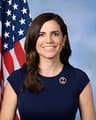 Nancy Mace
Republican · South Carolina
 Nicole Malliotakis
Republican · New York
 Carol Miller
Republican · West Virginia
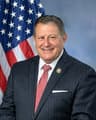 Joseph Morelle
Democrat · New York
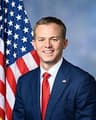 Blake Moore
Republican · Utah
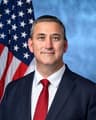 Nathaniel Moran
Republican · Texas
 John McGuire
Republican · Virginia
 Robert Onder
Republican · Missouri
 Jimmy Panetta
Democrat · California
 Chris Pappas
Democrat · New Hampshire
 Raul Ruiz
Democrat · California
 John Rutherford
Republican · Florida
 Darren Soto
Democrat · Florida
 Thomas Suozzi
Democrat · New York
 Kim Schrier
Democrat · Washington
 Hillary Scholten
Democrat · Michigan
 Shri Thanedar
Democrat · Michigan
 Jefferson Van Drew
Republican · New Jersey
 Beth Van Duyne
Republican · Texas
 Eugene Vindman
Democrat · Virginia
 Joe Wilson
Republican · South Carolina