

Andrew Ogles (R-TN)· Mar 25, 2025
H.Amdt. 10: Its purpose is not yet published.
Adopted
By voice vote, no names recorded
A Republican bill with 2 Democratic cosponsors · See all 21 cosponsors
Last activity — Received in the Senate and Read twice and referred to the Committee on Health, Education, Labor, and Pensions.
In the other chamber's committee
Passed one chamber and has been handed to a committee in the other.
The committee decides whether it goes any further, and most bills that reach a committee never leave it. A committee that simply does nothing kills a bill without anyone ever voting against it, so no news from here is usually the news.
Its path through Congress
This bill, known as the DETERRENT Act, aims to amend the Higher Education Act of 1965 to increase transparency regarding foreign financial ties to educational institutions. It strengthens disclosure requirements for foreign gifts and contracts received by these institutions. Additionally, it prohibits institutions from entering into contracts with certain foreign countries and entities of concern unless a waiver is granted. The act also mandates that institutions maintain policies and databases for disclosing gifts and contracts received by faculty and staff. Furthermore, it requires specified institutions to disclose investments of concern. Finally, it establishes enforcement mechanisms, including civil actions and significant fines for non-compliance.
Does this make what the government does easier for the public to see?
The act mandates the creation of a searchable public database for foreign gifts and contracts.
Does this give the federal government more power?
The bill expands federal oversight and enforcement capabilities regarding higher education financial disclosures.
Would students be better off under this?
The bill potentially protects students by increasing transparency regarding foreign influence on their educational institutions.
Does this protect people from being watched or searched?
The bill contains provisions that reduce privacy protections for disclosure reports.
Does this put more money into scientific research?
The bill imposes new disclosure requirements and potential financial penalties that may burden research institutions.
One recorded vote has been taken on this bill.
03/27/2025 · Roll call 83 · recorded as “On Passage”
Increased Transparency for Institutions: The bill requires institutions to file detailed disclosure reports regarding gifts and contracts from foreign sources, which includes the intended purpose and the value of the gift or contract (Section 2(a)(1)).
Public Access to Information: The Secretary of Education must establish a searchable, public database where reports on foreign gifts and contracts can be viewed and compared (Section 2(d)(1)).
Enhanced Security through Information Sharing: The Secretary is required to transmit unredacted disclosure reports to various intelligence and law enforcement agencies, such as the FBI and CIA, to facilitate interagency information sharing (Section 2(e)).
Faculty and Staff Oversight: Institutions are required to implement policies to identify and manage potential information gathering or espionage targeting covered individuals (Section 3(a)(3)).
Investment Accountability: Specified institutions must file reports regarding the purchase, sale, or holding of "investments of concern," providing a clearer picture of their financial holdings (Section 4(a)).
Prohibition on Contracts: Institutions are generally prohibited from entering into contracts with foreign countries or entities of concern, which could limit the scope of available partnerships (Section 2(b)(1)).
Burdensome Disclosure Requirements: Institutions must maintain detailed records and report specific information regarding gifts and contracts, including requirements for maintaining unredacted copies of contracts for specific timeframes (Section 2(b)(1)(A)(v)).
Significant Financial Penalties: Institutions that fail to comply with the new requirements may face heavy fines, some of which are calculated as a percentage of the total Federal funds received by the institution (Section 5(a)(4)).
Loss of Federal Funding Eligibility: Institutions that are subject to multiple civil actions and fail to comply with these requirements may become ineligible to participate in certain federal programs for at least two fiscal years (Section 5(b)(2)).
Strict Waiver Processes: To enter into a contract with a restricted entity, institutions must go through a rigorous waiver process that includes demonstrating the contract's benefit to the institution's mission and the security of the United States (Section 2(b)(2)).
Every group the model scored this bill for, from -10 to +10. Tap or hover a score for the reason it gave.
Andrew Ogles (R-TN)· Mar 25, 2025
Adopted
By voice vote, no names recorded
Andrew Ogles (R-TN)· Mar 25, 2025
Adopted
By voice vote, no names recorded
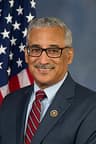
Robert Scott (D-VA)· Mar 27, 2025
Failed
199214
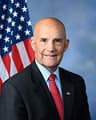
Keith Self (R-TX)· Mar 27, 2025
Failed
92321

Rashida Tlaib (D-MI)· Mar 27, 2025
Failed
3410
Rashida Tlaib (D-MI)· Mar 27, 2025
Failed
4404
6 bills Congress.gov lists as related to this one — companions in the other chamber, earlier versions, and bills this one absorbed or was folded into.
Republican · Georgia
Republican · Kentucky

Republican · Florida

Democrat · North Carolina

Republican · North Carolina

Republican · Minnesota

Republican · Wisconsin

Democrat · Washington

Republican · Indiana
Republican · Michigan
Independent · California

Republican · Michigan

Republican · Indiana

Republican · Utah

Republican · Missouri

Republican · Ohio

Republican · Pennsylvania

Republican · New York

Republican · South Carolina

Republican · Michigan
Republican · Texas