
John Reed (D-RI)
A resolution designating April 2025 as "Financial Literacy Month".
A Democratic resolution with 14 Republican cosponsors · See all 24 cosponsors
Last activity — Submitted in the Senate, considered, and agreed to without amendment and with a preamble by Unanimous Consent. (consideration: CR S2710; text: CR S2718-2719)
Adopted
The chamber formally agreed to it, and for a resolution that is the finish line: what it says is now officially the chamber's position, rule or tribute.
Nothing more is needed. A resolution is how a chamber speaks for itself or sets its own rules, so adopting it is what puts it into effect. It is not a law, so there is nothing for the President to sign.
Its path through Congress
- Introduced
- Officially Recorded
- Adopted by the Senate unanimous consent
A Senate resolution is the Senate speaking for itself: stating a position, honouring someone, or setting its own rules. Adopting it is the whole process. Once the Senate agrees to it, it is officially the Senate's word; it is not a law, so the House and the President have no part in it.
The Senate by unanimous consent (no one objected, so there was no vote): no senator's position on it was recorded.
What this bill would do
S. Res. 193 designates April 2025 as "Financial Literacy Month". The resolution aims to raise public awareness regarding the importance of personal financial education and the consequences of lacking that understanding. It calls on various entities, including the Federal Government, states, schools, and businesses, to observe the month with programs and activities.
Yes· 3 of 34
- Scored +6
Would people with disabilities be better off under this?
The bill explicitly highlights the need for and benefit of targeted financial education for this group.
- Scored +6
Would students be better off under this?
Focuses heavily on integrating financial education into high school and improving aid application rates.
- Scored +5
Would people in their twenties and thirties be better off under this?
Directly targets high school and young adults to improve credit scores and reduce debt defaults.
The opposite
No question was scored the opposite.
Who it would affect, and how
Potential Positive Impacts for People
-
Increased Public Awareness: By designating April 2025 as "Financial Literacy Month," the resolution seeks to highlight the importance of personal financial education and the risks associated with not understanding personal finances (Resolved section 1).
-
Support for Financial Inclusion: The text notes that expanding access to the mainstream financial system provides people with more secure and less expensive ways to manage money and build wealth (Whereas clause).
-
Benefits for Students: Financial education in high school is linked to higher credit scores, fewer defaults for young adults aged 18 to 21, and a higher likelihood that college-bound students apply for financial aid (Whereas clause).
-
Empowerment for Individuals: Increased financial literacy empowers people to make wise financial decisions and reduces confusion caused by a complex economy (Whereas clause).
-
Support for Vulnerable Groups: The resolution recognizes that people with disabilities could benefit from targeted financial education to help with making ends meet and managing financial products (Whereas clause).
Potential Negative Impacts for People
- No negative impacts for individuals or groups are explicitly listed in the provided text.
Groups and Interests Ranking
Every group the model scored this bill for, from -10 to +10. Tap or hover a score for the reason it gave.
- Demographic And Interest Groups
- Would people with disabilities be better off under this? — The bill explicitly highlights the need for and benefit of targeted financial education for this group. Would students be better off under this? — Focuses heavily on integrating financial education into high school and improving aid application rates. Would households on low incomes be better off under this? — Specifically addresses the needs of unbanked and underbanked households to increase financial inclusion. Would people in their twenties and thirties be better off under this? — Directly targets high school and young adults to improve credit scores and reduce debt defaults. Would immigrants be better off under this? — Helps individuals navigate the mainstream financial system and build wealth. Would Black Americans be better off under this? — Financial inclusion efforts target systemic barriers to banking and wealth building. Would children be better off under this? — Promotes the integration of financial education into school curricula for children. Would Hispanic Americans be better off under this? — Financial inclusion efforts target systemic barriers to banking and wealth building. Would middle-income households be better off under this? — Empowers households to make wiser financial decisions and manage debt. Would Native Americans be better off under this? — Financial inclusion efforts target systemic barriers to banking and wealth building. Would retired people be better off under this? — Promotes the planning and security necessary for a stable retirement. Would people in rural areas be better off under this? — Addresses the needs of underbanked populations often found in rural areas. Would people in cities be better off under this? — Addresses the needs of underbanked populations often found in urban centers. Would Asian Americans be better off under this? — General benefits of improved financial literacy and inclusion. Would business owners be better off under this? — Financial education fosters better entrepreneurial leadership and business management. Would farmers be better off under this? — Financial literacy is beneficial for managing agricultural business finances. Would LGBTQ people be better off under this? — General benefits of financial empowerment and literacy. Would men be better off under this? — General benefits of financial empowerment and literacy. Would people in middle age be better off under this? — Provides awareness and tools for better money management and retirement planning. Would people over 65 be better off under this? — Promotes retirement planning and financial security for older populations. Would union members be better off under this? — Financial wellness benefits are noted as tools to improve worker satisfaction. Would veterans be better off under this, taking everything together? — General benefits of financial empowerment and literacy. Would white Americans be better off under this? — General benefits of improved financial literacy. Would women be better off under this? — General benefits of financial empowerment and literacy. Would high-income households be better off under this? — General benefits of financial literacy apply, though impact is less critical than for low-income groups.
- Social Issues And Justice
- Does this expand the rights of people with disabilities? — The bill explicitly identifies that people with disabilities could benefit from targeted financial education. Is this likely to lift people out of poverty? — Financial literacy and inclusion are presented as tools to build wealth and manage money more securely. Does this narrow racial gaps in how people are treated? — Financial inclusion strategies aim to reach students who lack guidance at home, potentially reducing systemic wealth gaps. Is this likely to reduce homelessness? — Better money management and financial stability can indirectly reduce the risk of homelessness.
- Economy And Finance
- Does this give people more protection from unfair business practices? — Increased financial literacy helps individuals avoid poor financial decisions and understand complex economic systems. Is this likely to grow the economy? — The bill suggests that increased familiarity with financial markets will lead to increased economic activity and growth. Does this make the government pay for what it commits to? — Promoting financial literacy encourages better personal money management and fiscal responsibility among individuals. Does this make it easier to run a small business? — Financial education prepares individuals to become more effective entrepreneurs and business leaders.
- Education And Technology
- Does this make college cost less? — Financial literacy increases the likelihood that students will apply for financial aid.
- 4/30/2025
- Passed/agreed to in Senate: Submitted in the Senate, considered, and agreed to without amendment and with a preamble by Unanimous Consent.
- Submitted in the Senate, considered, and agreed to without amendment and with a preamble by Unanimous Consent. (consideration: CR S2710; text: CR S2718-2719)
- 24 Cosponsors added.
- Introduced in Senate
One bill Congress.gov lists as related to this one — companions in the other chamber, earlier versions, and bills this one absorbed or was folded into.
 John Boozman
Republican · Arkansas
 John Barrasso
Republican · Wyoming
 Jim Banks
Republican · Indiana
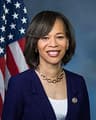 Lisa Blunt Rochester
Democrat · Delaware
 Katie Britt
Republican · Alabama
 Maria Cantwell
Democrat · Washington
 Mike Crapo
Republican · Idaho
 Susan Collins
Republican · Maine
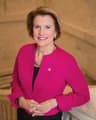 Shelley Capito
Republican · West Virginia
 Kevin Cramer
Republican · North Dakota
 Richard Durbin
Democrat · Illinois
 Maggie Hassan
Democrat · New Hampshire
 Cindy Hyde-Smith
Republican · Mississippi
 Mark Kelly
Democrat · Arizona
 Angus King
Independent · Maine
 Cynthia Lummis
Republican · Wyoming
 Gary Peters
Democrat · Michigan
 James Risch
Republican · Idaho
 Mike Rounds
Republican · South Dakota
 Tim Scott
Republican · South Carolina
 Tommy Tuberville
Republican · Alabama
 Ron Wyden
Democrat · Oregon
 Raphael Warnock
Democrat · Georgia
 Sheldon Whitehouse
Democrat · Rhode Island