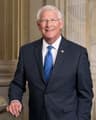
Roger Wicker (R-MS)
National Defense Authorization Act for Fiscal Year 2027
A Republican bill with no cosponsors
Last activity — Motion to proceed to consideration of measure made in Senate. (CR S4276)
Introduced, nothing more yet
Formally proposed, and not yet handed to a committee.
Nearly every bill is sent to a committee within days. Introduction alone is not a sign of support, of momentum, or of any likelihood of passing — any member may introduce any bill.
Its path through Congress
- Introduced
How Congress voted
- See who voted how →A vote to end debate and allow a final vote · 07/14/2026
What this bill would do
The bill authorizes appropriations for fiscal year 2027 for military activities of the Department of Defense, military construction, and defense activities of the Department of Energy. It prescribes end strengths for active duty and reserve military personnel for the fiscal year. The legislation is organized into four main divisions covering Department of Defense authorizations, military construction authorizations, Department of Energy national security authorizations, and funding tables. It addresses a wide range of matters including procurement, research and development, operation and maintenance, military personnel policy, compensation, health care, and acquisition policy. Additionally, the bill includes provisions regarding foreign nations, space activities, cyber-related matters, and base realignment and closure activities.
Yes· 3 of 56
- Scored +5
Does this better protect the country from computer attacks?
The bill significantly enhances cyber operations, readiness assessments, and IT security requirements.
- Scored +4
Would veterans be better off under this, taking everything together?
The bill improves discharge upgrade reviews for PTSD/TBI, expands healthcare access, and supports veteran benefits.
- Scored +4
Does this put more money into scientific research?
The bill authorizes substantial funding for research, development, test, and evaluation programs.
The opposite· 3 of 7
- Scored -10
Does this reduce what is spent on the military?
The legislation authorizes massive funding for national defense, military construction, and nuclear programs.
- Scored -5
Does this reduce what the federal government spends?
The bill increases overall defense authorizations and appropriations for fiscal year 2027.
- Scored -4
Would LGBTQ people be better off under this?
The bill restricts athletic participation and privacy spaces at service academies based on biological sex.
What Congress actually voted on
One recorded vote has been taken on this bill.
- The Senate: a vote to end debate and allow a final vote In the Senate, debate can continue indefinitely unless 60 senators vote to end it. This vote is that attempt. It decides whether the Senate may vote on the thing at all — not whether the thing passes. A failed cloture vote usually ends the matter without anyone ever voting on its merits. Blocked 50 yes · 46 no
07/14/2026 · Roll call 195 · recorded as “On Cloture on the Motion to Proceed S. 4784”
Who it would affect, and how
Potential Positive Impacts for People
-
Section 522: Repeals the sunset of the authority relating to non-medical counseling services for military families, which ensures continued access to vital support services for families.
-
Section 526: Provides relief for former service members requesting a review of a discharge or dismissal on the basis of post-traumatic stress disorder, traumatic brain injury related to combat, or military sexual trauma, allowing for potential upgrades and record corrections.
-
Section 555: Expands eligible child care providers for Department of Defense programs by removing prior service requirements and allowing participation from national service volunteers.
-
Section 602: Increases the rates of monthly basic pay for members of the uniformed services by 3.6 percent, effective January 1, 2027.
-
Section 632: Provides for the reimbursement of qualifying guardianship costs up to $1,000 incurred by members of the uniformed services as a result of relocations.
-
Section 703: Expands eligibility for hearing aids under TRICARE Select to include children of retired members of the uniformed services enrolled in family coverage.
-
Section 7531: Provides funding to the Government of Israel for the Iron Dome short-range rocket defense system and other cooperative missile defense programs, which can enhance security.
Potential Negative Impacts for People
-
Section 529B: Prohibits males from participating in athletic programs or activities designated for women or girls, and from entering certain privacy spaces designated for women or girls, at military service academies and Department of Defense Education Activity schools.
-
Section 529C: Repeals a pronoun policy and modifies requirements related to diversity, equity, and inclusion, which may remove specific supportive structures for certain groups.
-
Section 815: Prohibits contractors from purchasing certain equity securities or paying dividends/capital distributions unless they agree to a qualifying defense investment plan, which could burden business operations.
Groups and Interests Ranking
Every group the model scored this bill for, from -10 to +10. Tap or hover a score for the reason it gave.
- Demographic And Interest Groups
- Would veterans be better off under this, taking everything together? — The bill improves discharge upgrade reviews for PTSD/TBI, expands healthcare access, and supports veteran benefits. Would business owners be better off under this? — The legislation provides extensive contracting opportunities and supplier support for the defense industrial base. Would middle-income households be better off under this? — The legislation provides a 3.6% basic pay raise and improves housing and healthcare benefits for service members. Would people in their twenties and thirties be better off under this? — The legislation increases military basic pay by 3.6% and enhances educational and recruitment benefits. Would children be better off under this? — The bill improves dependent education assistance, child care availability, and family health benefits. Would households on low incomes be better off under this? — The bill enhances poverty reduction support, childcare access, and military family readiness programs. Would people in middle age be better off under this? — The bill supports career stability, retention incentives, and spouse employment fellowships. Would people with disabilities be better off under this? — The bill enforces disability hiring goals for contractors and supports exceptional family member programs. Would retired people be better off under this? — The bill protects retiree benefits and expands commissary and exchange access where authorized. Would people in rural areas be better off under this? — The legislation includes specific modernization plans for rural and isolated National Guard installations. Would students be better off under this? — The bill improves dependents' education, JROTC programs, and tuition assistance caps. Would billionaires be better off under this? — Large defense industry stakeholders benefit from multiyear procurement authorizations. Would high-income households be better off under this? — The bill supports economic activity through large-scale defense procurement contracts. Would people with substantial wealth be better off under this? — Defense sector investments benefit investors in aerospace and defense corporations. Would immigrants be better off under this? — The bill extends admission policies for H-2B nonimmigrants in certain territories and preserves records for Afghan allies. Would men be better off under this? — The legislation provides broad pay raises and benefit improvements across the armed forces. Would people over 65 be better off under this? — The bill maintains and protects retirement determinations and benefits for former service members. Would the very wealthiest people be better off under this? — Major defense contractors and capital providers benefit from increased defense authorizations. Would union members be better off under this? — The bill protects public shipyard employment and supports defense industrial base jobs. Would people in cities be better off under this? — The bill supports general economic activity and national security infrastructure. Would women be better off under this? — The bill extends special victims' counsel services to domestic violence victims and prioritizes women's health research. Would LGBTQ people be better off under this? — The bill restricts athletic participation and privacy spaces at service academies based on biological sex.
- Education And Technology
- Does this put more money into scientific research? — The bill authorizes substantial funding for research, development, test, and evaluation programs. Does this put more into space exploration? — The legislation supports space launch infrastructure and Department of the Air Force space programs. Does this make patent and copyright rules fairer? — The legislation modifies technical data rights and intellectual property protections for defense contractors. Does this reduce what student borrowers owe or repay? — The legislation expands student loan relief options for members of the Selected Reserve. Does this put more money into public schools? — The bill provides impact aid and educational support to local educational agencies benefiting military dependents. Does this give people more control over their personal data? — The bill establishes privacy and data collection protections for prospective recruit and personnel information.
- Healthcare
- Does this make health care easier to get in general? — The bill expands medical screening, firefighter testing, and healthcare access for service members and dependents. Does this help veterans get medical care? — The legislation enhances medical programs and pilot initiatives connecting defense and veteran health services. Does this put more money into medical research? — The legislation authorizes increased funding for medical and scientific research programs. Does this make mental health care easier to get? — The bill includes provisions expanding counseling and support services for service members and families. Does this make the country readier for the next outbreak? — The bill establishes capabilities for transporting and responding to high-consequence infectious diseases.
- National Security And Foreign Policy
- Does this better protect the country from computer attacks? — The bill significantly enhances cyber operations, readiness assessments, and IT security requirements. Does this strengthen ties with allied countries? — The legislation strengthens key alliances and cooperative security frameworks in the Indo-Pacific and Europe. Does this increase the pay, pensions or support veterans receive? — The legislation improves discharge review standards, veteran record corrections, and benefit access. Does this put more money into stopping terrorism? — The bill authorizes funding and authorities for counterterrorism and security cooperation missions. Does this send more money or help to other countries? — The bill authorizes security assistance and capacity-building funds for foreign allies and partners. Does this give the government more power to monitor people inside the country? — The bill expands data collection authorities and monitoring capabilities for security and recruitment purposes. Does this favour talking over confrontation abroad? — The bill supports international partnerships and defense cooperation initiatives. Does this reduce what is spent on the military? — The legislation authorizes massive funding for national defense, military construction, and nuclear programs.
- Environment Energy And Infrastructure
- Does this better protect air, water and wildlife? — The legislation enhances PFAS remediation tracking, public participation, and environmental restoration. Does this repair or build roads and bridges? — The bill authorizes significant military construction and infrastructure improvement projects. Does this invest in rural communities? — The legislation includes provisions supporting rural infrastructure and National Guard facility modernization. Does this put more money into wind, solar and other renewable power? — The bill promotes energy redundancy and storage capacity enhancements at military installations. Does this better protect public land such as parks and forests? — The bill provides guidance on public land withdrawals and environmental restoration activities. Does this cut the pollution that drives climate change? — The bill authorizes sustainable aviation fuel procurement and grid resiliency improvements.
- Governance And Ideology
- Does this make what the government does easier for the public to see? — The bill mandates numerous reports, dashboards, and briefings to improve congressional oversight. Does this protect the right to fair treatment by the courts? — The legislation enhances review standards for military discharges and administrative separation actions. Does this protect people from being watched or searched? — The bill adds whistleblower protections against retaliatory security clearance and psychiatric reviews. Does this give the federal government more power? — The legislation expands federal oversight and guidance regarding defense contractors and installations.
- Social Issues And Justice
- Does this tighten control of the border? — The bill mandates enhanced border activities and strategic plans for southern border domain awareness. Does this make housing cost less? — The bill introduces health, safety, and tenant protection standards for military family and privatized housing. Does this make child care cost less? — The legislation expands child care provider options and standardizes reporting on military child care readiness. Does this expand the rights of people with disabilities? — The bill includes provisions ensuring contractor compliance with disability hiring goals and family support. Does this expand the rights of LGBTQ people? — The bill restricts participation in female-designated academy sports and privacy spaces based on biological sex. Does this narrow the gap between how men and women are treated? — Certain gender-related diversity provisions are restricted or modified by the legislation.
- Economy And Finance
- Does this make it easier to run a small business? — The legislation includes specific provisions and set-asides to support small business participation in defense contracts. Is this likely to create jobs? — The bill authorizes significant procurement and construction projects that will sustain and create defense-related jobs. Is this likely to grow the economy? — Defense procurement contracts provide economic activity for the defense industrial base. Does this reduce what the federal government spends? — The bill increases overall defense authorizations and appropriations for fiscal year 2027. Does this reduce what the federal government owes? — The legislation authorizes extensive federal spending for defense activities and military construction. Does this make the government pay for what it commits to? — While including audit readiness provisions, the bill authorizes substantial federal expenditures.
No amendments submitted yet for this bill.
- 7/27/2026
- Motion to proceed to consideration of measure made in Senate. (CR S4276)
- 7/23/2026
- Motion to proceed to consideration of measure made in Senate. (CR S4241-4242)
- Motion to proceed to consideration of measure withdrawn in Senate.
- 7/20/2026
- Motion to proceed to consideration of measure made in Senate. (CR S4145)
- 7/14/2026
- Cloture motion on the motion to proceed to the measure not invoked in Senate by Yea-Nay Vote. 50 - 46. Record Vote Number: 195. (CR S3918)
- Motion by Senator Thune to reconsider the vote by which cloture on the motion to proceed to the measure was not invoked (Record Vote No. 195) entered in Senate.
- Motion to proceed to consideration of measure made in Senate. (CR S3919)
- 6/24/2026
- Motion to proceed to consideration of measure made in Senate. (CR S3193)
- Cloture motion on the motion to proceed to the measure presented in Senate. (CR S3193)
- 6/15/2026
- Committee on Armed Services. Original measure reported to Senate by Senator Wicker. With written report No. 119-127.
- Placed on Senate Legislative Calendar under General Orders. Calendar No. 436.
- Bill introduced.
28 bills Congress.gov lists as related to this one — companions in the other chamber, earlier versions, and bills this one absorbed or was folded into.
- 119-HR-2876: University of Utah Research Park Act
- 119-HR-8800: National Defense Authorization Act for Fiscal Year 2027
- 119-HR-9322: Abraham Accords Defense Cooperation Act of 2026
- 119-HR-9413: Military Family Limb Loss Support Act
- 119-HR-10870: Military Domestic Violence Survivors Support Act
- 119-S-1320: Servicewomen and Veterans Menopause Research Act
- 119-S-1453: University of Utah Research Park Act
- 119-S-2745: Federal Firefighter Cancer Detection and Prevention Act of 2025
- 119-S-2809: Transparency in Contracting Act of 2025
- 119-S-4161: Maverick Act
- 119-S-4164: A bill to make technical corrections to the National Defense Authorization Act for Fiscal Year 2026.
- 119-S-4219: Abraham Accords Defense Cooperation Act of 2026
- 119-S-4683: WARP Act of 2026
- 119-S-4707: Responsible Artificial Intelligence Defense Act of 2026
- 119-S-4858: Alaska National Guard Rural Community Revival Act
- 119-S-5211: A bill to require the Under Secretary of Defense for Policy and the Chairman of the Joint Chiefs of Staff to submit a strategy for cyber cooperation in the Indo-Pacific region, and for other purposes.
- 119-S-5340: A bill to require a drone posture review.
- 119-S-5343: Military Leadership Removal Transparency Act of 2026
- 119-S-5345: A bill to provide for the delivery of artificial intelligence functional bills of materials, and for other purposes.
- 119-S-5375: ARCH Act
- 119-S-5504: A bill to require the Secretary of Defense to establish a pilot program on Department of Defense partnerships with institutions of higher education recognized in the National Centers of Academic Excellence in Cybersecurity program for Cyber Research, and for other purposes.
- 119-S-5590: Electric Grid Supply Chain Security Act
- 119-S-5595: Weapons Resupply, Stockpile, and Assurance Act
- 119-S-5596: Military DEI Repeal Act of 2026
- 119-S-5597: Service Academy Testing Enhancement Act of 2026
- 119-S-5598: Blocking Foreign Cellular Modules in Defense Systems Act of 2026
- 119-S-5599: River Ridge Land Conveyance Act
- 119-S-5601: Insider Threat Reporting and Security Guidance Act of 2026