
Maria Cantwell (D-WA)
Fire Ready Nation Act of 2025
A Democratic bill with 4 Republican cosponsors · See all 8 cosponsors
Last activity — Held at the desk.
Passed one chamber, waiting for the other to take it up
Passed one chamber, and the other has not yet sent it to a committee or put it on its calendar.
The other chamber will hand it to a committee, place it on its calendar, or leave it where it is. Nothing has been decided, and a bill can sit here indefinitely.
Its path through Congress
- Introduced
- Passed Senate unanimous consent
- Awaiting House
The Senate by unanimous consent (no one objected, so there was no vote): no senator's position on it was recorded.
What this bill would do
This Act establishes a coordinated fire weather services program within the National Oceanic and Atmospheric Administration. The program aims to improve the forecasting, detection, and modeling of wildfires, fire weather, and wildfire smoke. It includes the creation of a fire weather testbed to evaluate new technologies and uncrewed systems for data collection. Additionally, the bill establishes an Incident Meteorologist Service to provide on-site decision support. The legislation also creates a Fire Science and Technology Working Group to coordinate interagency research and strategic planning. Finally, the act includes provisions for workforce support and emergency response pay considerations.
Yes· 3 of 13
- Scored +7
Does this put more money into scientific research?
The bill authorizes significant funding for research and development in fire weather and earth system modeling.
- Scored +6
Would people in rural areas be better off under this?
The bill mandates parity in fire forecasts and warning services for remote, isolated, and rural communities.
- Scored +6
Does this better protect air, water and wildlife?
The bill enhances the monitoring and prediction of wildfires, smoke, and post-fire hazards like flooding.
The opposite
No question was scored the opposite.
Who it would affect, and how
Potential Positive Impacts for People
-
Improved Wildfire Safety and Readiness: The establishment of a coordinated fire weather services program aims to support the readiness, responsiveness, and resilience of the United States to wildfires and associated hazards (Section 3(b)(1)).
-
Enhanced Decision Support for Emergency Personnel: The program will develop impact-based decision support services to help core partners, such as emergency personnel and public safety officials, make decisions regarding lives and livelihoods (Section 2(6) and Section 3(b)(3)).
-
Better Communication for Rural Communities: The Act prioritizes developing communication networks to ensure parity of fire forecasts and warnings for remote, isolated, and rural communities (Section 3(b)(6) and Section 3(c)(4)).
-
Increased Safety via Advanced Technology: The use of uncrewed systems and a fire weather testbed is intended to improve data collection and the transition of new capabilities into operational use (Section 4(a) and Section 4(b)(1)).
-
Support for Meteorologist Well-being: The Incident Meteorologist Service includes provisions for professional counseling and other forms of support to assist with the emotional and mental health of employees responding to extreme fire weather events (Section 7(f)).
-
Protection of Pay for Emergency Workers: For the 2025 calendar year, the bill allows covered employees to receive premium pay for services like wildland firefighting or acting as an incident meteorologist without it counting against certain pay limitations (Section 8(b)(1)).
Potential Negative Impacts for People
- Potential for Airspace Restrictions: The deployment of uncrewed systems for fire weather and environment observations must follow specific procedures and restrictions established by agencies with jurisdiction over the airspace where wildfire response occurs (Section 4(b)(3)(A)).
Groups and Interests Ranking
Every group the model scored this bill for, from -10 to +10. Tap or hover a score for the reason it gave.
- Demographic And Interest Groups
- Would people in rural areas be better off under this? — The bill mandates parity in fire forecasts and warning services for remote, isolated, and rural communities. Would Native Americans be better off under this? — The act explicitly includes partnerships and support for Indian tribes and tribal organizations regarding fire weather services. Would households on low incomes be better off under this? — Enhanced smoke and wildfire monitoring provides better protection for health and property in vulnerable areas. Would veterans be better off under this, taking everything together? — The bill includes provisions for the well-being of employees, which can indirectly benefit the broader emergency response community.
- Environment Energy And Infrastructure
- Does this better protect air, water and wildlife? — The bill enhances the monitoring and prediction of wildfires, smoke, and post-fire hazards like flooding. Does this invest in rural communities? — The act specifically prioritizes improving communication networks and warning parity for remote and rural communities.
- Education And Technology
- Does this put more money into scientific research? — The bill authorizes significant funding for research and development in fire weather and earth system modeling.
- Economy And Finance
- Is this likely to create jobs? — The act establishes new services and research programs that will likely require more personnel. Does this make the government pay for what it commits to? — The bill includes provisions for coordination to avoid duplication of existing agency activities.
- Governance And Ideology
- Does this make what the government does easier for the public to see? — The act requires the development of a comprehensive, publicly accessible digital presence for program data and services.
- National Security And Foreign Policy
- Does this strengthen ties with allied countries? — The act allows for the development of collaborative relationships and exchange of data with foreign partners regarding transboundary fire issues.
- Healthcare
- Does this do more about addiction and overdose deaths? — The act includes research on the impact of wildfire smoke on health, though it does not directly address opioids.
- Social Issues And Justice
- Is this likely to lift people out of poverty? — Improved wildfire forecasting and smoke monitoring can help protect the livelihoods and economic stability of vulnerable communities.
- 9/11/2025
- Message on Senate action sent to the House.
- Held at the desk.
- Received in the House.
- 9/10/2025
- Passed/agreed to in Senate: Passed Senate without amendment by Unanimous Consent.
- Passed Senate without amendment by Unanimous Consent. (consideration: CR S6549-6555; text: CR S6549-6555)
- 7/16/2025
- Committee on Commerce, Science, and Transportation. Reported by Senator Cruz without amendment. With written report No. 119-42.
- Placed on Senate Legislative Calendar under General Orders. Calendar No. 119.
- 2/5/2025
- Committee on Commerce, Science, and Transportation. Ordered to be reported without amendment favorably.
- 2/4/2025
- Star Print ordered on the bill.
- 1 Cosponsor added.
- 1/29/2025
- Read twice and referred to the Committee on Commerce, Science, and Transportation.
- 7 Cosponsors added.
- Introduced in Senate
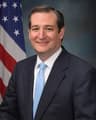 Ted Cruz
Republican · Texas
 Ben Luján
Democrat · New Mexico
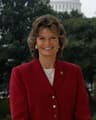 Lisa Murkowski
Republican · Alaska
 Alex Padilla
Democrat · California
 Jacky Rosen
Democrat · Nevada
 Brian Schatz
Democrat · Hawaii
 Dan Sullivan
Republican · Alaska
 Tim Sheehy
Republican · Montana