
A Republican bill with 2 Democratic cosponsors · See all 9 cosponsors
Last activity — Read the second time. Placed on Senate Legislative Calendar under General Orders. Calendar No. 205.
Cleared committee, waiting for its first floor vote
A committee approved it and it is on the calendar of the chamber it started in.
This is further than most bills get, and still no promise of a vote: the calendar is a queue, and the majority leadership decides what is called. A bill can sit here until the Congress ends.
Its path through Congress
- Introduced
- On Calendar
What this bill would do
This bill is known as the Keep America Flying Act of 2026. It provides ongoing funding to pay essential Federal Aviation Administration (FAA) and Transportation Security Administration (TSA) personnel and contractors if the federal government shuts down. The funding covers standard pay, benefits, allowances, and payments to specific contractors who support these workers. This money will keep being spent until regular funding laws are passed or until September 30, 2026, whichever happens first. The law is also written to take effect as if it had started on September 30, 2025.
Yes· 3 of 6
- Scored +5
Does this improve buses, trains and other public transport?
The bill ensures continuous operational funding for air traffic control and security screening, directly supporting critical national transportation infrastructure.
- Scored +4
Would union members be better off under this?
Many FAA personnel and air traffic controllers are unionized workers who receive guaranteed continuous pay under this bill during shutdowns.
- Scored +3
Would middle-income households be better off under this?
The legislation provides financial security and steady paychecks to middle-class federal workers and contractors during government shutdowns.
The opposite
No question was scored the opposite.
Who it would affect, and how
Potential Positive Impacts for People
-
Section 2(a)(1) provides the necessary money to keep paying air traffic controllers and other essential operational FAA personnel during a government shutdown. This is positive because it ensures the people responsible for the safe and orderly operation of our airspace keep getting paid.
-
Section 2(a)(2) provides ongoing pay and benefits for TSA employees who handle screening operations, aviation security, and related support. This is a positive step to make sure security personnel are supported financially during a shutdown.
-
Section 2(a)(3) and Section 2(a)(4) provide funding for contractors who support FAA and TSA personnel. This ensures that the supporting businesses and workers do not lose their payments while the government is shut down.
Potential Negative Impacts for People
- Based on the provided text, there are no explicitly stated negative impacts or burdens for individuals or groups of people in the United States.
Groups and Interests Ranking
Every group the model scored this bill for, from -10 to +10. Tap or hover a score for the reason it gave.
- Demographic And Interest Groups
- Would union members be better off under this? — Many FAA personnel and air traffic controllers are unionized workers who receive guaranteed continuous pay under this bill during shutdowns. Would middle-income households be better off under this? — The legislation provides financial security and steady paychecks to middle-class federal workers and contractors during government shutdowns. Would business owners be better off under this? — Businesses relying on aviation and consistent travel benefit from the avoidance of airport and airspace disruptions.
- Environment Energy And Infrastructure
- Does this improve buses, trains and other public transport? — The bill ensures continuous operational funding for air traffic control and security screening, directly supporting critical national transportation infrastructure.
- Economy And Finance
- Is this likely to grow the economy? — Ensuring FAA and TSA personnel continue to be paid during a government shutdown helps maintain stability in air travel and related economic activities.
- Governance And Ideology
- Does this make it easier to do business across state lines? — By preventing disruptions to air travel during government shutdowns, the bill protects interstate commerce and travel.
- 4/20/2026
- 1 Cosponsor added.
- 11/5/2025
- 1 Cosponsor added.
- 10/30/2025
- 1 Cosponsor added.
- 10/29/2025
- 1 Cosponsor added.
- 10/28/2025
- 1 Cosponsor added.
- 10/27/2025
- 1 Cosponsor added.
- 10/22/2025
- Introduced in the Senate. Read the first time. Placed on Senate Legislative Calendar under Read the First Time. (Legislative Day October 21, 2025).
- Read the second time. Placed on Senate Legislative Calendar under General Orders. Calendar No. 205.
- 3 Cosponsors added.
- Introduced in Senate
One bill Congress.gov lists as related to this one — companions in the other chamber, earlier versions, and bills this one absorbed or was folded into.
 Marsha Blackburn
Republican · Tennessee
 Ruben Gallego
Democrat · Arizona
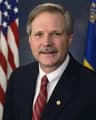 John Hoeven
Republican · North Dakota
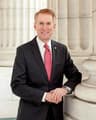 James Lankford
Republican · Oklahoma
 Lisa Murkowski
Republican · Alaska
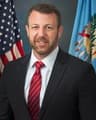 Markwayne Mullin
Republican · Oklahoma
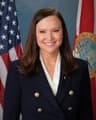 Ashley Moody
Republican · Florida
 Dan Sullivan
Republican · Alaska
 Raphael Warnock
Democrat · Georgia