
James Risch (R-ID)
Deter PRC Aggression Against Taiwan Act
A Republican bill with 5 Democratic cosponsors · See all 13 cosponsors
Last activity — Placed on Senate Legislative Calendar under General Orders. Calendar No. 245.
Cleared committee, waiting for its first floor vote
A committee approved it and it is on the calendar of the chamber it started in.
This is further than most bills get, and still no promise of a vote: the calendar is a queue, and the majority leadership decides what is called. A bill can sit here until the Congress ends.
Its path through Congress
- Introduced
- On Calendar
What this bill would do
This bill, titled the "Deter PRC Aggression Against Taiwan Act," aims to create economic tools to discourage the People's Republic of China from taking aggressive actions against Taiwan. It calls for the establishment of an interagency "PRC Sanctions Task Force" to identify military and non-military entities that could be sanctioned. This task force is tasked with creating strategies to target the financial and industrial sectors of the PRC. The goal is to prepare the United States to respond immediately to actions such as naval blockades or cyber attacks against Taiwan. The bill includes requirements for the task force to provide briefings and annual classified reports to Congress.
Yes· 3 of 4
- Scored +5
Does this strengthen ties with allied countries?
The bill mandates coordination with allies and partners to leverage economic tools against aggression.
- Scored +4
Does this make what the government does easier for the public to see?
The bill requires an annual classified report to be submitted to appropriate congressional committees.
- Scored +3
Does this better protect the country from computer attacks?
The bill seeks to deter cyber attacks against Taiwan's governing institutions.
The opposite
- Scored -2
Would business owners be better off under this?
The bill explicitly notes that sanctions could have negative economic consequences for businesses and global financial stability.
Who it would affect, and how
Potential Positive Impacts for People
-
Deterrence of Aggression: The bill establishes a framework to identify and target entities that support actions to overthrow Taiwan's institutions or occupy its territory, which serves to deter such actions (Section 2).
-
Protection of Essential Services: By targeting physical or cyber attacks, the bill aims to protect the ability of Taiwan's governing institutions to operate and provide essential services to its citizens (Section 2).
-
Economic Support for Threatened Nations: The task force is directed to coordinate with allies to provide economic support to Taiwan and other countries facing threats or economic coercion from the PRC (Section 4(b)(5)(D)).
-
Mitigation of Economic Damage: The bill requires the task force to assess and develop measures, such as licenses and exemptions, to reduce potential negative economic consequences caused by the imposition of sanctions (Section 4(b)(4)).
Potential Negative Impacts for People
-
Economic Consequences for the United States and Allies: The bill acknowledges that imposing sanctions could result in potential economic consequences for the United States and its allies and partners (Section 4(b)(3)).
-
Instability of the Global Financial System: The task force must consider how targeting specific entities might impact the stability of the global financial system (Section 4(b)(7)(C)).
-
Impact on Non-State Companies: The strategy for targeting sanctions includes an assessment of the impact on companies in the PRC that are not formally designated as state-owned enterprises (Section 4(b)(7)(C)(iv)).
Groups and Interests Ranking
Every group the model scored this bill for, from -10 to +10. Tap or hover a score for the reason it gave.
- National Security And Foreign Policy
- Does this strengthen ties with allied countries? — The bill mandates coordination with allies and partners to leverage economic tools against aggression. Does this better protect the country from computer attacks? — The bill seeks to deter cyber attacks against Taiwan's governing institutions.
- Governance And Ideology
- Does this make what the government does easier for the public to see? — The bill requires an annual classified report to be submitted to appropriate congressional committees.
- Demographic And Interest Groups
- Would business owners be better off under this? — The bill explicitly notes that sanctions could have negative economic consequences for businesses and global financial stability.
- Economy And Finance
- Does this give people more protection from unfair business practices? — The bill aims to protect global economic stability by analyzing the impact of sanctions on the financial system.
- 12/2/2025
- 1 Cosponsor added.
- 11/10/2025
- 2 Cosponsors added.
- 11/3/2025
- 7 Cosponsors added.
- 10/30/2025
- Committee on Foreign Relations. Reported by Senator Risch with an amendment in the nature of a substitute. Without written report.
- Placed on Senate Legislative Calendar under General Orders. Calendar No. 245.
- 10/22/2025
- Committee on Foreign Relations. Ordered to be reported with an amendment in the nature of a substitute favorably.
- 10/16/2025
- 2 Cosponsors added.
- 10/9/2025
- 1 Cosponsor added.
- 10/1/2025
- Read twice and referred to the Committee on Foreign Relations.
- Introduced in Senate
One bill Congress.gov lists as related to this one — companions in the other chamber, earlier versions, and bills this one absorbed or was folded into.
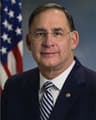 John Boozman
Republican · Arkansas
 Michael Bennet
Democrat · Colorado
 Ted Budd
Republican · North Carolina
 John Cornyn
Republican · Texas
 Christopher Coons
Democrat · Delaware
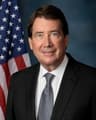 Bill Hagerty
Republican · Tennessee
 Andy Kim
Democrat · New Jersey
 Jeff Merkley
Democrat · Oregon
 David McCormick
Republican · Pennsylvania
 Pete Ricketts
Republican · Nebraska
 Jeanne Shaheen
Democrat · New Hampshire
 Rick Scott
Republican · Florida
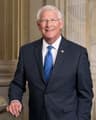 Roger Wicker
Republican · Mississippi