
A Democratic bill with 9 Republican cosponsors · See all 17 cosponsors
Last activity — Read twice and referred to the Committee on Homeland Security and Governmental Affairs.
In committee
Introduced and handed to a committee in the chamber it started in.
The committee holds it, and most bills are never heard from again. A hearing or a committee vote would be news; silence is the usual outcome, and it kills the bill without anyone voting against it.
Its path through Congress
- Introduced
- In Committee
What this bill would do
The Pray Safe Act of 2025 seeks to create a Federal Clearinghouse within the Department of Homeland Security. This Clearinghouse will serve as a primary resource to educate nonprofit, faith-based, and house of worship organizations on safety and security best practices. It will also provide centralized information regarding available Federal grant programs. The Secretary of Homeland Security will oversee the establishment of evidence-based security tiers and provide training materials. Additionally, the program aims to provide a centralized list of points of contact for assistance. The Act includes a sunset provision that ends its effectiveness four years after enactment.
Yes· 3 of 8
- Scored +3
Does this protect the freedom to practise a religion?
The act provides faith-based organizations and houses of worship with resources to improve their safety and security.
- Scored +2
Does this make it easier to run a small business?
The act provides nonprofit organizations with a centralized resource for safety best practices and grant information.
- Scored +2
Does this make what the government does easier for the public to see?
The act creates a central online clearinghouse to make federal grant and safety information more accessible to the public.
The opposite
- Scored -1
Does this expand the rights of people with disabilities?
The act includes a rule of construction stating it does not satisfy or waive requirements under the Americans with Disabilities Act.
Who it would affect, and how
Potential Positive Impacts for People
-
Improved Safety Education: The Clearinghouse will publish online best practices and recommendations to help organizations prepare for threats such as terrorist attacks, manmade disasters, or natural disasters (Section 3(a)(1)(B)).
-
Access to Funding Information: The Clearinghouse will provide a comprehensive index and overview of Federal grant programs, including direct links to applications and user guides, to help organizations fund their security needs (Section s3(a)(2)(C) and Section 3(c)(1)).
-
Targeted Security Guidance: Organizations will receive evidence-based recommendations covering essential areas like event planning, facility hardening, and incident response (Section 3(a)(2)(B)).
-
Direct Assistance: The establishment of a designated point of contact ensures that organizations have a specific person to reach out to for information and assistance regarding safety and grant programs (Section 3(a)(1)(B)(iii)).
-
State-Level Resource Identification: The Clearinghouse will identify State agencies and grant programs that can assist with targeted violence and terrorism prevention (Section 3(c)(3)(B)).
Potential Negative Impacts for People
- Temporary Nature of Support: Because the Act contains a sunset provision, the Clearinghouse and its resources are scheduled to cease being effective four years after the date of enactment (Section 3(f)).
Groups and Interests Ranking
Every group the model scored this bill for, from -10 to +10. Tap or hover a score for the reason it gave.
- Economy And Finance
- Does this make it easier to run a small business? — The act provides nonprofit organizations with a centralized resource for safety best practices and grant information. Is this likely to grow the economy? — The act facilitates easier access to federal grant information for nonprofit organizations.
- Social Issues And Justice
- Does this protect the freedom to practise a religion? — The act provides faith-based organizations and houses of worship with resources to improve their safety and security. Does this change how police departments operate? — The act coordinates with the Department of Justice and the FBI to provide safety and security resources. Does this expand the rights of people with disabilities? — The act includes a rule of construction stating it does not satisfy or waive requirements under the Americans with Disabilities Act.
- Demographic And Interest Groups
- Would households on low incomes be better off under this? — The act increases access to federal grants which may support community-based nonprofit services. Would people in cities be better off under this? — The act provides security resources that can benefit community organizations in urban settings.
- Governance And Ideology
- Does this make what the government does easier for the public to see? — The act creates a central online clearinghouse to make federal grant and safety information more accessible to the public.
- National Security And Foreign Policy
- Does this better protect the country from computer attacks? — The act includes information on physical and online security measures for nonprofit organizations.
- 6/23/2026
- 2 Cosponsors added.
- 6/22/2026
- 2 Cosponsors added.
- 3/2/2026
- 1 Cosponsor added.
- 1/28/2026
- 1 Cosponsor added.
- 12/18/2025
- 2 Cosponsors added.
- 11/4/2025
- 2 Cosponsors added.
- 9/30/2025
- Read twice and referred to the Committee on Homeland Security and Governmental Affairs.
- 7 Cosponsors added.
- Introduced in Senate
One bill Congress.gov lists as related to this one — companions in the other chamber, earlier versions, and bills this one absorbed or was folded into.
 Angela Alsobrooks
Democrat · Maryland
 Michael Bennet
Democrat · Colorado
 Susan Collins
Republican · Maine
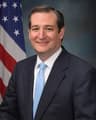 Ted Cruz
Republican · Texas
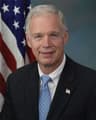 Ron Johnson
Republican · Wisconsin
 Mark Kelly
Democrat · Arizona
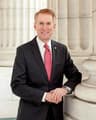 James Lankford
Republican · Oklahoma
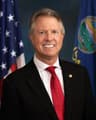 Roger Marshall
Republican · Kansas
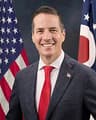 Bernie Moreno
Republican · Ohio
 David McCormick
Republican · Pennsylvania
 Jon Ossoff
Democrat · Georgia
 Gary Peters
Democrat · Michigan
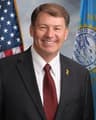 Mike Rounds
Republican · South Dakota
 Jacky Rosen
Democrat · Nevada
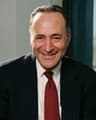 Charles Schumer
Democrat · New York
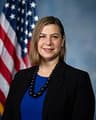 Elissa Slotkin
Democrat · Michigan
 Rick Scott
Republican · Florida