
A Democratic bill with 28 Democratic cosponsors · See all 30 cosponsors
Last activity — Read twice and referred to the Committee on Finance.
In committee
Introduced and handed to a committee in the chamber it started in.
The committee holds it, and most bills are never heard from again. A hearing or a committee vote would be news; silence is the usual outcome, and it kills the bill without anyone voting against it.
Its path through Congress
- Introduced
- In Committee
What this bill would do
This bill is titled the "Restoring Essential Healthcare Act." Its primary purpose is to amend Public Law 119-21. The legislation seeks to repeal the prohibition on making payments under the Medicaid program to certain entities. By repealing Section 71113 of Public Law 119-21, the bill allows for payments for specific items or services. This change applies to the period between the enactment of Public Law 119-21 and the enactment of this new section.
Yes· 3 of 5
- Scored +5
Does this put more money into Medicaid, the health coverage for people on low incomes?
The bill allows Medicaid funds to be used for items or services provided by entities that were previously prohibited from receiving payments.
- Scored +4
Does this make health care easier to get in general?
By removing payment prohibitions, the bill facilitates access to specific medical items or services covered under Medicaid.
- Scored +3
Would households on low incomes be better off under this?
The bill supports the distribution of medical services to those in lower economic brackets who utilize Medicaid.
The opposite
No question was scored the opposite.
Who it would affect, and how
Potential Positive Impacts for People
- Medicaid Payment Accessibility: The bill repeals the prohibition found in Section 71113 of Public Law 119-21, which would allow payments to be made for items or services furnished by "prohibited entities" as defined in that section. This could benefit individuals who rely on Medicaid for specific medical assistance.
Potential Negative Impacts for People
- No negative impacts are explicitly stated in the provided text: The provided text does not list any specific negative consequences or burdens resulting from the repeal of the prohibition.
Groups and Interests Ranking
Every group the model scored this bill for, from -10 to +10. Tap or hover a score for the reason it gave.
- Healthcare
- Does this put more money into Medicaid, the health coverage for people on low incomes? — The bill allows Medicaid funds to be used for items or services provided by entities that were previously prohibited from receiving payments. Does this make health care easier to get in general? — By removing payment prohibitions, the bill facilitates access to specific medical items or services covered under Medicaid.
- Demographic And Interest Groups
- Would households on low incomes be better off under this? — The bill supports the distribution of medical services to those in lower economic brackets who utilize Medicaid. Would people in cities be better off under this? — The bill may improve service availability in urban areas where prohibited entities might operate.
- Social Issues And Justice
- Is this likely to lift people out of poverty? — Expanding Medicaid service coverage can help reduce the financial burden on low-income individuals seeking essential healthcare.
- 8/1/2025
- 3 Cosponsors added.
- 7/29/2025
- Read twice and referred to the Committee on Finance.
- 27 Cosponsors added.
- Introduced in Senate
One bill Congress.gov lists as related to this one — companions in the other chamber, earlier versions, and bills this one absorbed or was folded into.
 Angela Alsobrooks
Democrat · Maryland
 Tammy Baldwin
Democrat · Wisconsin
 Richard Blumenthal
Democrat · Connecticut
 Cory Booker
Democrat · New Jersey
 Christopher Coons
Democrat · Delaware
 Catherine Cortez Masto
Democrat · Nevada
 Richard Durbin
Democrat · Illinois
 Tammy Duckworth
Democrat · Illinois
 John Fetterman
Democrat · Pennsylvania
 Kirsten Gillibrand
Democrat · New York
 John Hickenlooper
Democrat · Colorado
 Mazie Hirono
Democrat · Hawaii
 Martin Heinrich
Democrat · New Mexico
 Amy Klobuchar
Democrat · Minnesota
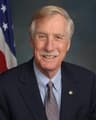 Angus King
Independent · Maine
 Ben Luján
Democrat · New Mexico
 Edward Markey
Democrat · Massachusetts
 Patty Murray
Democrat · Washington
 Christopher Murphy
Democrat · Connecticut
 Jeff Merkley
Democrat · Oregon
 Alex Padilla
Democrat · California
 John Reed
Democrat · Rhode Island
 Bernie Sanders
Independent · Vermont
 Adam Schiff
Democrat · California
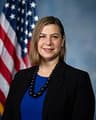 Elissa Slotkin
Democrat · Michigan
 Chris Van Hollen
Democrat · Maryland
 Ron Wyden
Democrat · Oregon
 Peter Welch
Democrat · Vermont
 Sheldon Whitehouse
Democrat · Rhode Island
 Elizabeth Warren
Democrat · Massachusetts