
Tim Scott (R-SC)
Community Investment and Prosperity Act
A Republican bill with 4 Democratic cosponsors · See all 9 cosponsors
Last activity — Read twice and referred to the Committee on Banking, Housing, and Urban Affairs.
In committee
Introduced and handed to a committee in the chamber it started in.
The committee holds it, and most bills are never heard from again. A hearing or a committee vote would be news; silence is the usual outcome, and it kills the bill without anyone voting against it.
Its path through Congress
- Introduced
- In Committee
What this bill would do
This bill is titled the "Community Investment and Prosperity Act." It aims to allow the Comptroller of the Currency and the Board of Governors of the Federal Reserve System to increase the aggregate amount of investments certain banks can make. Specifically, it targets national banking associations and State member banks. The legislation seeks to enable these institutions to make more investments to promote the public welfare. It achieves this by amending specific sentences within the Revised Statutes and the Federal Reserve Act.
Yes· 3 of 7
- Scored +3
Is this likely to create jobs?
Increasing the cap on public welfare investments by banks may stimulate economic activity and job growth.
- Scored +3
Is this likely to grow the economy?
The bill enables banks to allocate more capital toward public welfare initiatives, which can stimulate economic growth.
- Scored +2
Does this make it easier to run a small business?
Increased investment in public welfare by banks can indirectly support community-based small business environments.
The opposite
No question was scored the opposite.
Who it would affect, and how
Potential Positive Impacts for People
- Increased Investment in Public Welfare: The bill allows national banking associations and State member banks to increase the aggregate amount of investments they make to promote the public welfare. This is achieved by increasing the limit from "15" to "20" in the Revised Statutes of the United States (Section 2(a)) and the Federal Reserve Act (Section 2(b)).
Potential Negative Impacts for People
- No negative impacts are explicitly mentioned in the provided text.
Groups and Interests Ranking
Every group the model scored this bill for, from -10 to +10. Tap or hover a score for the reason it gave.
- Economy And Finance
- Is this likely to grow the economy? — The bill enables banks to allocate more capital toward public welfare initiatives, which can stimulate economic growth. Is this likely to create jobs? — Increasing the cap on public welfare investments by banks may stimulate economic activity and job growth. Does this make it easier to run a small business? — Increased investment in public welfare by banks can indirectly support community-based small business environments.
- Demographic And Interest Groups
- Would households on low incomes be better off under this? — Greater public welfare investments by banks can lead to more community resources for low-income families. Would people in rural areas be better off under this? — Increased public welfare investment can be utilized for development in rural communities. Would people in cities be better off under this? — Increased public welfare investment often flows into urban community development projects.
- Social Issues And Justice
- Is this likely to lift people out of poverty? — Expanding the capacity for banks to invest in public welfare may help fund initiatives that reduce poverty.
- 2/26/2026
- 2 Cosponsors added.
- 7/24/2025
- Read twice and referred to the Committee on Banking, Housing, and Urban Affairs.
- 7 Cosponsors added.
- Introduced in Senate
2 bills Congress.gov lists as related to this one — companions in the other chamber, earlier versions, and bills this one absorbed or was folded into.
 Angela Alsobrooks
Democrat · Maryland
 Lisa Blunt Rochester
Democrat · Delaware
 Bill Cassidy
Republican · Louisiana
 Kevin Cramer
Republican · North Dakota
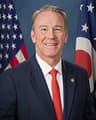 Jon Husted
Republican · Ohio
 Andy Kim
Democrat · New Jersey
 Bernie Moreno
Republican · Ohio
 David McCormick
Republican · Pennsylvania
 Raphael Warnock
Democrat · Georgia