
Jim Banks (R-IN)
Qualified Immunity Act of 2025
A Republican bill with 10 Republican cosponsors · See all 10 cosponsors
Last activity — Read twice and referred to the Committee on the Judiciary.
In committee
Introduced and handed to a committee in the chamber it started in.
The committee holds it, and most bills are never heard from again. A hearing or a committee vote would be news; silence is the usual outcome, and it kills the bill without anyone voting against it.
Its path through Congress
- Introduced
- In Committee
What this bill would do
The Qualified Immunity Act of 2025 seeks to amend the Revised Statutes to codify the defense of qualified immunity for actions under section 1979. This bill establishes specific definitions for law enforcement agencies and officers at the Federal, State, Tribal, or local levels. It provides that individual law enforcement officers cannot be found liable if the constitutional right was not clearly established or if a court has ruled the conduct was consistent with the law. Additionally, the bill protects law enforcement agencies and local government units from liability if the employed officer is found not liable and was acting within their employment scope. The changes are set to take effect 180 days after the Act is enacted.
Yes
- Scored +2
Would white Americans be better off under this?
The bill provides increased legal protection and predictability for law enforcement officers often represented in these demographics.
The opposite· 3 of 8
- Scored -4
Does this change how police departments operate?
The bill makes policing reform more difficult by establishing legal shields that protect officers and agencies from liability for constitutional rights violations.
- Scored -3
Would Black Americans be better off under this?
The protection of officers from liability may limit the ability to seek justice for civil rights violations that impact Black Americans.
- Scored -3
Would Hispanic Americans be better off under this?
Codified immunity may limit legal accountability for civil rights violations that impact Hispanic communities.
Who it would affect, and how
Potential Positive Impacts for People
-
Shielding officers from liability: The bill aims to protect law enforcement officers from "harassment, distraction, and liability" when they are performing their duties reasonably (Section 2).
-
Protection for individual officers: Under Section 3(a)(2)(A), an officer in their individual capacity shall not be found liable if they can establish that the right or privilege was not clearly established at the time of the conduct or if a court has issued a final decision that the conduct was consistent with the Constitution and Federal laws.
-
Protection for agencies and local governments: According to Section 3(a)(2)(B), a law enforcement agency or unit of local government shall not be liable if the officer is found not liable and was acting within the scope of their employment.
-
Providing breathing room for officials: The bill finds that qualified immunity is meant to give government officials "breathing room to make reasonable mistakes of fact and law" (Section 2).
Potential Negative Impacts for People
- Limits on holding officers accountable: The bill notes that qualified immunity is intended to balance the "need to hold law enforcement officers accountable when they exercise power irresponsibly" (Section 2), implying that the codification of these protections may impact that specific need.
Groups and Interests Ranking
Every group the model scored this bill for, from -10 to +10. Tap or hover a score for the reason it gave.
- Demographic And Interest Groups
- Would white Americans be better off under this? — The bill provides increased legal protection and predictability for law enforcement officers often represented in these demographics. Would Black Americans be better off under this? — The protection of officers from liability may limit the ability to seek justice for civil rights violations that impact Black Americans. Would Hispanic Americans be better off under this? — Codified immunity may limit legal accountability for civil rights violations that impact Hispanic communities. Would households on low incomes be better off under this? — Reduced officer accountability can disproportionately affect low-income individuals who rely more heavily on legal recourse for civil rights violations. Would people with disabilities be better off under this? — The limits on liability may reduce the ability of people with disabilities to seek redress for rights violations.
- Social Issues And Justice
- Does this change how police departments operate? — The bill makes policing reform more difficult by establishing legal shields that protect officers and agencies from liability for constitutional rights violations. Does this narrow racial gaps in how people are treated? — By codifying qualified immunity, the bill may reduce the ability to hold officers accountable for constitutional violations that disproportionately affect minority communities.
- Governance And Ideology
- Does this protect the right to fair treatment by the courts? — The bill limits the ability of individuals to seek judicial remedy for alleged constitutional rights violations. Does this make what the government does easier for the public to see? — Codifying immunity protections may reduce the legal recourse used to uncover and address government misconduct.
- 3/24/2025
- 1 Cosponsor added.
- 1/17/2025
- 1 Cosponsor added.
- 1/16/2025
- Read twice and referred to the Committee on the Judiciary.
- 8 Cosponsors added.
- Introduced in Senate
One bill Congress.gov lists as related to this one — companions in the other chamber, earlier versions, and bills this one absorbed or was folded into.
 Marsha Blackburn
Republican · Tennessee
 Ted Budd
Republican · North Carolina
 Mike Crapo
Republican · Idaho
 Bill Cassidy
Republican · Louisiana
 Cindy Hyde-Smith
Republican · Mississippi
 Markwayne Mullin
Republican · Oklahoma
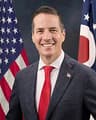 Bernie Moreno
Republican · Ohio
 James Risch
Republican · Idaho
 Rick Scott
Republican · Florida
 Tim Sheehy
Republican · Montana