
A Republican bill with 7 Democratic cosponsors · See all 13 cosponsors
Last activity — Read twice and referred to the Committee on Energy and Natural Resources.
In committee
Introduced and handed to a committee in the chamber it started in.
The committee holds it, and most bills are never heard from again. A hearing or a committee vote would be news; silence is the usual outcome, and it kills the bill without anyone voting against it.
Its path through Congress
- Introduced
- In Committee
What this bill would do
The Technology Grants to Strengthen Domestic Mining Education Act of 2025 requires the Secretary of Energy to establish a grant program for mining schools. These competitive grants aim to recruit and educate future mining engineers and professionals to meet United States energy and mineral needs. The Secretary must consult with the Secretary of the Interior when establishing the program. Grant recipients can use funds for various purposes, including enhancing mineral extraction, refining, and recycling technologies. The Act also establishes the Mining Professional Development Advisory Board to evaluate applications and provide oversight. Finally, the bill repeals the Mining and Mineral Resources Institutes Act.
Yes· 3 of 12
- Scored +5
Would Native Americans be better off under this?
The bill explicitly includes Tribal Colleges or Universities as potential mining schools.
- Scored +5
Would students be better off under this?
The bill creates new funding avenues for students in mining-related higher education programs.
- Scored +5
Is this likely to create jobs?
The bill aims to recruit and educate the next generation of mining professionals to meet future needs.
The opposite
No question was scored the opposite.
Who it would affect, and how
Potential Positive Impacts for People
-
Recruitment and Education: Grant funds can be used to recruit students and support programs related to mining, mineral extraction, and processing technology to meet future energy and mineral needs (Section 2(b)(2) and Section 2(c)(4)).
-
Environmental Protection and Land Recovery: Funds may be used for reclamation technology, reducing environmental and human impacts, mitigating acid mine drainage, and promoting reforestation and revegetation (Section 2(c)(4)(iii), (v), and (x)).
-
Resource Efficiency: Grants can support technologies that reduce water usage, mitigate surface disturbance, and promote overall resource efficiency (Section 2(c)(4)(xiv)).
-
Economic Competitiveness: The program aims to enhance the competitiveness of United States energy and mineral technology exports and reduce dependence on foreign energy and mineral supplies (Section 2(c)(4)(vii) and (viii)).
-
Educational Opportunities: The bill defines "mining school" to include programs at institutions of higher education, including Tribal Colleges or Universities (Section 2(a)(5)(A)).
Potential Negative Impacts for People
- Repeal of Existing Law: The Act repeals the Mining and Mineral Resources Institutes Act (Section 3).
Groups and Interests Ranking
Every group the model scored this bill for, from -10 to +10. Tap or hover a score for the reason it gave.
- Demographic And Interest Groups
- Would Native Americans be better off under this? — The bill explicitly includes Tribal Colleges or Universities as potential mining schools. Would students be better off under this? — The bill creates new funding avenues for students in mining-related higher education programs. Would business owners be better off under this? — The bill supports the mining industry through enhanced technology and workforce development. Would people in their twenties and thirties be better off under this? — The bill supports educational opportunities and recruitment for future mining professionals. Would people in rural areas be better off under this? — Mining development often benefits rural communities through job creation and education.
- Economy And Finance
- Is this likely to create jobs? — The bill aims to recruit and educate the next generation of mining professionals to meet future needs. Is this likely to grow the economy? — By enhancing the competitiveness of US energy and mineral technology exports, the bill supports economic growth.
- Education And Technology
- Does this put more money into scientific research? — The bill provides funding for research into mineral extraction, refining, and reclamation technologies.
- Environment Energy And Infrastructure
- Does this better protect air, water and wildlife? — The bill funds reclamation technologies to mitigate acid mine drainage and reduce environmental impacts.
- Governance And Ideology
- Does this make what the government does easier for the public to see? — The bill requires publishing statements regarding grant awards on a public website. Does this give the federal government more power? — The bill authorizes the Secretary of Energy to establish and oversee a new grant program.
- National Security And Foreign Policy
- Does this make trade with other countries easier? — The bill aims to reduce dependence on foreign energy and mineral supplies through domestic production.
- 5/19/2026
- 1 Cosponsor added.
- 5/8/2025
- 1 Cosponsor added.
- 3/26/2025
- 1 Cosponsor added.
- 3/25/2025
- Read twice and referred to the Committee on Energy and Natural Resources.
- 10 Cosponsors added.
- Introduced in Senate
One bill Congress.gov lists as related to this one — companions in the other chamber, earlier versions, and bills this one absorbed or was folded into.
 Michael Bennet
Democrat · Colorado
 Catherine Cortez Masto
Democrat · Nevada
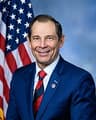 John Curtis
Republican · Utah
 Ruben Gallego
Democrat · Arizona
 John Hickenlooper
Democrat · Colorado
 John Hoeven
Republican · North Dakota
 James Justice
Republican · West Virginia
 Mark Kelly
Democrat · Arizona
 Ben Luján
Democrat · New Mexico
 Lisa Murkowski
Republican · Alaska
 Mike Rounds
Republican · South Dakota
 Jacky Rosen
Democrat · Nevada
 Dan Sullivan
Republican · Alaska