
Michael Lawler (R-NY)
Replace UNRWA with Real Humanitarian Assistance Act
A Republican bill with 2 Democratic cosponsors · See all 30 cosponsors
Last activity — Referred to the House Committee on Foreign Affairs.
In committee
Introduced and handed to a committee in the chamber it started in.
The committee holds it, and most bills are never heard from again. A hearing or a committee vote would be news; silence is the usual outcome, and it kills the bill without anyone voting against it.
Its path through Congress
- Introduced
- In Committee
What this bill would do
This bill, titled the "Replace UNRWA with Real Humanitarian Assistance Act," directs the Secretary of State to create a plan to shut down UNRWA operations across the Middle East. The Secretary must submit a comprehensive strategy to Congress within 180 days of the act's enactment. This strategy must include a timeline for phasing out operations and an assessment of existing programs like education and healthcare. The plan must also identify new entities, such as host governments or other organizations, to take over these responsibilities and funding. Finally, the Secretary is required to begin implementing this strategy within one year of submitting the plan.
Yes
- Scored +3
Does this favour talking over confrontation abroad?
The bill explicitly mandates a diplomatic engagement plan with host countries and international partners.
- Scored +2
Does this strengthen ties with allied countries?
The bill requires the strategy to be coordinated with international partners and allies.
The opposite· 3 of 6
- Scored -3
Would households on low incomes be better off under this?
The transition of humanitarian services poses a risk to the continuity of aid for low-income populations served by UNRWAs.
- Scored -3
Does this make health care easier to get in general?
The dismantling of UNRWA creates a risk of service interruption for healthcare programs currently managed by the agency.
- Scored -2
Would children be better off under this?
The change in educational and social service providers could impact the stability of services available to children.
Who it would affect, and how
Potential Positive Impacts for People
-
Continuity of essential services: The bill requires a plan to ensure that critical humanitarian services are not interrupted during the transition (Section 2(b)(5) and Section 2(e)(1)).
-
Improved oversight and transparency: The strategy must include mechanisms to ensure that any successor programs maintain neutrality, accountability, and transparency (Section 2(b)(6)), while also ensuring successor entities meet minimum standards for transparency and accountability (Section 2(e)(2)).
Potential Negative Impacts for People
- Potential humanitarian, political, and security risks: The bill acknowledges that the transition involves humanitarian, political, and security implications that must be addressed through a risk-reward assessment (Section 2(b)(7)).
Groups and Interests Ranking
Every group the model scored this bill for, from -10 to +10. Tap or hover a score for the reason it gave.
- Demographic And Interest Groups
- Would households on low incomes be better off under this? — The transition of humanitarian services poses a risk to the continuity of aid for low-income populations served by UNRWAs. Would children be better off under this? — The change in educational and social service providers could impact the stability of services available to children. Would people in cities be better off under this? — The disruption of established service networks may impact residents in densely populated areas served by the agency.
- National Security And Foreign Policy
- Does this favour talking over confrontation abroad? — The bill explicitly mandates a diplomatic engagement plan with host countries and international partners. Does this strengthen ties with allied countries? — The bill requires the strategy to be coordinated with international partners and allies.
- Healthcare
- Does this make health care easier to get in general? — The dismantling of UNRWA creates a risk of service interruption for healthcare programs currently managed by the agency.
- Social Issues And Justice
- Is this likely to lift people out of poverty? — The transition away from established UNRWA social services introduces uncertainty regarding the long-term provision of aid to vulnerable populations.
- Environment Energy And Infrastructure
- Does this better protect public land such as parks and forests? — The assessment of UNRWA infrastructure programs could lead to changes in how regional assets are managed.
- 7/23/2026
- 1 Cosponsor added.
- 7/21/2026
- 2 Cosponsors added.
- 7/16/2026
- 3 Cosponsors added.
- 7/14/2026
- Referred to the House Committee on Foreign Affairs.
- 24 Cosponsors added.
- Introduced in House
 Gus Bilirakis
Republican · Florida
 Don Bacon
Republican · Nebraska
 Juan Ciscomani
Republican · Arizona
 Gabe Evans
Republican · Colorado
 Brian Fitzpatrick
Republican · Pennsylvania
 Julie Fedorchak
Republican · North Dakota
 Randy Fine
Republican · Florida
 Josh Gottheimer
Democrat · New Jersey
 Craig Goldman
Republican · Texas
 Bill Huizenga
Republican · Michigan
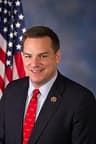 Richard Hudson
Republican · North Carolina
 J. Hill
Republican · Arkansas
 Darrell Issa
Republican · California
 Young Kim
Republican · California
 Barry Loudermilk
Republican · Georgia
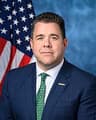 Nick LaLota
Republican · New York
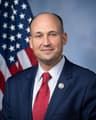 Nicholas Langworthy
Republican · New York
 Michael McCaul
Republican · Texas
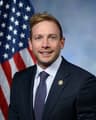 Max Miller
Republican · Ohio
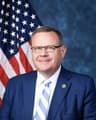 Tim Moore
Republican · North Carolina
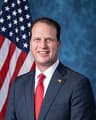 August Pfluger
Republican · Texas
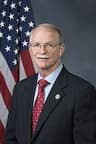 John Rutherford
Republican · Florida
 Christopher Smith
Republican · New Jersey
 Adrian Smith
Republican · Nebraska
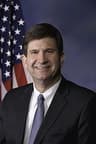 Bradley Schneider
Democrat · Illinois
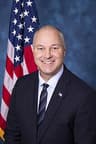 Pete Stauber
Republican · Minnesota
 Claudia Tenney
Republican · New York
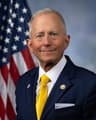 Jefferson Van Drew
Republican · New Jersey
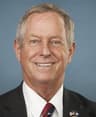 Joe Wilson
Republican · South Carolina
 Ann Wagner
Republican · Missouri