
A Republican bill with 3 Republican cosponsors · See all 3 cosponsors
Last activity — Referred to the House Committee on Education and Workforce.
In committee
Introduced and handed to a committee in the chamber it started in.
The committee holds it, and most bills are never heard from again. A hearing or a committee vote would be news; silence is the usual outcome, and it kills the bill without anyone voting against it.
Its path through Congress
- Introduced
- In Committee
What this bill would do
The TECH Act aims to provide qualified technical schools with the same access to Federal grant programs as 2-year and 4-year institutions of higher education. Under this bill, qualified technical schools offering certain career pathway or job training programs would be eligible for covered Federal grants. The Secretaries of Education and Labor would be required to modify eligibility criteria and application procedures within 180 days of enactment. Additionally, the Secretaries must issue guidance on how to disperse grants to ensure an adequate workforce pipeline for certain essential sectors. This includes training in areas such as national security, healthcare, and critical infrastructure.
Yes· 3 of 8
- Scored +5
Would students be better off under this?
The bill expands opportunities for students at technical schools to access federal grants and earn recognized credentials.
- Scored +4
Is this likely to create jobs?
The bill aims to create a workforce pipeline for essential sectors like healthcare and national security through technical school grants.
- Scored +3
Would households on low incomes be better off under this?
Increased access to technical training and federal grants can provide pathways to higher-wage employment for low-income individuals.
The opposite
No question was scored the opposite.
Who it would affect, and how
Potential Positive Impacts for People
-
Equal access to Federal grants: Qualified technical schools would be eligible to participate in covered Federal grant programs on the same basis as 2-year or 4-year institutions (Section 2(a)).
-
Workforce pipeline development: The bill directs agencies to issue guidance on dispersing grants to ensure that specific sectors and occupations have an adequate workforce pipeline to replace aging and retiring employees (Section 2(b)(2)).
-
Support for essential industries: Eligible job training programs include those determined to be essential for national security, public safety, supply chain security, transportation, critical manufacturing or infrastructure, healthcare, or public health (Section 2(c)(4)(A)(ii)).
-
Employment readiness: Training programs are designed to provide students with recognized postsecondary credentials that meet employer hiring requirements or satisfy educational prerequisites for professional licensure or certification (Section 2(c)(4)(A)(v)).
Potential Negative Impacts for People
- No specific negative impacts are explicitly detailed in the provided text.
Groups and Interests Ranking
Every group the model scored this bill for, from -10 to +10. Tap or hover a score for the reason it gave.
- Demographic And Interest Groups
- Would students be better off under this? — The bill expands opportunities for students at technical schools to access federal grants and earn recognized credentials. Would households on low incomes be better off under this? — Increased access to technical training and federal grants can provide pathways to higher-wage employment for low-income individuals.
- Economy And Finance
- Is this likely to create jobs? — The bill aims to create a workforce pipeline for essential sectors like healthcare and national security through technical school grants. Is this likely to grow the economy? — By strengthening workforce pipelines in essential sectors, the bill supports long-term economic stability.
- Education And Technology
- Does this make college cost less? — The bill increases access to federal grant programs for qualified technical schools, potentially lowering costs for students.
- Healthcare
- Does this make health care easier to get in general? — The bill supports the development of a workforce pipeline specifically for the healthcare sector.
- National Security And Foreign Policy
- Does this better protect the country from computer attacks? — The bill directs training and workforce pipelines toward sectors essential for national security.
- Social Issues And Justice
- Does this make child care cost less? — The bill includes the CCAMPIS Program, which supports child care access for parents in school.
- 6/15/2026
- 1 Cosponsor added.
- 5/26/2026
- 1 Cosponsor added.
- 3/24/2026
- Referred to the House Committee on Education and Workforce.
- 1 Cosponsor added.
- Introduced in House
One bill Congress.gov lists as related to this one — companions in the other chamber, earlier versions, and bills this one absorbed or was folded into.
 Blake Moore
Republican · Utah
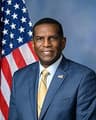 Burgess Owens
Republican · Utah
 Robert Onder
Republican · Missouri